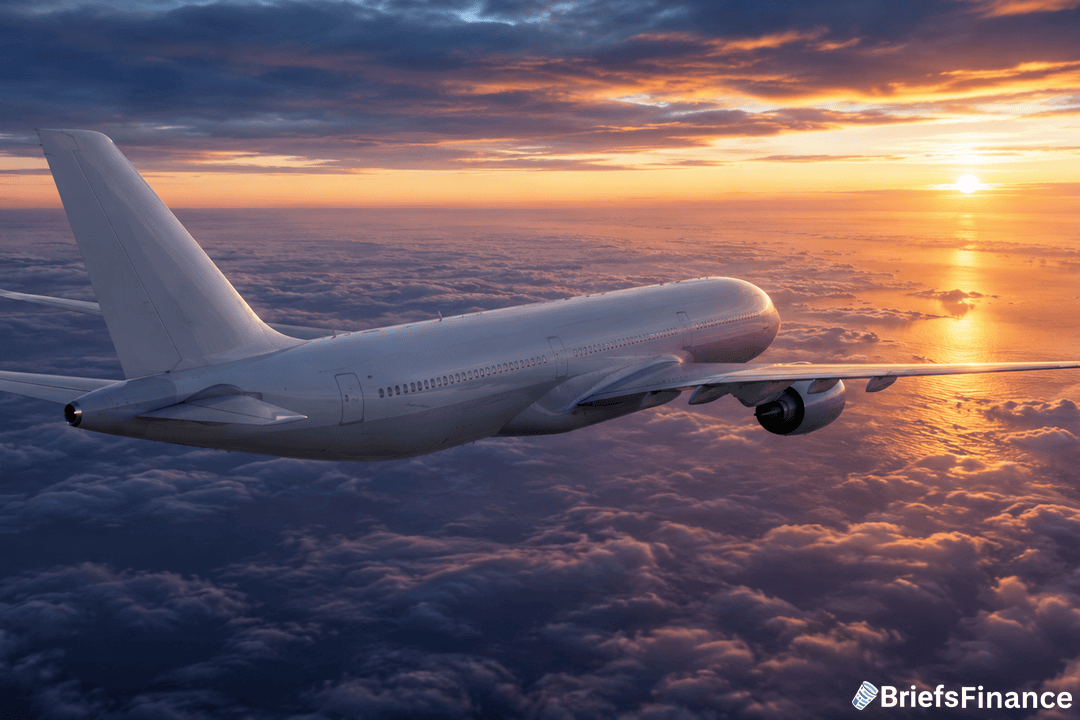
The hard part of flying 20 hours nonstop isn't the plane. It's the passengers.
That's the bet Qantas is making with Project Sunrise, the nonstop Sydney to London route it plans to start flying in October 2027. The plane is more or less solved. The body inside it is still the puzzle.
Half The Seats, All The Fuel
Qantas is using a specially modified version of the Airbus A350-1000ULR. Engineers added a 20,000-litre fuel tank and tweaked the airframe to extend its range to roughly 10,000 nautical miles, enough to stay airborne for as long as 22 hours.
To make the long haul livable, the airline capped each plane at 238 seats. A standard A350-1000 typically carries between 350 and 400. Every cabin class gets extra legroom, including enclosed First suites, private Business suites, and a redesigned Premium Economy.
Think of it like a hotel limiting its occupancy on purpose so every guest gets more space - except the hotel is at 38,000 feet.
We unpack what stories like this actually mean for investors in Market Briefs every weekday morning, and new readers get a free 45-minute investing masterclass as a bonus.
The Cabin Is A Sleep Experiment
Most airlines try to make long flights more comfortable with bigger seats and better entertainment. Qantas spent the past seven years studying biology instead.
Working with Peter Cistulli, a sleep medicine professor at the University of Sydney, the airline mapped how light exposure, meal timing, and movement can shift a passenger's body clock midair. Cabin lighting changes gradually over the flight to mimic sunrise and sunset on the destination's local time, while meals get served on a fixed schedule built around when passengers should be awake or asleep, not when they get hungry.
There's also a dedicated "Wellbeing Zone." Passengers can leave their seats to stretch, move around, or just stand without bumping into a flight attendant's cart.
Designer David Caon said early concepts included exercise bikes and yoga areas, but the team settled on a quieter relaxation space with soft, diffused lighting that's meant to feel like a stretch break, not a workout class.
Seven Years In The Making
Project Sunrise didn't start with a plane. It started with data.
Qantas began running experimental nonstop flights between New York, London, and Sydney in 2019, tracking passenger sleep, alertness, food intake, and movement with wearable tech. Sleep scientists, nutritionists, and aviation experts shaped what's now baked into the cabin.
The first A350-1000ULR built for Qantas made its maiden flight from Toulouse on June 2, 2026. The Sydney to New York route is expected to follow Sydney to London, with tickets reportedly going on sale in February 2027.
What To Watch
The commercial bet is that travelers will pay a premium to skip the stopover and step off the plane functional, not wrecked - and Qantas estimates the project could add more than A$400 million a year to earnings if it works.
If the science actually works at scale, the math on ultra-long-haul flying changes for the entire industry - and the airlines running today's longest routes through Singapore and Doha will have a new benchmark to beat.
If you like reading about moves like this before the market does, subscribe to Market Briefs. It lands in five minutes a day, and you get an investing course thrown in free when you join.