Free NewsletterPro Login
S&P 500 6,287 +0.42%
DOW 44,521 -0.18%
NASDAQ 21,103 +0.71%
S&P 500 +12.4%
Briefs Finance Fund +24.8%
JOIN THE FUND →

New York Governor Imposes Year-Long Halt on Giant AI Computer Hubs

Published Jul 14, 2026
[tts_player]
Share:
Summary:
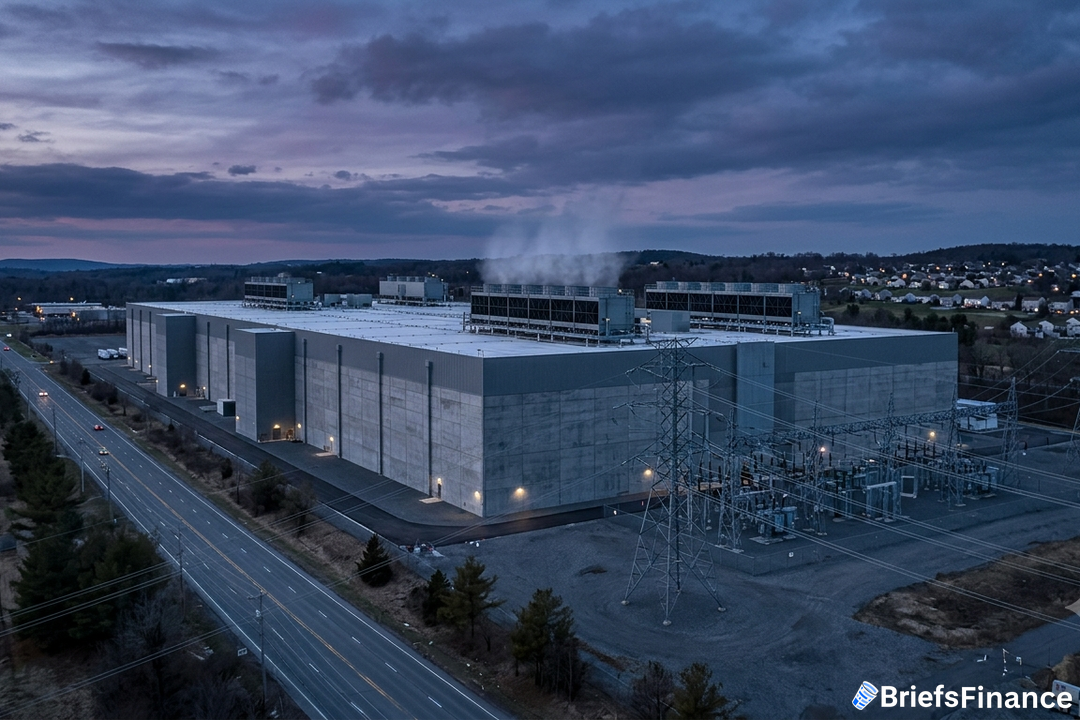
  • Governor Kathy Hochul signed an executive order halting new construction of data centers requiring at least 50 megawatts for up to one year.
  • Residential electricity prices in New York have risen nearly 68% since 2019, with large AI data centers blamed for straining the grid.
  • A poll found 46% of New Yorkers supported the ban, while only 21% opposed it.

Why New York Pulled the Plug

Your electric bill has been climbing for years, and a big part of the reason is sitting inside windowless buildings full of computers.

Governor Kathy Hochul just hit pause on that problem.

"We're in the midst of one of the most significant economic upheavals in generations … perhaps ever," Hochul said. She added that these "hyperscale AI data centers consume enormous amounts of power, truly threatening to outpace our grid's capacity."

The ban lasts up to one year. During that time, the state will develop a comprehensive framework for how these buildings get built and what they have to do to keep power costs from exploding.

New Yorkers have felt the squeeze. Environmental groups like Food & Water Watch say the public pressure got so loud that the state had to act. Laura Shindell, director of New York State's Food & Water Watch, stated: "This one-year moratorium is a huge step forward for New York communities fighting against an onslaught of massive data center proposals. It comes as the direct result of immense public pressure from people across the state demanding their elected leaders protect them from Big Tech's assault, which threatens the state's clean air and water and New Yorkers' financial security."

Get the market news that matters in a five-minute read with Market Briefs, our free daily newsletter

The Politics Behind the Pause

Not everyone thinks a blanket ban is the right move.

State Assemblyman Scott Gray, a Republican, called it "the wrong answer to the right questions." He argued that local communities, not Albany, should decide whether to host a data center. "It freezes investment, takes decisions away from the communities that should be making them and duplicates or ignores work the governor's own administration already has underway," he communicated in a June letter to the governor.

On the other side, Senator Kirsten Gillibrand said the moratorium is really about trust. "Right now, New Yorkers aren't convinced these massive facilities benefit them," she said. State Senator Kristen Gonzalez agreed, saying technology should make life better, "not pollute our water, strain our energy grid, or drive up our utility bills."

The numbers back up that public skepticism. Democrats supported it by a 37-point margin. Republicans were also on board, but by a narrower 13-point margin.

Even with the ban popular, it has drawn criticism from outside the state. Senator John Fetterman of Pennsylvania posted a blunt reaction: "China wins." And some governors, including Maine's Janet Mills and Virginia's Abigail Spanberger, had cautioned against similar measures.

What Comes Next

The ban does not affect existing data centers. It only stops new ones from breaking ground while New York figures out what to do.

When the year is up, the rules could get even tighter. Hochul is also looking at a separate bill passed by the state legislature, the Responsible Data Center Development Act, that would ban data centers of 20 megawatts or more for a year. That is a much lower bar.

She hasn't acted on the bill yet, but has said she will collaborate with the legislature to "further review" its nature. She is also advancing a bill that would eliminate sales tax breaks for large data centers statewide.

Right now, 14 state legislatures have introduced similar bills restricting new data center construction, but none had been signed into law before New York acted.

Join Market Briefs, our free daily newsletter, for a quick daily rundown of the markets
Disclosure

Recent News

1 2 3 35

Get Market Briefs delivered to your inbox every morning for free!

No fluff. No noise. No politics. Just finance news you can read in 5 minutes.

Blogs

June 29, 2026
Portfolio Diversification: Why Putting All Your Eggs in One Basket Destroys Wealth
  • Real diversification means spreading investments across all 11 economic sectors plus bonds, alternatives, and cash so no single bet can sink the portfolio.
  • Different sectors perform at different times, so a diversified portfolio captures upswings while smoothing the brutal drawdowns that wipe out concentrated bets.
  • Total market index funds offer the simplest path to diversification, and annual rebalancing is what keeps the structure working over time.
Read More
June 29, 2026
Non Taxable Income: What It Is and Why It Matters
  • Non taxable income is money you receive that you don't owe income tax on.
  • The tax code treats workers, investors, and business owners very differently, and investors often come out ahead.
  • Learning how income is taxed is a quiet superpower for keeping more of what you earn.
Read More
June 29, 2026
Semiconductor Stocks: A Simple Guide for Investors
  • Semiconductor stocks are companies that design and make computer chips, the brains inside nearly every modern device.
  • The AI boom has turned chips into one of the market's most important and most watched groups.
  • They offer big growth potential, but come with high valuations and a notoriously cyclical history.
Read More
June 25, 2026
How Stocks Work: A Simple Guide for Beginners
  • A stock is a slice of ownership in a company - buy one, and you own a piece of the business.
  • You make money two ways: the share price rising over time, and dividends paid to shareholders.
  • The simplest path for most beginners is buying into the whole market through a low-cost index fund.
Read More
June 25, 2026
Stop Loss vs Stop Limit: What's the Difference?
  • A stop loss order sells your stock once it hits a trigger price, prioritizing getting you out.
  • A stop limit order only sells within a price range you set, prioritizing price over a guaranteed exit.
  • The trade-off: a stop loss almost always executes; a stop limit might not if the price moves too fast.
Read More
June 25, 2026
Energy Stocks: A Simple Guide for Investors
  • Energy stocks are companies that produce and supply the power the world runs on, from oil and gas to newer sources.
  • They make up one of the 11 sectors of the market and tend to move with energy prices and big-picture shifts.
  • Like any sector, the key is diversification and understanding the forces driving demand.
Read More
June 18, 2026
What Is a Stop Loss Order? A Simple Guide
  • A stop loss order automatically sells a stock once it falls to a price you set.
  • It's a tool to cap losses or lock in gains without watching the market all day.
  • It works best for active strategies, and can backfire if used carelessly on long-term holdings.
Read More
June 18, 2026
Best S&P 500 Index Fund: How to Choose One
  • The best S&P 500 index fund for most investors is simply the cheapest, most established one that tracks the index well.
  • Funds like VOO, IVV, and SPY all hold the same 500 companies, so the biggest difference is the fee.
  • Pick one, automate your buys, and let time do the heavy lifting.
Read More
June 17, 2026
What Are Penny Stocks? Risks and Rewards Explained
  • Penny stocks are very low-priced shares of very small companies, often trading for just a few dollars or less.
  • They promise huge gains but carry huge risks: low liquidity, high failure rates, and wild price swings.
  • Most investors are better served by quality companies and funds than by chasing cheap shares.
Read More
June 17, 2026
Best Stocks for Beginners With Little Money
  • The best stocks for beginners with little money usually aren't individual stocks at all - they're low-cost index funds.
  • You can start with $100 or less and use small, regular investments to build wealth over time.
  • Focus on diversification and consistency, not on picking the next big winner.
Read More
1 2 3 24
Share via
Copy link











