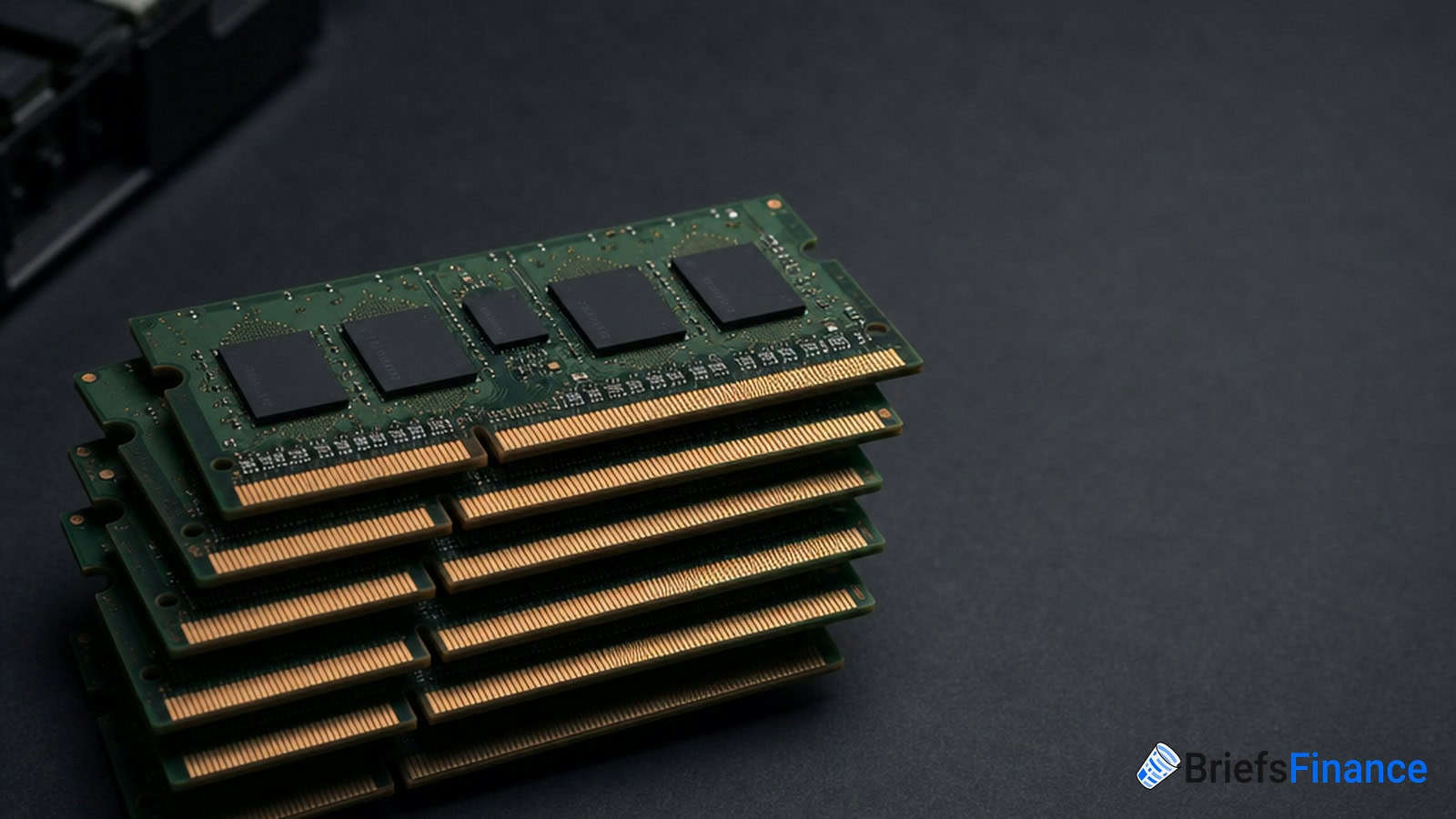
Micron's stock keeps climbing, powered by an AI memory boom that's made it one of the best chip trades of the year.
But the picture isn't as clean as the chart suggests.
Chinese memory chipmakers are catching up faster than most investors thought - and most of Micron's revenue still comes from the parts of the business they're closest to catching.
Here's where Micron's lead is real, where it's slipping, and what investors should actually be watching.
The AI Memory Boom Has Been Good To Micron
Memory chips were a boring corner of the market for years. Then AI showed up.
Big AI models need a special kind of memory called HBM - short for high-bandwidth memory. It sits next to Nvidia's chips and feeds them data fast enough to keep up.
Micron is one of only three companies in the world that makes it, which is why the stock has run.
Demand for HBM is outpacing supply, and Micron has been raising prices and selling out future production before it's even built.
If you want a five-minute read on which AI plays still have room to run, join Market Briefs - comes with a free investing masterclass when you sign up.
China Isn't Standing Still
While Micron has been cashing in, Chinese memory makers have been building.
Two names matter here:
- CXMT makes DRAM, the memory inside regular computers and phones.
- YMTC makes NAND, the memory inside storage drives.
Both started years behind the leaders, and both are closing the gap faster than U.S. companies expected.
CXMT is now shipping mainstream DDR5 that's approaching the performance levels of what Micron and Samsung sell, while YMTC has caught up on storage chip layer counts - a key measure of how much data a single chip can hold.
The U.S. has tried to slow this down with export controls. The controls have hurt, but they haven't stopped progress.
Why This Matters For Investors
A lot of Micron's stock story rests on one idea: high-end memory is in short supply, and only a handful of companies can make it.
If Chinese makers reach parity on the low and mid-tier, they don't have to beat Micron at the top - they just have to flood the bottom of the market.
That pushes prices down across the board and squeezes margins on everything Micron sells outside of HBM.
It's the same playbook China has run in solar panels, EVs, and steel: catch up on the basics, then drive prices down until competitors bleed.
What To Watch
Micron's HBM business is safe for now. The technology gap there is still real, and U.S. export controls keep Chinese makers out of the highest-end AI chips.
But the rest of Micron's business - the regular DRAM and NAND that still make up most of revenue - is where Chinese makers are getting close. That's the part investors should be watching.
For now, the HBM moat holds - but the fight is everywhere else.
Get smart on chip stocks, AI, and the moves Wall Street is watching every weekday morning. Sign up for Market Briefs and get a free 45-minute investing course thrown in.