What Happened to the Mega-Cap Tech Stocks
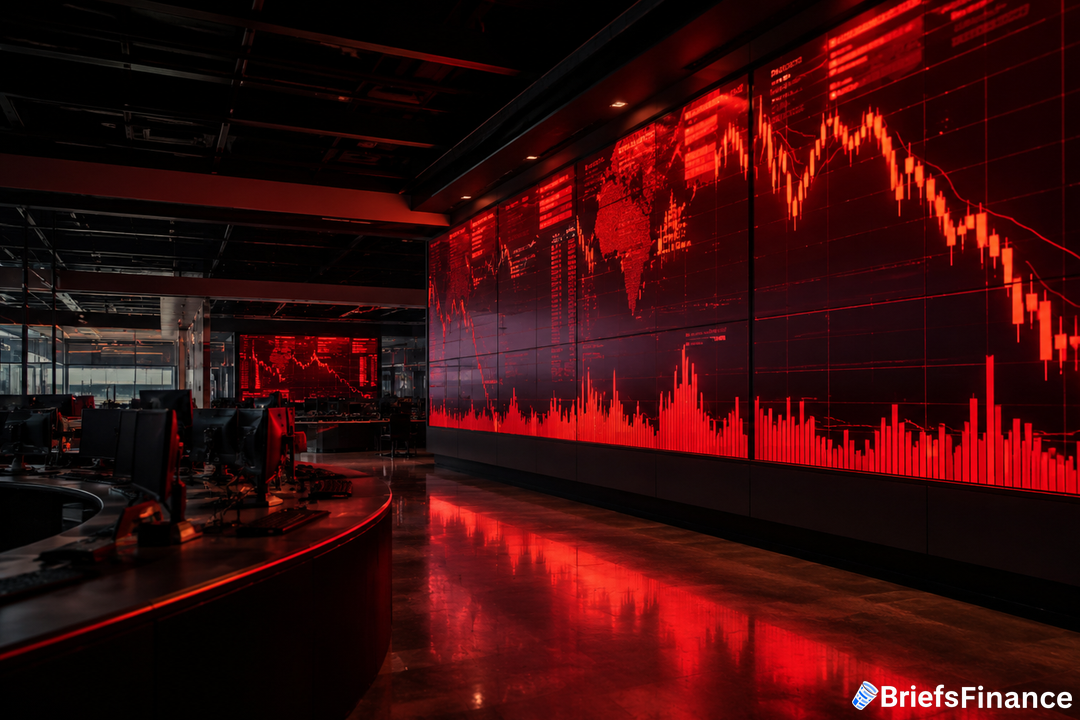
The seven largest U.S. technology companies, known as the Magnificent Seven, took a beating this week.
The dramatic 4.8% one-day decline, which erased $787 billion in market value, underscores the heightened sensitivity of large-cap tech equities to signals of slowing growth or increasing costs. With interest rates still elevated, investors are increasingly discounting future earnings that depend heavily on AI adoption.
Investors sold hard after Alphabet and Tesla released quarterly earnings that showed how much cash these giants are pouring into artificial intelligence.
Get the market news that matters in a five-minute read with Market Briefs, our free daily newsletter
By the close, the Magnificent Seven index had fallen approximately 11% below its record high set in late May. Since that peak, about $2 trillion in market cap has been wiped out.
The selloff also reflects broader macroeconomic concerns. With the Federal Reserve maintaining elevated interest rates to combat inflation, investors are reassessing the present value of future cash flows from high-growth companies. The steep decline in the Magnificent Seven underscores how even modest shifts in expectations can trigger significant repricing, especially when these stocks trade at premium valuations.
The broader market context adds to the pressure. The selloff reflects a recalibration of expectations for the tech sector, which has powered most of the S&P 500's gains this year. With the Federal Reserve maintaining high interest rates, the valuations of growth-oriented stocks become more sensitive to distant cash flows. The massive capital expenditure plans from Alphabet and Tesla have sharpened fears that returns from AI investments may take longer to materialize, prompting a swift repricing of risk across the group.
This sudden revaluation also highlights the heavy reliance of the broader index on a handful of mega-cap names. The S&P 500's year-to-date advance had been disproportionately driven by the Magnificent Seven, meaning their contraction has an outsized effect on overall market performance. Investors are now questioning whether the lofty valuations assigned to these stocks can be justified without faster AI-driven revenue growth.
Why AI Spending Spooked Investors
The concern is not about AI investment itself but about the magnitude of spending and the potential payoff.
Brian Therien, senior analyst at Edward Jones, said: "Alphabet's higher investment outlook helps reinforce our view that the AI infrastructure buildout remains a durable theme. However, the negative share-price reaction may indicate that investors are becoming more focused on returns generated on AI-related investments."
Ryan Lee, a vice president in product and strategy at Direxion, remarked in a note: "While Tesla continues to invest heavily in AI and robotics, monetization remains the central concern following the earnings miss." He added: "Tesla has become the physical AI story, with the potential to bring artificial intelligence into consumers' everyday lives through autonomous vehicles and robotics. The question is how quickly those investments can begin supporting the valuation."
Join Market Briefs, our free daily newsletter, for a quick daily rundown of the markets