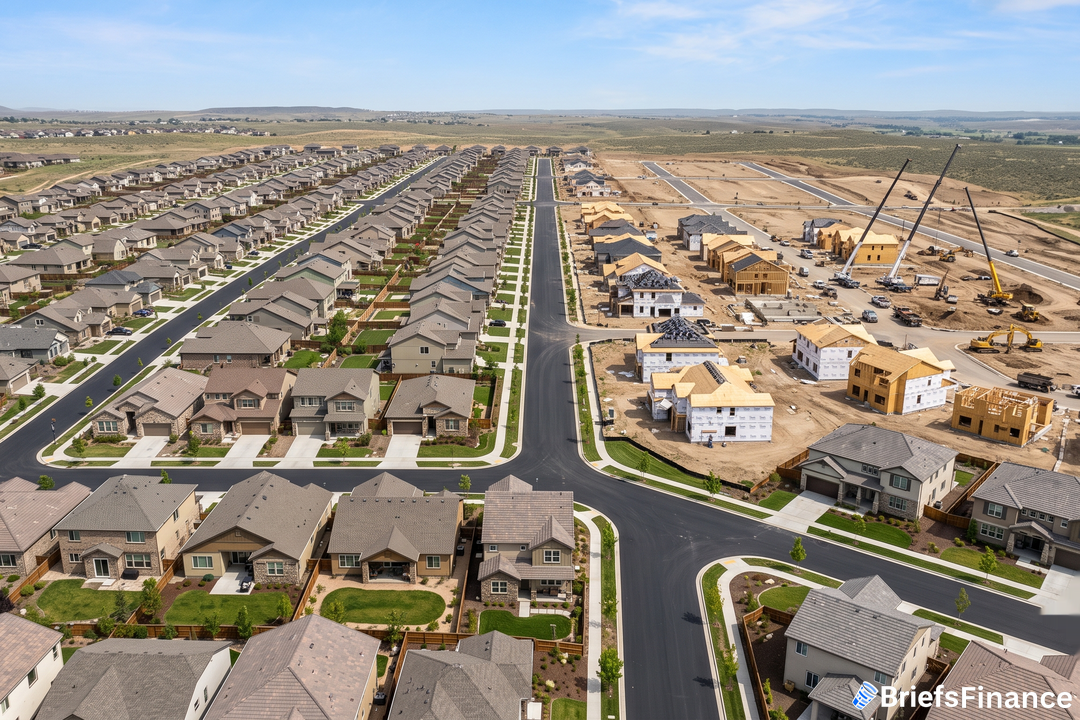
For more than a decade, homebuyers have faced a frustrating shortage of homes. That could flip by 2035. According to a recent analysis by the Mortgage Bankers Association, by 2035 there could be more homes for sale than individuals seeking to purchase or lease. The shift is not driven by builders overdoing it, but by a shrinking pool of future buyers.
The Demographic Shift
The main reason for the coming oversupply is demographics. The U.S. population is growing more slowly, birth rates are lower, and immigration has slowed. These trends mean fewer new households will form over the next decade.
For more than a decade, demand for homes has outpaced supply. That trend is expected to reverse by 2035.
Think of it like a line at a popular restaurant. For years, more people joined the line than got tables. Now, fewer new people show up, but the kitchen still cooks at the same pace. Eventually, there will be empty seats.
Get your free investing masterclass bonus when you join Market Briefs, our free daily newsletter
These long-term trends are now converging with a housing construction boom that began in the post-pandemic period, creating the conditions for oversupply.
What It Means for Prices and Regions
If builders continue to add new homes at the current rate, some local markets could see prices soften. That is especially true in fast-growing states like Texas, Florida, and Arizona. Buyers there may have more choices and less pressure. Homeowners in those areas might see their home equity build more slowly than in the past.
But housing markets differ by region. In the Northeast and Midwest, new construction is more limited. Those areas could still see price increases even as the national picture shifts.
The pandemic-era housing boom, fueled by historically low interest rates and shifting work patterns, temporarily masked the underlying demographic slowdown. As mortgage rates have since risen sharply, demand has cooled, yet construction continues at an elevated pace. This mismatch, combined with slowing population growth and an aging population, sets the stage for the oversupply predicted by the MBA.
The report highlights that while some regions like the Sun Belt may see price corrections, other areas with tighter land-use restrictions could maintain price stability. Notably, the MBA report states, "The expected gradual release of homes from aging Baby Boomers will add to supply over time, but not in a sudden wave."
According to the MBA, there will be no immediate surge of homes from retiring Boomers. Some have called this a "silver tsunami" of supply. Instead, the report says it will be a gradual increase over many years.
What to Watch
Subscribe to Market Briefs, our free daily newsletter, and claim your bonus investing masterclass