The Fed spends its time watching jobs reports and inflation prints. A former Fed President just told his old colleagues they have a blind spot worth $725 billion.
Robert Kaplan is now Goldman Sachs' vice chair, after years running the Dallas Fed. He says corporate America's AI spending is now a force the central bank needs to factor in when it reads the economy.
The "Historic" Spending Number
Kaplan called the current wave of corporate spending "historic." CapEx - short for capital expenditures - is what companies spend on physical stuff like buildings, equipment, and data centers.
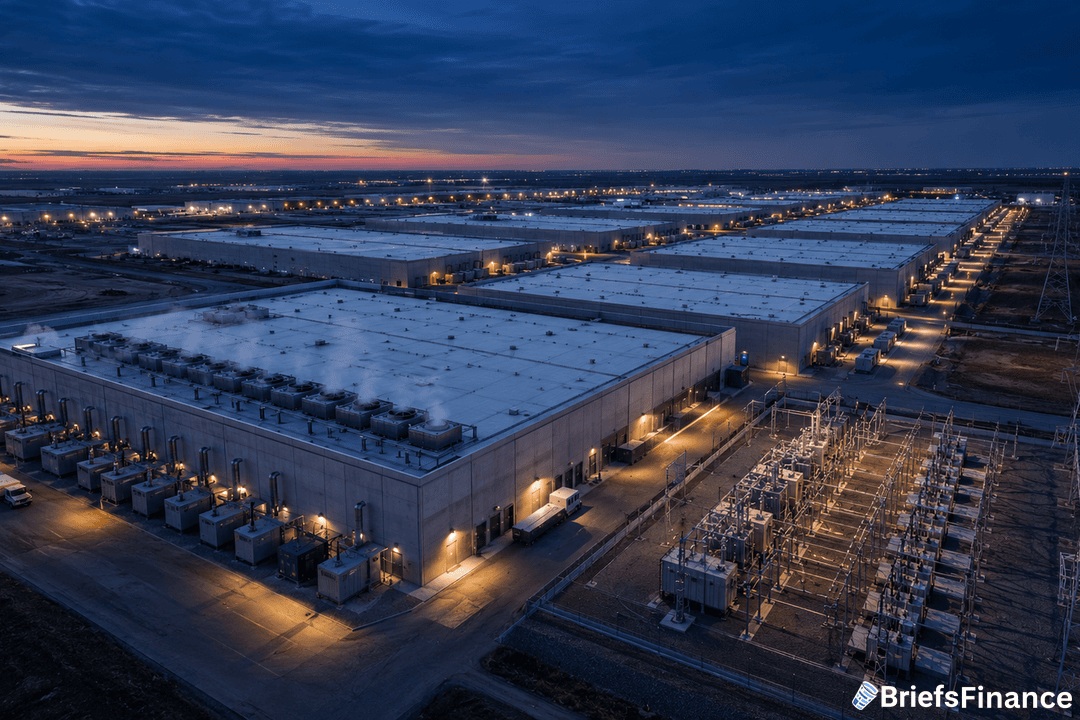
Google, Microsoft, Meta, and Amazon are now tracking around $725 billion of capex in 2026, up 77% from $410 billion last year. About three-quarters of that money is being shoveled into AI infrastructure: chips, servers, power systems, and the massive warehouses that hold them all.
Wall Street's read on this same story keeps getting bigger, with Evercore and Bank of America now seeing AI capex top $1 trillion by 2027.
Every morning, Market Briefs breaks down the moves Wall Street is actually watching - in five minutes a day, with a free 45-minute investing masterclass thrown in when you sign up.
What This Means For Fed Policy
Kaplan's point was direct: when corporate spending of this size becomes the engine of the economy, central bank tools built for consumer demand work differently. Traditional inflation and labor data may miss what's actually moving GDP right now.
Capex booms do two things at once. They prop up growth while they're happening, and they leave a hangover when demand for the gear softens.
The strain is already showing up downstream, with the FERC chair recently saying the U.S. power grid isn't built to handle the AI buildout.
What To Watch
Kaplan's comments come right as Q1 earnings confirmed the $725 billion 2026 figure across the big hyperscalers, with Meta alone now guiding for $125 billion to $145 billion this year. The spending is real. The open question is whether AI revenue ever shows up to justify it.
Goldman has been one of the most vocal banks asking that question publicly, and now its vice chair is putting it directly in the Fed's lap.
Want this kind of read on the market every morning? Join 350,000+ investors reading Market Briefs - you also get a 45-minute masterclass on spotting investments as a free sign-up bonus.