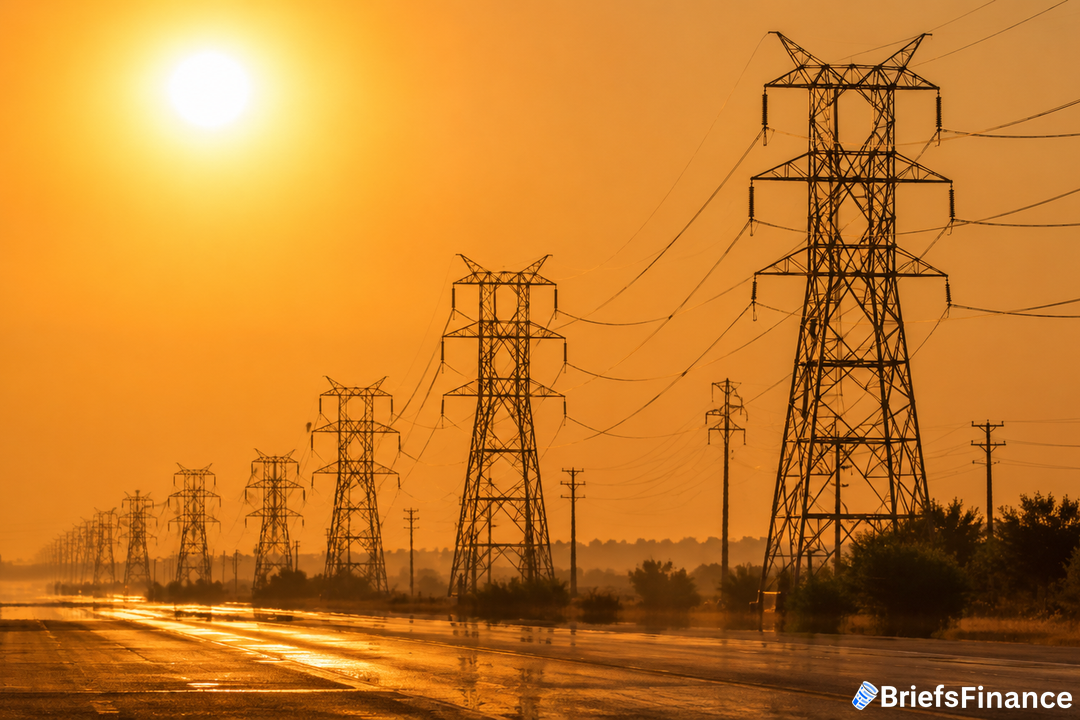
A stationary high-pressure system known as a heat dome has moved over the eastern United States. Temperatures are pushing 100°F in New York City, tying a record set in 1966. Electricity costs on America's biggest grid soared as a historic heatwave hit the East Coast, expected to be the year's hottest day. Utilities are scrambling to keep the lights on.
Record Heat Across the East
"This is the day when the most records are possible," said David Roth, a high-ranking forecaster with the US Weather Prediction Center. Washington's Reagan National Airport expects a high of 103°F, a new record. Trenton, New Jersey could hit 104°F. Even Caribou, Maine may reach 93°F, breaking a record set in 1914.
In total, 152 warm weather records may be threatened, tied or broken across the eastern half of the US. Between now and the Fourth of July holiday, forecasters say 411 daily records for high temperatures or warm overnight lows could be matched or broken. With humidity, it will feel like 105F to 115F across New York City and the entire Northeast.
The heat dome is being driven by a stagnant high-pressure system that traps hot air and prevents cooling, a pattern that has become more frequent and intense in recent years due to climate change. This prolonged strain on the power grid has forced operators to dip into emergency reserves and rely on aging fossil-fuel plants that are more prone to outages during extreme weather.
Get your free investing masterclass bonus when you join Market Briefs, our free daily newsletter
Grid Strain and Price Spikes
PJM Interconnection, the operator of the largest US grid, called a level 1 emergency - its lowest alert - for the third straight day to boost supplies and allow it to request extra backup resources. To prevent rolling blackouts, the US Department of Energy gave PJM special permission to use on-site power generation at data centers and other big industrial users as a final option.
One problem: an 810-megawatt combined cycle gas plant in Gettysburg, Pennsylvania, owned by LS Power - a highly efficient method of burning natural gas - went offline Thursday after a transformer caught fire.
Real-time power prices in PJM's Dominion region (Northern Virginia) hit $1,800 per megawatt-hour on Thursday afternoon, after exceeding $2,000 the prior evening. In New England, day-ahead power for the evening was contracted at almost $1,000 per megawatt-hour. On-peak power in northeast Massachusetts (including Boston) jumped 244% to $424.64 per megawatt-hour for Thursday.
Emergency Measures and Travel Warnings
Consolidated Edison briefly cut electricity to a few customers in the Riverdale section of the Bronx and urged 89,000 homes and businesses in a wider area to reduce their power usage while the utility performs equipment repairs. The company also lowered voltage across its system, a precaution that can dim lights and trip air conditioners or other appliances. New York City Mayor Zohran Mamdani urged residents to help conserve energy by keeping air conditioners at 78F, unplugging unused devices, and delaying dishwasher and laundry use until early morning. "During a historic heatwave, AC will save lives," he posted on X. "But only if we keep the grid stable enough for it to stay on."
ISO New England Inc., operator of the New England grid, alerted that conditions would be "exceptionally tight" for meeting Thursday evening's peak demand because there is very little spare generating capacity. Even Canada is affected. Environment and Climate Change Canada reported that heat warnings of orange and yellow levels have been issued for regions including Ontario, Quebec, and the Maritimes, as well as Toronto, the fourth most populous city in North America.
What to Watch
The worst of the heat will occur Thursday and Friday, after which the ridge of high pressure, known as a heat dome, will start to weaken. By next week, most of the eastern US will see temperatures return to normal levels, Roth said.
Subscribe to Market Briefs, our free daily newsletter, and claim your bonus investing masterclass