For most of the past two years, China's problem was falling prices.
Now factory prices are rising at the fastest pace since 2022, but the strange part is that shoppers still aren't spending.
So China is getting inflation from its factories and a shrug from its shoppers at the same time.
Two Forces Lifting Prices
Two things are driving the jump.
The first is the Iran war, which has snarled shipping through the Strait of Hormuz.
That has made fuel and raw goods cost more, with factory prices for fuel and power up 10% in May.
Those higher producer prices are the prices factories charge before goods reach stores.
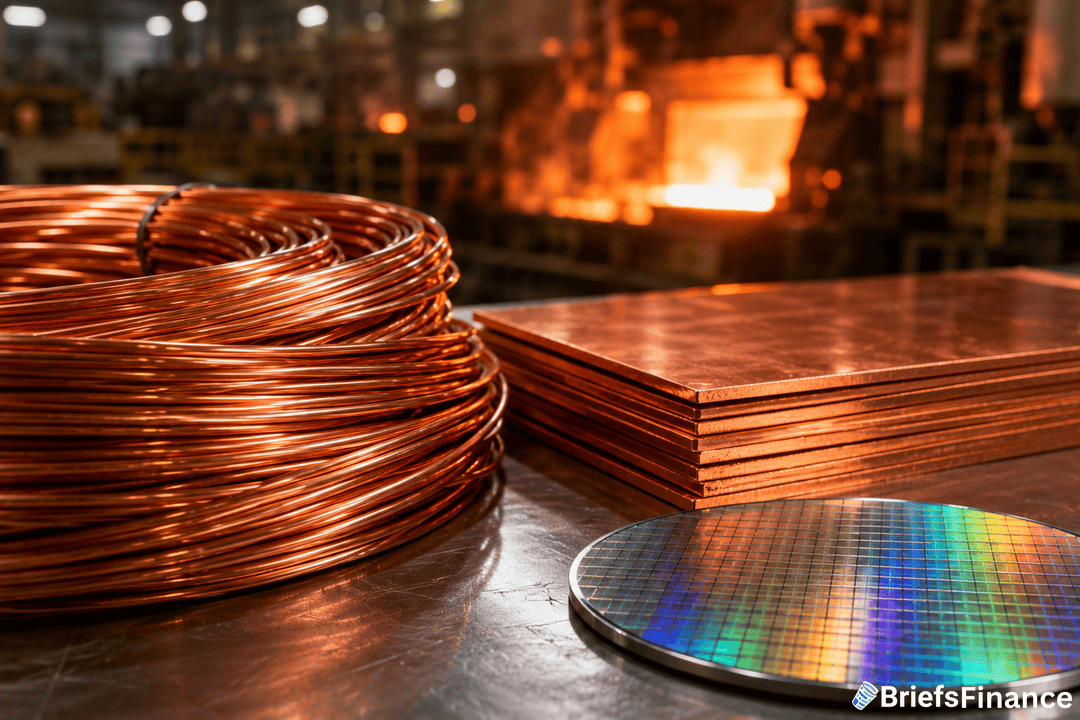
The second force is the AI boom, which has pushed up prices for chips, wiring, and the metals in gadgets.
Metal and mining prices led the climb, with some up more than a third from a year ago.
Together, the two forces dragged China out of its longest run of falling prices in decades.
What happens in China's factories shows up in your portfolio sooner than you'd think. Market Briefs tracks it every morning in five minutes, plus a free investing masterclass when you sign up.
The Squeeze On Factories
Higher costs would be fine if companies could charge more.
But Chinese factories can't, because weak demand at home means they eat the costs instead.
"What we're seeing is Chinese factories being squeezed from both sides," said Josh Gilbert, an analyst at trading platform eToro.
Picture a vise, with costs climbing on one side and flat prices on the other.
Why Shoppers Still Aren't Spending
Consumer prices rose just 1.2% in May, a touch below what forecasters wanted to see.
Food even got cheaper, with pork down about 16% from a year ago.
The one big jump came at the pump, where gas for drivers rose more than 23%.
Core prices, stripping out food and fuel, rose just 1.1%, and that is the number experts watch for real demand.
Why Global Investors Are Watching
China is the world's biggest oil buyer, so what it does ripples outward.
It has cut its oil imports nearly 20% since the war started.
That pullback, helped by big oil stockpiles and clean energy, has kept a lid on global oil prices.
Those reserves give Beijing room to ride out a long war.
Chinese stocks still slipped on the news, with the main indexes down about 1%.
One bright spot was exports, which rose more than 19% in May.
Strong demand for solar gear and AI goods drove that gain, a sign trade still powers economic growth in China.
Worth Noting
High-end brands like Ralph Lauren and LVMH saw a pickup in Chinese demand.
Still, experts warn it is too soon to call that a real rebound, since the housing market and job market are both still weak.
For now, China's factories are busy and its shoppers are careful.
Want global market moves explained in plain English? Read Market Briefs with 350,000+ investors and get a 45-minute investing course as a free bonus.