Free NewsletterPro Login

China's Factory Prices Hit A Near 4-Year High As Shoppers Stay Cautious

Published Jun 10, 2026
Share:
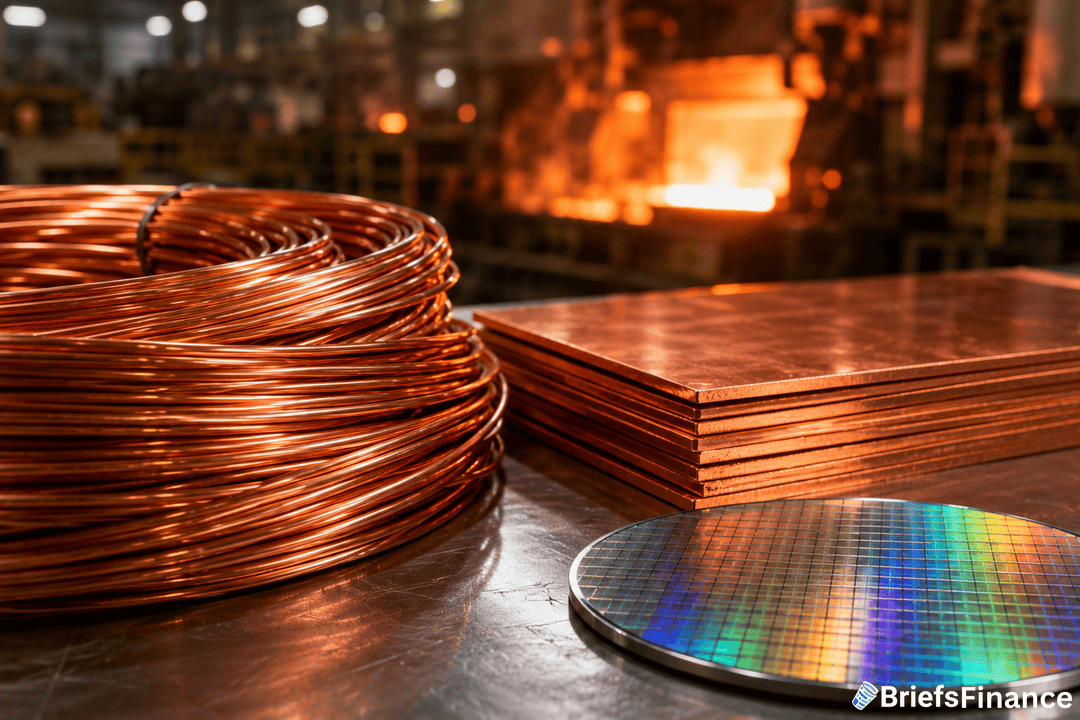
Coiled copper wire, stacked copper sheets, and a silicon wafer on a table in an industrial factory with molten metal in the background. “BriefsFinance” logo is in the lower right corner.
Summary:
  • China's producer prices rose 3.9% in May from a year earlier, the fastest since July 2022, beating forecasts.
  • The Iran war and an AI building boom drove input costs up, with factory prices for fuel and power climbing 10%.
  • Consumer prices rose just 1.2%, below expectations, as households kept their wallets shut.

For most of the past two years, China's problem was falling prices.

Now factory prices are rising at the fastest pace since 2022, but the strange part is that shoppers still aren't spending.

So China is getting inflation from its factories and a shrug from its shoppers at the same time.

Two Forces Lifting Prices

Two things are driving the jump.

The first is the Iran war, which has snarled shipping through the Strait of Hormuz.

That has made fuel and raw goods cost more, with factory prices for fuel and power up 10% in May.

Those higher producer prices are the prices factories charge before goods reach stores.

The second force is the AI boom, which has pushed up prices for chips, wiring, and the metals in gadgets.

Metal and mining prices led the climb, with some up more than a third from a year ago.

Together, the two forces dragged China out of its longest run of falling prices in decades.

What happens in China's factories shows up in your portfolio sooner than you'd think. Market Briefs tracks it every morning in five minutes, plus a free investing masterclass when you sign up.

The Squeeze On Factories

Higher costs would be fine if companies could charge more.

But Chinese factories can't, because weak demand at home means they eat the costs instead.

"What we're seeing is Chinese factories being squeezed from both sides," said Josh Gilbert, an analyst at trading platform eToro.

Picture a vise, with costs climbing on one side and flat prices on the other.

Why Shoppers Still Aren't Spending

Consumer prices rose just 1.2% in May, a touch below what forecasters wanted to see.

Food even got cheaper, with pork down about 16% from a year ago.

The one big jump came at the pump, where gas for drivers rose more than 23%.

Core prices, stripping out food and fuel, rose just 1.1%, and that is the number experts watch for real demand.

Why Global Investors Are Watching

China is the world's biggest oil buyer, so what it does ripples outward.

It has cut its oil imports nearly 20% since the war started.

That pullback, helped by big oil stockpiles and clean energy, has kept a lid on global oil prices.

Those reserves give Beijing room to ride out a long war.

Chinese stocks still slipped on the news, with the main indexes down about 1%.

One bright spot was exports, which rose more than 19% in May.

Strong demand for solar gear and AI goods drove that gain, a sign trade still powers economic growth in China.

Worth Noting

High-end brands like Ralph Lauren and LVMH saw a pickup in Chinese demand.

Still, experts warn it is too soon to call that a real rebound, since the housing market and job market are both still weak.

For now, China's factories are busy and its shoppers are careful.

Want global market moves explained in plain English? Read Market Briefs with 350,000+ investors and get a 45-minute investing course as a free bonus.

Disclosure

Get Market Briefs delivered to your inbox every morning for free!

No fluff. No noise. No politics. Just finance news you can read in 5 minutes.

Blogs

May 30, 2026
Financial Literacy Books That Actually Build Wealth
  • The best financial literacy books don't just teach budgeting, they shift how you think about money.
  • Two classics stand out: The Intelligent Investor for valuing investments, and Rich Dad Poor Dad for the owner's mindset.
  • Reading is only step one. The real wealth comes from acting on what you learn.
Read More
May 30, 2026
What Is a Roth Conversion? A Simple Guide
  • A Roth conversion moves money from a traditional retirement account into a Roth account.
  • You pay taxes on the money now, in exchange for tax-free growth and withdrawals later.
  • It can pay off if you expect higher taxes or more income in the future, but the timing and tax hit matter a lot.
Read More
May 30, 2026
Trailing Stop Loss: How to Protect Your Gains
  • A trailing stop loss is an order that automatically sells a stock if it falls a set percentage from its recent high.
  • As the stock rises, the sell point rises with it, locking in gains while capping losses.
  • It's most useful for active strategies like momentum investing, not for long-term buy-and-hold.
Read More
May 30, 2026
5 Types of Wealth: Why Money Is Only One of Them
  • Real wealth is more than a bank balance. It spans your finances, health, mind, purpose, and freedom.
  • Money is powerful, but it amplifies the life you already have rather than fixing a broken one.
  • True financial wealth means your cash flow covers your expenses, so your money works while you live.
Read More
May 30, 2026
How to Invest in Private Equity: A Beginner's Guide
  • Private equity means investing in companies that aren't listed on the stock market.
  • Traditional private equity is built for experienced, high-net-worth investors with large amounts to invest.
  • New rules have opened more accessible paths, like startup crowdfunding and real estate deals, often starting around $100.
Read More
May 30, 2026
What Is a Call Option? A Simple Guide With Examples
  • A call option gives you the right to buy a stock at a set price by a set date.
  • Investors buy calls when they expect a stock to rise, using less money than buying the shares outright.
  • The most you can lose buying a call is the premium, but time works against you, so it's an advanced tool.
Read More
May 30, 2026
EBITDA Formula: How to Calculate It Step by Step
  • EBITDA stands for Earnings Before Interest, Taxes, Depreciation, and Amortization, a measure of a company's core profit.
  • The formula adds those four items back to net income to show what the underlying business earns.
  • Investors use EBITDA to compare companies and to judge how many times earnings a stock is selling for.
Read More
May 30, 2026
What Is a Stock Option? A Plain-English Guide
  • A stock option is a contract giving you the right, but not the obligation, to buy or sell a stock at a set price by a set date.
  • There are two types: calls (the right to buy) and puts (the right to sell).
  • Options are powerful but risky, so they suit investors who already have the basics down.
Read More
May 30, 2026
Put Option: What It Is and How It Works
  • A put option gives you the right to sell a stock at a set price by a set date.
  • Investors use puts to bet a stock will fall, or as insurance to protect shares they own.
  • The most you can lose buying a put is the premium you paid, which makes it a defined-risk tool.
Read More
May 30, 2026
Operating Margin: What It Is and How to Calculate It
  • Operating margin shows how much profit a company keeps from its core business after paying its running costs.
  • The formula is operating income divided by revenue, shown as a percent.
  • A strong, steady operating margin signals a well-run business that controls its costs.
Read More
1 2 3 22
Share via
Copy link










