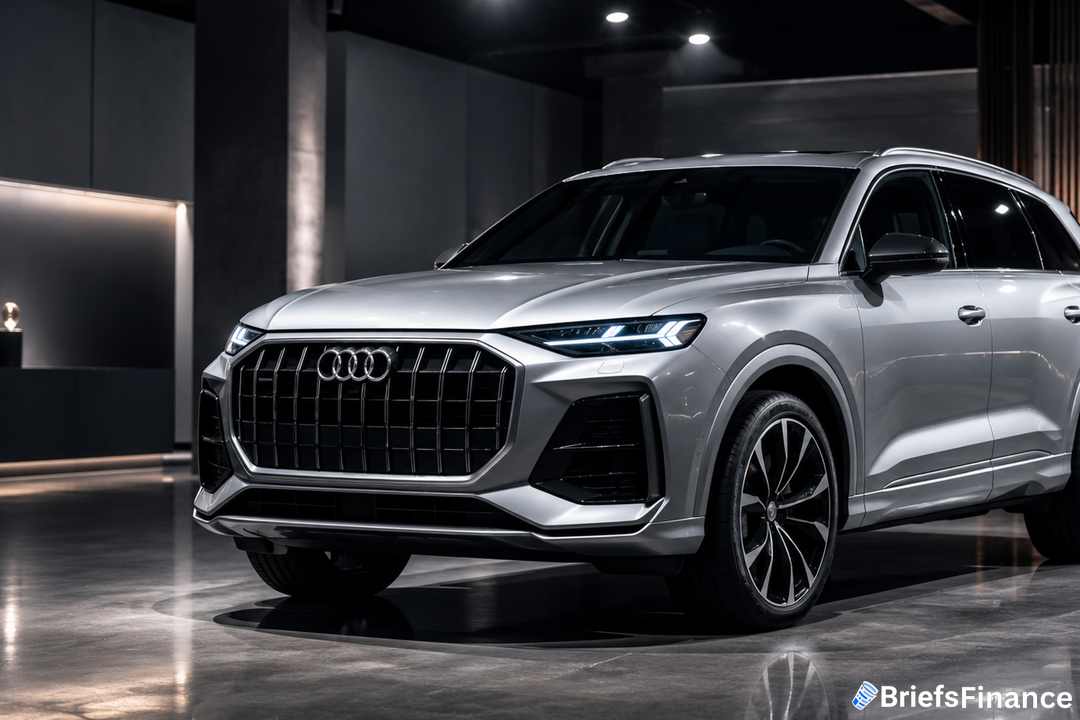
The New Flagship SUV
On Tuesday, Audi introduced the full-size Q9 SUV. The three-row model stretches 209 inches in length and 86.8 inches wide (including mirrors), making it slightly larger than the Mercedes-Benz GLS and BMW X7. Adults can comfortably sit in the third row.
The standard Q9 is powered by a 2.9-liter V6 that produces 429 horsepower and accelerates from 0 to 60 mph in 4.9 seconds. The higher-performance SQ9 variant uses a 4.0-liter V8 generating 591 horsepower and 590 lb-ft of torque, reaching 60 mph in 3.8 seconds.
Audi of America's senior vice president of product management, Filip Brabec, described the Q9 as "the most lavish luxury car that we have in this space." Karl Brauer, executive analyst for iSeeCars, said the vehicle has "real decadent features, I would almost say, like power opening doors and crazy interior materials, even by Audi standards."
The Q9 also comes with features including "matrix adaptive beam" headlights, a ChatGPT-powered voice assistant, a driver assist system with a hands-free function, and the largest moonroof Audi has ever put on a vehicle.
Get the market news that matters in a five-minute read with Market Briefs, our free daily newsletter
Why Audi Needs This Car So Badly
Audi's U.S. sales have been sliding. The first three months of 2026 were particularly severe, seeing a 30% decline year-over-year.
Audi attributed its weak U.S. results to tariffs and the expiration of federal EV incentives. The brand also bet heavily on electric vehicles, but by June 2026, battery-electric models represented only 5.4% of the overall U.S. auto market.
As Brauer put it: "A lot of manufacturers were caught out by this. But Audi is probably one of the more substantial ones in terms of how much energy and resources they put into and expected to get back from the electric car world and how far those realities fell from expectations."
Meanwhile, BMW's U.S. sales were up 4.7% through June, while Mercedes-Benz sales were down about 3.5%.
The New Product Push and What Comes Next
Audi is trying to turn things around with a wave of new SUVs. The brand unveiled the compact Q3 in March 2026 and the midsize Q7 in June 2026. Now comes the Q9, which along with the SQ9 variant will be the brand's flagship U.S. model. Brabec noted that SUVs now make up over 80% of the premium auto space, and Audi wants "absolute top contenders in each and every part of those segments."
RBC Capital Markets global autos analyst Tom Narayan noted that Audi had been "nipping at the heels of what used to be a duopoly of German OEMs" and had gained market share over time. But he noted that Audi's pricing edge has disappeared due to tariffs, and "that will still dominate their performance in the U.S."
There is a possible workaround. According to reports, Audi executives are exploring the possibility of producing some SUVs at Volkswagen's upcoming South Carolina plant, which is being set up for its Scout SUV brand. No final decision has been announced.
Audi's lack of domestic production remains a structural challenge. While competitors can mitigate tariff impacts by building vehicles locally, Audi's entire lineup is imported, making it uniquely vulnerable to trade policy shifts. This disadvantage has been a key factor in its recent sales struggles, as analysts have repeatedly noted. The potential move to South Carolina, if realized, could eventually help Audi regain pricing competitiveness.
Join Market Briefs, our free daily newsletter, for a quick daily rundown of the markets