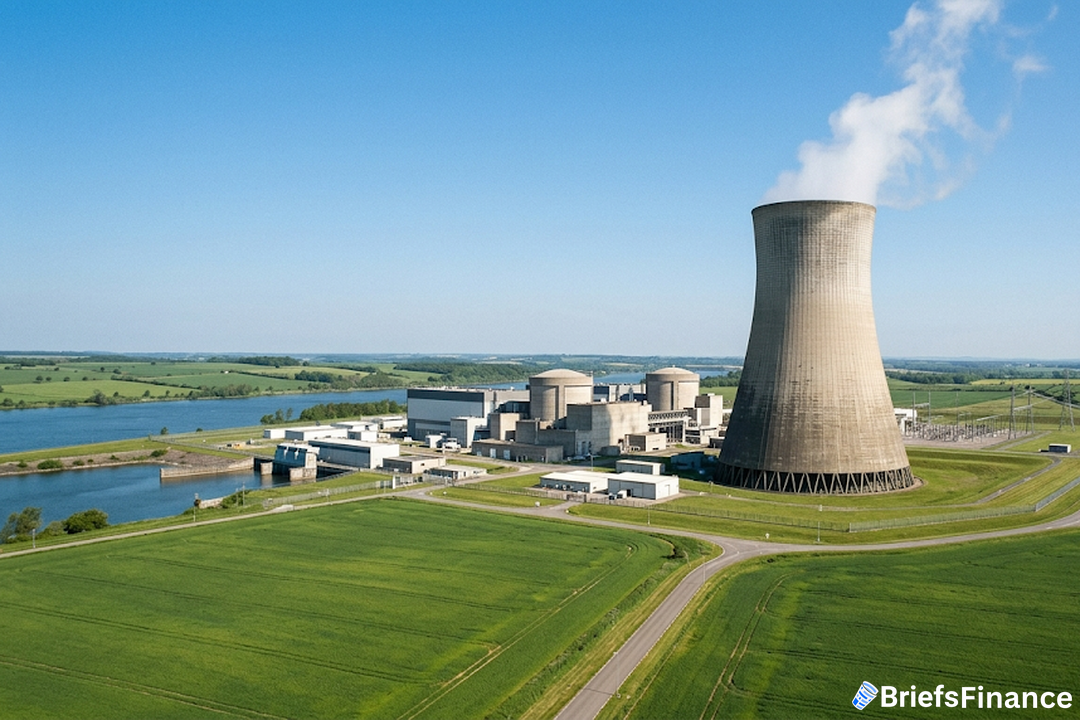
A Long-Awaited Milestone for Nuclear Power
Deployable and Antares did not respond to requests for comment.
Following a series of executive orders, the Trump administration aims to expand the use of both traditional large reactors and smaller advanced designs.
Get the market news that matters in a five-minute read with Market Briefs, our free daily newsletter
The NRC's traditional licensing pathway for advanced reactors has often been criticized for its length and uncertainty, sometimes taking more than a decade. The pilot programs, by offering early guidance and faster reviews, have dramatically shortened that timeline. This acceleration is crucial as technology companies increasingly demand reliable, carbon-free power for growing data centers and AI operations.
Historical Context and a New Path Forward
The achievement marks a turning point for U.S. nuclear power, which has seen little private-sector innovation since the 1970s. America's last instance of a new reactor design reaching criticality occurred in the 1970s, when the Clinch River Breeder Reactor project was eventually abandoned due to cost overruns and policy shifts. That project, also a non-light water design, was a government-led effort that demonstrated the challenges of bringing advanced nuclear to market.
Energy Department pilot programs, which aim to simplify NRC licensing and reduce hurdles, supported the construction of these four private reactors. "The pilot programs have been instrumental in helping startups navigate the NRC's complex licensing framework, a hurdle that previously deterred private investment," an Energy Department spokesperson said. By reducing upfront regulatory uncertainty, the initiatives aim to attract private investment and accelerate deployment of advanced nuclear technology. In contrast, today's four private reactors have benefited from streamlined licensing processes and targeted Department of Energy pilot programs that provide technical support and regulatory guidance.
The success of these four private companies marks a stark contrast to the long hiatus in advanced reactor development. Since the Clinch River project's cancellation, U.S. nuclear innovation has largely been limited to incremental improvements on existing light-water designs. The new reactors, using coolants like molten salt or liquid metal, promise enhanced safety and efficiency, which the administration believes is crucial for meeting the energy demands of growing industries such as artificial intelligence and cloud computing. Through pilot programs, startups receive help navigating the NRC's extensive approval process - something that once scared off private money.
Non-light water reactors - employing technologies such as molten salt or liquid metal cooling - offer potential advantages in safety, efficiency, and waste reduction. The Energy Department's pilot programs, launched under the Trump administration, aim to reduce regulatory hurdles and attract private investment. These four companies represent a new wave of nuclear startups hoping to commercialize advanced reactor technology, with the White House event signaling high-level support for their efforts.
This milestone also underscores a shift from government-led projects to private-sector initiative. While the Clinch River project was a costly federal undertaking, today's reactors were built by startups using streamlined regulatory pathways, demonstrating that private innovation can succeed where past public efforts faltered.
Join Market Briefs, our free daily newsletter, for a quick daily rundown of the markets