Free NewsletterPro Login
S&P 500 6,287 +0.42%
DOW 44,521 -0.18%
NASDAQ 21,103 +0.71%
S&P 500 +12.4%
Briefs Finance Fund +24.8%
JOIN THE FUND →

Amazon Could Face FTC Penalties Over Its Ad Business, Bloomberg Reports

Published Jun 17, 2026
[tts_player]
Share:
Summary:
  • Bloomberg reported Amazon could face billions in FTC civil penalties tied to claims it misled advertisers on pricing and auction terms.
  • Amazon's ad business generated $68.6 billion in 2025, up 22% year over year, making it one of the highest-margin units inside the company.
  • A potential case or settlement could arrive as soon as this summer and would stack on top of Amazon's recent $2.5 billion FTC Prime settlement.

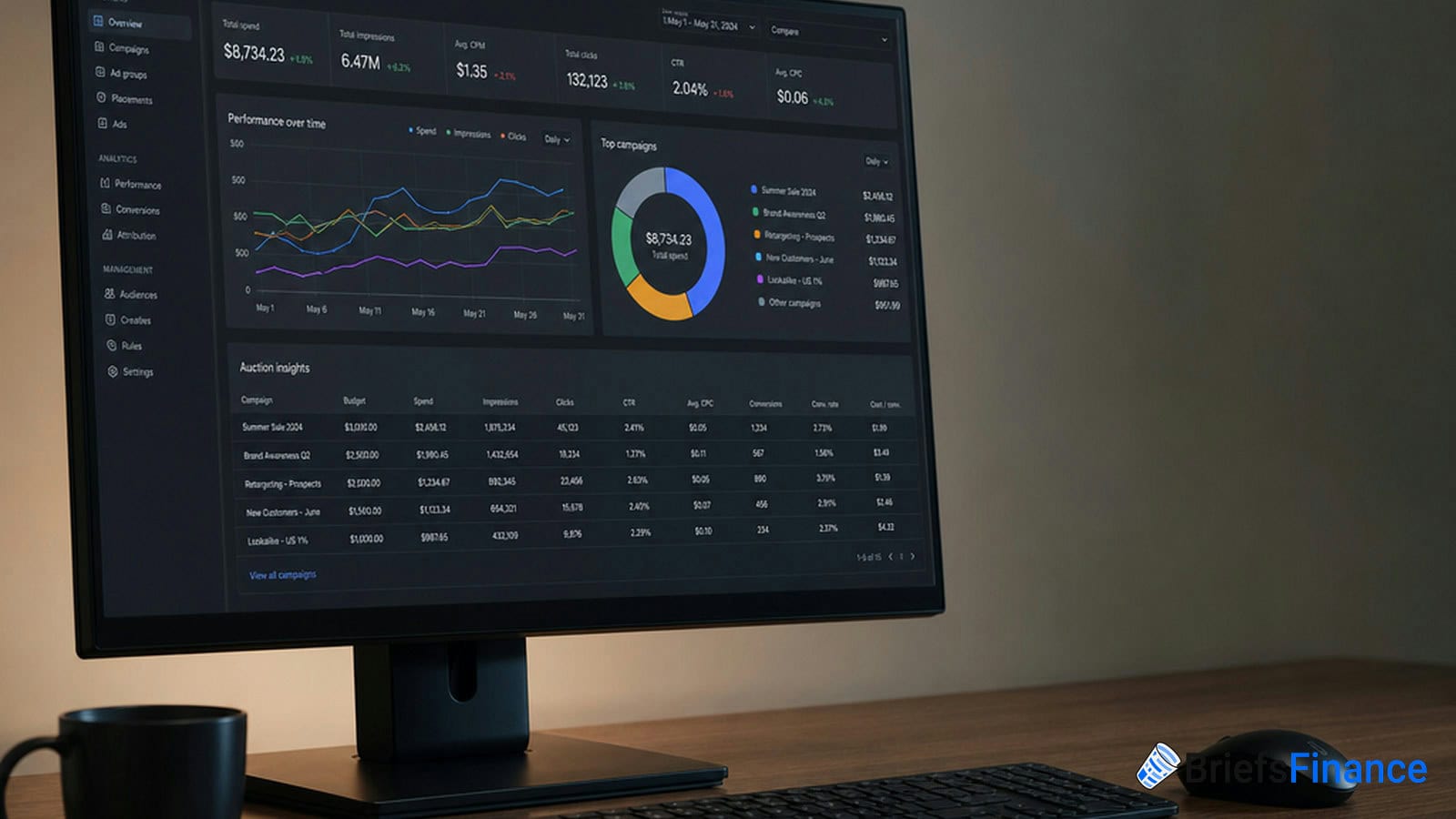
Amazon's ad business is the quiet money maker inside the company. It pulls in tens of billions of dollars a year and grows faster than almost anything else Amazon does.

Now federal regulators may be coming for it.

The FTC's New Focus On Amazon Ads

Bloomberg News reported that Amazon could face billions of dollars in civil penalties from a possible Federal Trade Commission lawsuit. The case centers on claims that Amazon misled advertisers - including how it disclosed terms, pricing, and "reserve pricing" in its ad auctions.

The agency has been looking into Amazon's ad business since at least last year, but no formal case has been filed yet. Several state attorneys general are also involved, and Bloomberg reported the probe could wrap up through a lawsuit or settlement as soon as this summer.

If one lands, it would open a second regulatory front against Amazon.

The FTC already won a major case against Amazon over how it signs up and cancels Prime members. In September, Amazon agreed to pay $2.5 billion - $1 billion in civil penalties and $1.5 billion in customer refunds - to settle those claims.

An ad case would stack on top of that. The timing is rough - Amazon's stock is already dealing with heavy AI spending and questions over AWS growth.

Why now? The FTC's consumer protection unit has been probing whether Amazon and Google properly disclosed terms and pricing to the advertisers buying ads on their platforms.

Amazon's ad-heavy pages have drawn the biggest share of that attention from lawmakers and consumer groups.

Want the daily read on stories like this? Market Briefs breaks down the moves shaping Big Tech every morning in five minutes, plus a free investing masterclass when you join.

Why Ads Matter So Much To Amazon

Most shoppers still think of Amazon as the everything store. But investors see it more as an ad company that happens to sell stuff on the side.

Amazon's ad unit is now one of the largest in the world. It trails only Google and Meta and pulled in roughly $68.6 billion in 2025, up 22% year over year.

That revenue keeps growing fast, climbing more than 20% a year and outpacing retail. AWS is the one segment running even hotter right now, growing 24% in the latest quarter - its fastest pace in 13 quarters.

Ads also carry far higher margins than retail. That's why Wall Street values them as a separate engine inside the company - and why any rule change could land straight on the bottom line.

The most sensitive piece is sponsored product listings. They dominate the top of search results on Amazon and pull in the bulk of ad dollars.

Sellers have long complained that they need to buy those ads just to stay visible. That revenue stream is now central to how Amazon hits its profit targets each quarter.

Any rule forcing Amazon to change how it discloses ad pricing, run its auctions differently, or limit how sponsored listings appear could reshape the whole format.

What To Watch

The first question is whether the FTC really files. Bloomberg's reporting flags this as a chance, not a done deal.

From there, the focus shifts to what any penalty would look like.

A fine is one outcome. Bigger changes, like new rules for ad auctions or sponsored listings, would matter much more to investors.

Watch for:

  • Any formal FTC complaint or settlement news as soon as this summer.

  • Statements from Amazon on regulatory risk in its next earnings call.

  • Reaction from rival ad platforms like Google and Meta, which face their own antitrust fights.

For now, Amazon's ad engine keeps running. The question is how long it runs the way it does today.

And the FTC docket just became one of the bigger swing factors hanging over Amazon stock heading into next year.

Join 350,000+ investors reading Market Briefs every weekday morning - and grab a free 45-minute investing course as a bonus when you sign up.

Disclosure

Recent News

1 2 3 40

Get Market Briefs delivered to your inbox every morning for free!

No fluff. No noise. No politics. Just finance news you can read in 5 minutes.

Blogs

June 29, 2026
Portfolio Diversification: Why Putting All Your Eggs in One Basket Destroys Wealth
  • Real diversification means spreading investments across all 11 economic sectors plus bonds, alternatives, and cash so no single bet can sink the portfolio.
  • Different sectors perform at different times, so a diversified portfolio captures upswings while smoothing the brutal drawdowns that wipe out concentrated bets.
  • Total market index funds offer the simplest path to diversification, and annual rebalancing is what keeps the structure working over time.
Read More
June 29, 2026
Non Taxable Income: What It Is and Why It Matters
  • Non taxable income is money you receive that you don't owe income tax on.
  • The tax code treats workers, investors, and business owners very differently, and investors often come out ahead.
  • Learning how income is taxed is a quiet superpower for keeping more of what you earn.
Read More
June 29, 2026
Semiconductor Stocks: A Simple Guide for Investors
  • Semiconductor stocks are companies that design and make computer chips, the brains inside nearly every modern device.
  • The AI boom has turned chips into one of the market's most important and most watched groups.
  • They offer big growth potential, but come with high valuations and a notoriously cyclical history.
Read More
June 25, 2026
How Stocks Work: A Simple Guide for Beginners
  • A stock is a slice of ownership in a company - buy one, and you own a piece of the business.
  • You make money two ways: the share price rising over time, and dividends paid to shareholders.
  • The simplest path for most beginners is buying into the whole market through a low-cost index fund.
Read More
June 25, 2026
Stop Loss vs Stop Limit: What's the Difference?
  • A stop loss order sells your stock once it hits a trigger price, prioritizing getting you out.
  • A stop limit order only sells within a price range you set, prioritizing price over a guaranteed exit.
  • The trade-off: a stop loss almost always executes; a stop limit might not if the price moves too fast.
Read More
June 25, 2026
Energy Stocks: A Simple Guide for Investors
  • Energy stocks are companies that produce and supply the power the world runs on, from oil and gas to newer sources.
  • They make up one of the 11 sectors of the market and tend to move with energy prices and big-picture shifts.
  • Like any sector, the key is diversification and understanding the forces driving demand.
Read More
June 18, 2026
What Is a Stop Loss Order? A Simple Guide
  • A stop loss order automatically sells a stock once it falls to a price you set.
  • It's a tool to cap losses or lock in gains without watching the market all day.
  • It works best for active strategies, and can backfire if used carelessly on long-term holdings.
Read More
June 18, 2026
Best S&P 500 Index Fund: How to Choose One
  • The best S&P 500 index fund for most investors is simply the cheapest, most established one that tracks the index well.
  • Funds like VOO, IVV, and SPY all hold the same 500 companies, so the biggest difference is the fee.
  • Pick one, automate your buys, and let time do the heavy lifting.
Read More
June 17, 2026
What Are Penny Stocks? Risks and Rewards Explained
  • Penny stocks are very low-priced shares of very small companies, often trading for just a few dollars or less.
  • They promise huge gains but carry huge risks: low liquidity, high failure rates, and wild price swings.
  • Most investors are better served by quality companies and funds than by chasing cheap shares.
Read More
June 17, 2026
Best Stocks for Beginners With Little Money
  • The best stocks for beginners with little money usually aren't individual stocks at all - they're low-cost index funds.
  • You can start with $100 or less and use small, regular investments to build wealth over time.
  • Focus on diversification and consistency, not on picking the next big winner.
Read More
1 2 3 24
Share via
Copy link










