Free NewsletterPro Login

Google Splits New TPU Chips to Target Nvidia

Published Apr 22, 2026
Share:
Summary:
  • Google unveiled its 8th generation TPU, split into two chips for training and inference.
  • The TPU 8t delivers 2.8x the performance of the prior Ironwood TPU at the same price.
  • Broadcom designs the training chip; MediaTek designs the inference chip.

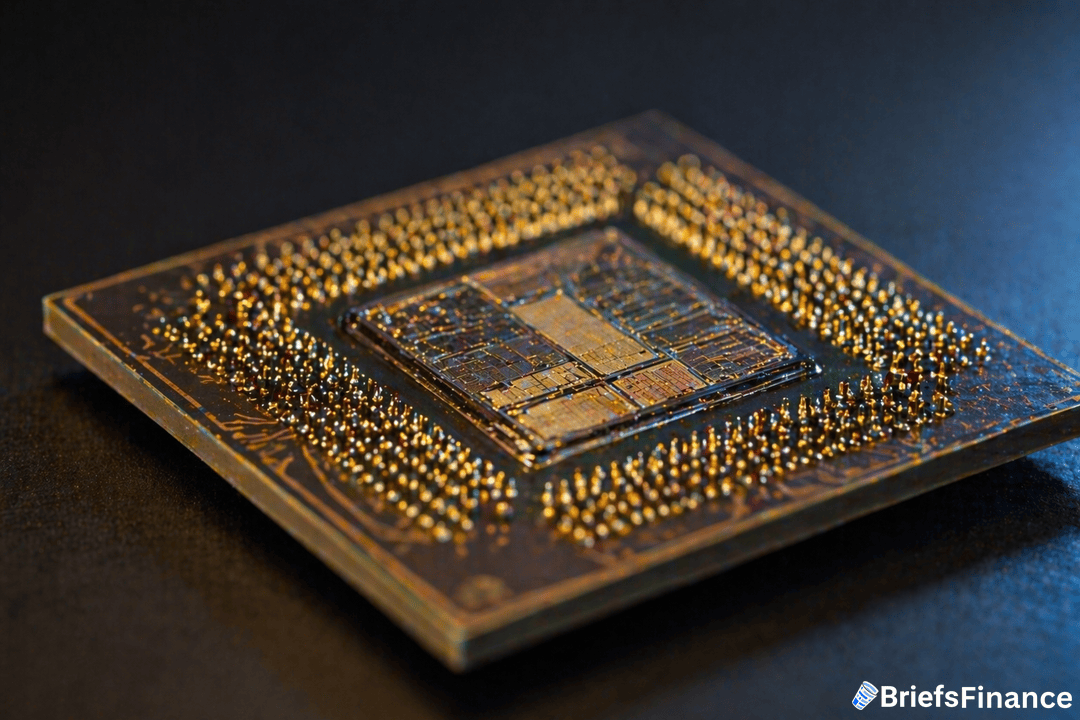
Google (GOOGL) is making its most direct move yet against Nvidia in the AI chip market. The company announced its 8th generation TPU on Wednesday and, for the first time, split the chip line into two dedicated products: TPU 8t for training AI models and TPU 8i for running them.

Both chips will be available later this year, with cloud customers and internal Google products expected to be among the first adopters.

The Performance Claims

Google says the TPU 8t delivers 2.8x the performance of the 7th generation "Ironwood" TPU at the same price, which is a big jump in one cycle. The TPU 8i delivers 80% better performance than the prior generation's inference workload.

Amin Vahdat, Google's senior vice president and chief technologist for AI and infrastructure, said in a blog post that the company determined "the community would benefit from chips individually specialized to the needs of training and serving."

Why Split Training and Inference

Training a model is a very different workload from running one, so using a single chip for both forces trade-offs. Training needs massive memory and raw compute, while inference needs low latency and tight cost control at massive scale.

Nvidia's H100 and B200 chips are designed to handle both use cases, which has made them the default for most AI builders. Google's bet is that specialized chips can beat generalist ones on both cost and performance, especially as AI agents push inference volume higher.

The Supply Chain

Two non-Nvidia supply chains:

  • Broadcom (AVGO) designs both the current Ironwood and new TPU 8t training chip, with an agreement running through 2031.
  • MediaTek designs the TPU 8i inference chip and its cost-optimized variants, including TPU v7e and v8e.

Having two separate chip designers gives Google real redundancy across its core AI compute stack. It also splits partnership risk between two large suppliers instead of relying on a single Nvidia dependency.

The Cloud Customer Play

Google Cloud has been pitching TPUs as a way to cut AI inference costs for enterprise customers, and this split is the clearest version of that pitch yet. Anthropic already runs large parts of its model on TPUs, and Apple has been testing similar workloads with Google for its own AI features.

If more model builders follow, Google earns both the hardware revenue and the recurring cloud spend. That combo is the exact playbook Nvidia and the hyperscalers have been fighting over.

What to Watch

Google is still a big Nvidia customer, and that will not change overnight. If cloud customers start to prefer TPUs on cost alone, especially for inference workloads, Nvidia loses some of the pricing power it has relied on since 2023.

The next signal is AWS and Microsoft, since both are spending heavily on custom chips of their own. That is the market where most of the AI money goes from here.

Disclosure

Get Market Briefs delivered to your inbox every morning for free!

No fluff. No noise. No politics. Just finance news you can read in 5 minutes.

Blogs

May 30, 2026
Financial Literacy Books That Actually Build Wealth
  • The best financial literacy books don't just teach budgeting, they shift how you think about money.
  • Two classics stand out: The Intelligent Investor for valuing investments, and Rich Dad Poor Dad for the owner's mindset.
  • Reading is only step one. The real wealth comes from acting on what you learn.
Read More
May 30, 2026
What Is a Roth Conversion? A Simple Guide
  • A Roth conversion moves money from a traditional retirement account into a Roth account.
  • You pay taxes on the money now, in exchange for tax-free growth and withdrawals later.
  • It can pay off if you expect higher taxes or more income in the future, but the timing and tax hit matter a lot.
Read More
May 30, 2026
Trailing Stop Loss: How to Protect Your Gains
  • A trailing stop loss is an order that automatically sells a stock if it falls a set percentage from its recent high.
  • As the stock rises, the sell point rises with it, locking in gains while capping losses.
  • It's most useful for active strategies like momentum investing, not for long-term buy-and-hold.
Read More
May 30, 2026
5 Types of Wealth: Why Money Is Only One of Them
  • Real wealth is more than a bank balance. It spans your finances, health, mind, purpose, and freedom.
  • Money is powerful, but it amplifies the life you already have rather than fixing a broken one.
  • True financial wealth means your cash flow covers your expenses, so your money works while you live.
Read More
May 30, 2026
How to Invest in Private Equity: A Beginner's Guide
  • Private equity means investing in companies that aren't listed on the stock market.
  • Traditional private equity is built for experienced, high-net-worth investors with large amounts to invest.
  • New rules have opened more accessible paths, like startup crowdfunding and real estate deals, often starting around $100.
Read More
May 30, 2026
What Is a Call Option? A Simple Guide With Examples
  • A call option gives you the right to buy a stock at a set price by a set date.
  • Investors buy calls when they expect a stock to rise, using less money than buying the shares outright.
  • The most you can lose buying a call is the premium, but time works against you, so it's an advanced tool.
Read More
May 30, 2026
EBITDA Formula: How to Calculate It Step by Step
  • EBITDA stands for Earnings Before Interest, Taxes, Depreciation, and Amortization, a measure of a company's core profit.
  • The formula adds those four items back to net income to show what the underlying business earns.
  • Investors use EBITDA to compare companies and to judge how many times earnings a stock is selling for.
Read More
May 30, 2026
What Is a Stock Option? A Plain-English Guide
  • A stock option is a contract giving you the right, but not the obligation, to buy or sell a stock at a set price by a set date.
  • There are two types: calls (the right to buy) and puts (the right to sell).
  • Options are powerful but risky, so they suit investors who already have the basics down.
Read More
May 30, 2026
Put Option: What It Is and How It Works
  • A put option gives you the right to sell a stock at a set price by a set date.
  • Investors use puts to bet a stock will fall, or as insurance to protect shares they own.
  • The most you can lose buying a put is the premium you paid, which makes it a defined-risk tool.
Read More
May 30, 2026
Operating Margin: What It Is and How to Calculate It
  • Operating margin shows how much profit a company keeps from its core business after paying its running costs.
  • The formula is operating income divided by revenue, shown as a percent.
  • A strong, steady operating margin signals a well-run business that controls its costs.
Read More
1 2 3 22
Share via
Copy link












