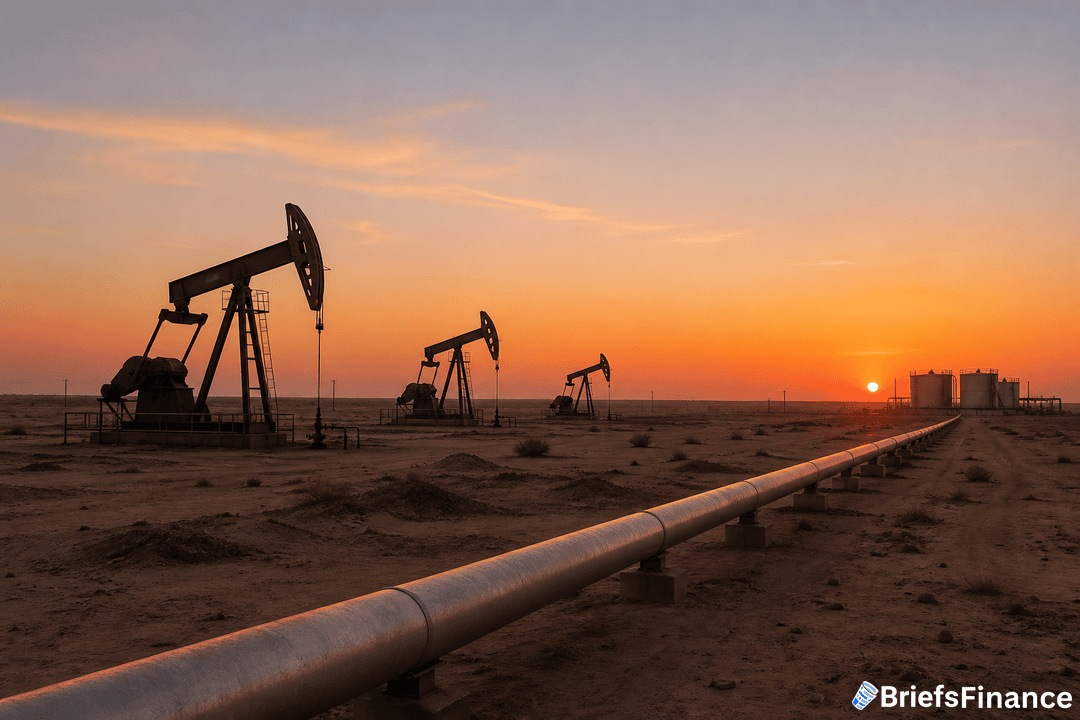
What happened to Kuwait's oil flows
Kuwait's production has climbed back to around 2 million barrels a day, or roughly three quarters of its prewar pace near 2.6 million. Output slipped to under 1 million barrels a day in the early months of the conflict as Iran blocked shipping through the strait. Tehran still threatens vessels in the corridor, but more ships are opting to transit anyway, Kuwait Petroleum Corp. CEO Sheikh Nawaf Al-Sabah said.
Restoring oil output after conflict is slow, expensive, and watched closely by traders. Market Briefs tracks supply recovery free every weekday.
How Kuwait is responding operationally
KPC's chief says the company is honoring crude supply obligations and that refineries making diesel and jet fuel are operating. Even so, he flagged a shortage in refined products and said strategic inventories are at "critical levels." His take on the chokepoint was blunt: "More ships are getting through because people recognize there's no alternative to the Strait of Hormuz." And on workarounds, he added, "Everything you do, every pipeline you build, storage facility, all of that cannot replace the vital importance of the Strait of Hormuz to international commerce." He also linked Europe's recent emergency release of diesel and jet fuel to the disruption of Kuwaiti supplies, saying, "Why is Europe now under this emergency diesel and jet fuel release, it's because of Kuwait." The refineries are functioning, he said, but the constraint is a "lack of freedom of navigation through the strait." In the past month, more customers have been willing to send their own ships to lift cargoes. KPC is also expanding its own fleet, now 29 vessels. "We found that having a strategic tanker fleet that we own is more beneficial to us," he said.
What it means for your portfolio
Exports from the region are rebounding, and several Wall Street banks estimate shipments are approaching prewar levels. Producers across the Gulf - among them Kuwait, the United Arab Emirates, and Saudi Arabia - are still sending cargoes through Hormuz despite attacks on vessels in the disputed corridor. Kuwait says its strategic projects are on schedule, and it remains "absolutely on track" to increase production capacity from 3 million now to 4 million barrels a day in 2035.
It is also advancing pipeline ideas, with routes via Saudi Arabia and the UAE among the options. For your wallet, watch the trio that matters: how many tankers keep sailing, how quickly product tightness eases, and whether Kuwait's capacity build stays on plan. Those forces flow through to pump prices and the inflation you feel, not just the charts traders stare at.
Every barrel back on the market shows up in the price eventually. Join Market Briefs free and follow the numbers.