Salad Scare Takes the Dressing Down
Hidden Valley Ranch spent part of the summer riding a World Cup wave. The brand got a real lift in sales and online buzz as fans stocked up for watch parties.
That momentum has faded. This summer's cyclospora outbreak made many Americans wary of leafy greens, and that wariness is now showing up at the grocery store.
That drop erased some of the sales and social media lift Hidden Valley Ranch had gained during the World Cup.
For the parent companies, salad dressing is a side dish, not the main course. It is only a small slice of their businesses: roughly 2% of Kraft Heinz's US revenue and 11% of Clorox's, so a 20% plunge stings even though it doesn't threaten either company.
A Parasite Made People Rethink Salads
Why would a salad dressing brand lose sales because of lettuce? The answer is simple: people stopped buying salad.
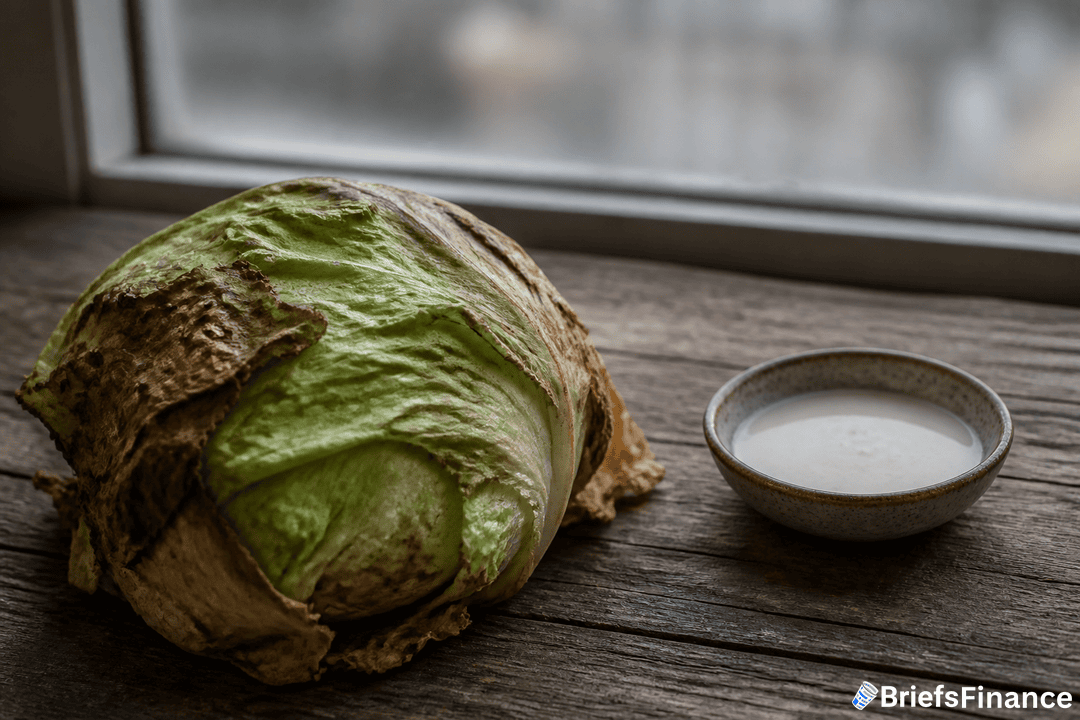
Thousands of people in the US developed cyclosporiasis this summer. The intestinal infection spreads when people eat food tainted with feces. Health officials at the state and federal level traced an early cluster of Midwest infections to iceberg lettuce served at Taco Bell, and that lettuce came from Taylor Farms.
The money story behind the headlines is usually the part that matters. Join Market Briefs free and get it every morning.
Confusion about what was safe changed habits quickly. Many shoppers skipped salads entirely, even after Michigan health officials said leafy greens were safe to eat again.
Iceberg lettuce sales fell 20% in the latest four weeks, a sharp turn from the 5% rise in the prior 12 weeks. The whole lettuce market is worth $2.6 billion, and TD Cowen analyst Robert Moskow pegs iceberg's share at about 37%.
Restaurant chains felt it too. Sweetgreen Inc. reduced its full-year forecast in August because demand for fresh prepared foods softened, while Cava Group Inc.'s sales slowed in mid-July as awareness of the outbreak grew.
Cava said demand trends have been improving. Some shoppers just switched to frozen produce instead.
Frozen kale was the biggest gainer, with sales 14% higher in the three weeks through Aug. 1 than a year earlier, according to NielsenIQ. NielsenIQ also reported higher sales for frozen spinach, raspberries, and blueberries.
NielsenIQ wrote that "increased interest in farmers' markets suggests consumers are also reassessing where they shop." The firm added that shoppers want "greater visibility into sourcing and handling."
What It Means for Your Money
Moskow expects trust to come back gradually, but he says the current quarter may still be rough.
"We expect consumers' trust in the industry to gradually improve and sales to recover," he wrote. "That said, the negative impact to Kraft Heinz and Clorox's salad dressing brands may prove meaningful in the current quarter."
He also ran the math: if the dressing declines lasted through the third calendar quarter, Clorox's US retail sales would shrink by 55 basis points and Kraft Heinz's by 40 basis points.
A basis point is one-hundredth of a percentage point, so those are small but noticeable dents.
Food scares like this usually fade, and these are big companies with plenty of other products. But this episode is a reminder that a single health worry can move sales quickly, and sometimes the food at the edge of the plate goes first.
For your portfolio, the real question is whether shoppers come back to the produce aisle and whether they keep buying ranch once they do. If those habits return, the dressing numbers should recover; if they do not, those small dents start to look a little less temporary.
Understanding what moved a market beats knowing that it moved. Get the free Market Briefs daily newsletter and follow the drivers.