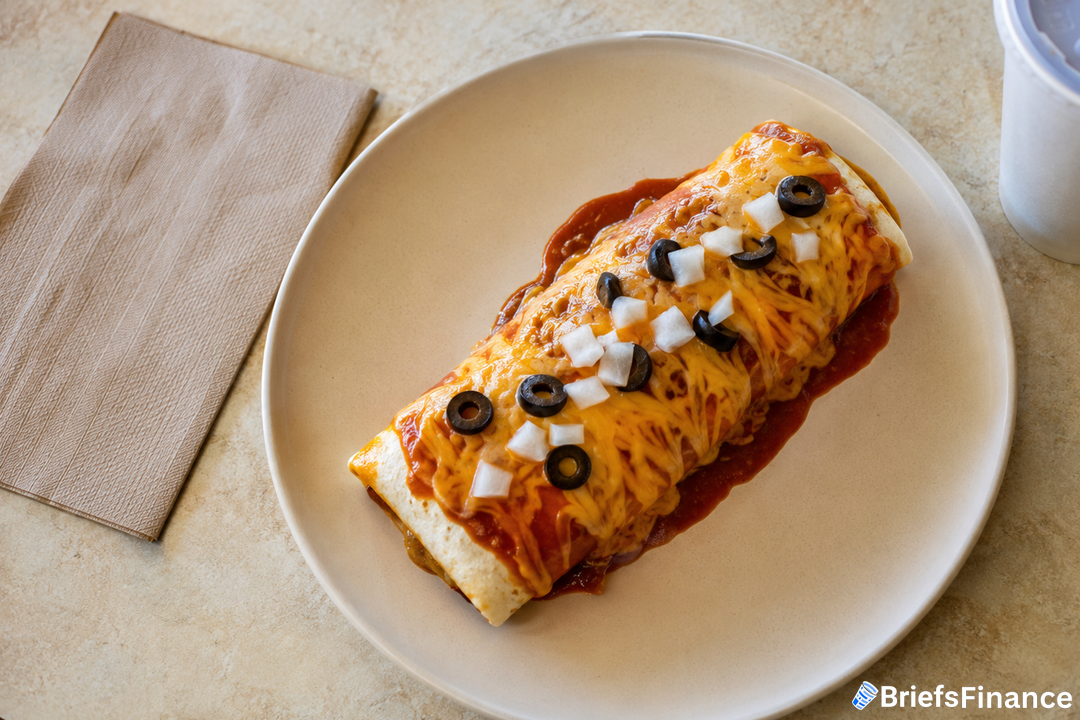
By offering a lettuce-free burrito covered in enchilada sauce for just a dollar, the fast-food chain was able to lessen the fallout from a parasite outbreak that had deterred customers. The promotion of the Enchirito at a dollar began on July 22.
The Enchirito, a classic menu item that typically includes lettuce, was stripped of the ingredient to reassure customers. The dollar price point was also intended to draw back wary diners. However, the broader outbreak continued to affect consumer confidence and company stock.
The Outbreak and Its Spread
The cyclosporiasis outbreak, caused by a microscopic parasite, has resulted in thousands of reported illnesses across multiple states. Federal health officials linked the contamination to iceberg lettuce harvested from a specific region in Mexico, which prompted supplier Taylor Farms to issue a broad recall.
"Our swift response included removing all contaminated lettuce from our US locations and launching the discounted Enchirito promotion," said a Taco Bell spokesperson, aiming to reassure customers. Despite these efforts, consumer confidence remained fragile, and the continued spread of the outbreak kept pressure on Yum! Brands' stock, which had declined 6% since mid-July.
Get the market news that matters in a five-minute read with Market Briefs, our free daily newsletter
On Friday, federal officials announced that four additional states were connected to contaminated iceberg lettuce originating from Mexico. Earlier, US investigators had linked the Midwest cases to lettuce from Taylor Farms, which was supplied to Taco Bell and other restaurant chains.
Impact on Yum! Brands
The outbreak has been a blow to Taco Bell, long considered the strongest performer in Yum! Brands' portfolio.
That was the day Taco Bell acknowledged it had removed items from some restaurants as a precaution, prior to officials confirming a connection to the chain. Subsequently, Taco Bell removed all contaminated lettuce from its US locations.
Outbreak Spread and Industry Impact
The cyclosporiasis outbreak began escalating in mid-July, with cases reported across multiple states within days. Health officials warned that the actual number of infections might be higher than reported due to testing delays and underreporting. For Taco Bell, the timing was particularly damaging, as the chain relies heavily on produce-heavy items like salads and burritos. The recall by Taylor Farms affected not only Taco Bell but also numerous other restaurants, disrupting supply chains nationwide and highlighting the vulnerability of the fast-food industry to produce-related outbreaks.
Broader Context
The contamination affected not only Taco Bell but also other restaurants supplied by Taylor Farms, triggering a multi-state recall that disrupted supply chains. By the time the Enchirito promotion launched, the recall had expanded to 27 states, and health officials warned that more cases could emerge as testing and reporting continued.
Taco Bell's decision to strip lettuce from the Enchirito was a direct response to customer concerns, and the $1 price aimed to win back diners who had avoided the chain during the scare. Although the promotion temporarily stabilized transaction volumes, analysts noted that long-term recovery would depend on containing the broader outbreak and restoring consumer trust in produce safety.
Join Market Briefs, our free daily newsletter, for a quick daily rundown of the markets