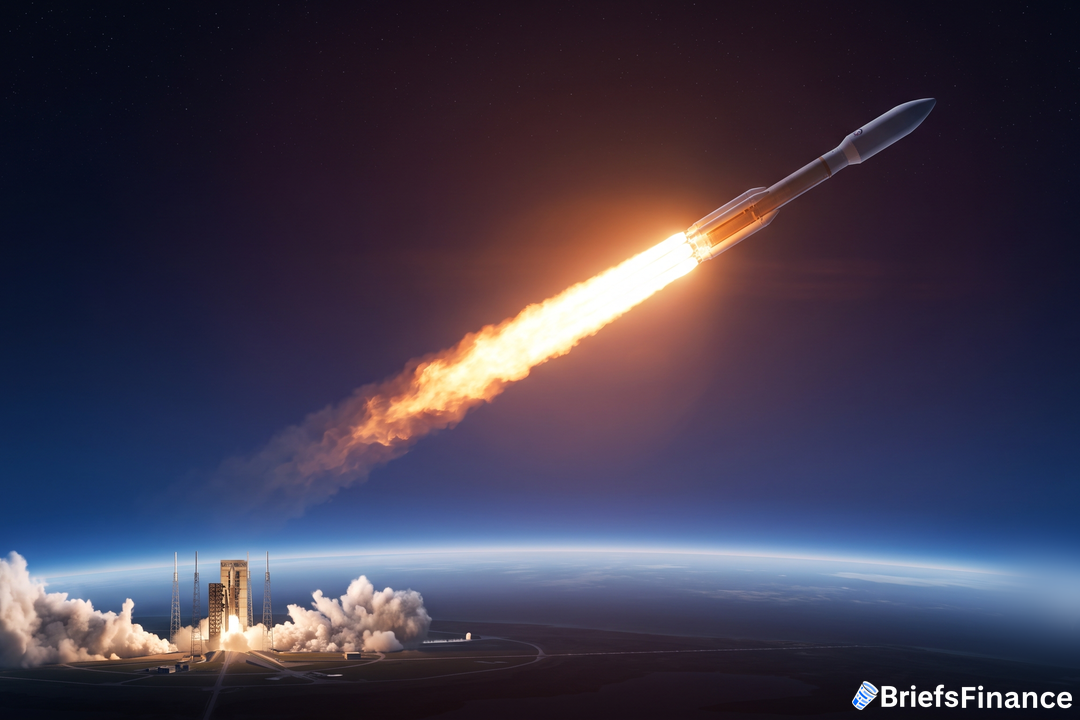
Amazon finally has enough hardware in orbit to start selling its Leo internet service. But the company is coming from behind. SpaceX got a four-year head start, launching Starlink in 2015, and has more than 10,000 satellites and over 10 million subscribers.
Milestone Launch
On July 2, 2026, Amazon used an Atlas V rocket from United Launch Alliance to carry 29 satellites into orbit. That brought the total Leo constellation to more than 390 satellites. Chris Weber, Amazon's VP of business and product for Leo, posted on X that the fleet is "enough to support continuous service across initial latitudes."
The company plans to start offering Leo to consumers and government customers later this year. Initial coverage will be limited to certain geographic areas. Amazon will add more satellites to widen the network.
Get your free investing masterclass bonus when you join Market Briefs, our free daily newsletter
Industry Context
Amazon's LEO project, originally called Kuiper, faces a steep climb against SpaceX's Starlink, which has operated since 2015 and now has around 10,000 satellites serving more than 10 million subscribers. Amazon's plan to deploy 7,700 satellites is ambitious, but the company has only launched over 390 so far, with service starting in limited areas later this year. The gap in satellite count and subscribers highlights the need for rapid deployment using multiple rocket providers.
The Competition Gap
A lack of available rockets has delayed the deployment. In 2022, Amazon struck a historic agreement to secure launch capacity from ULA, Arianespace, and Blue Origin (owned by Jeff Bezos), and later also purchased launches from SpaceX. However, many of these rocket providers experienced delays.
Blue Origin is currently rebuilding the launch pad and probing the cause of the explosion. Both Bezos and Blue Origin's CEO Dave Limp have expressed their goal of launching New Glenn again before the end of the year.
What to Watch
Amazon's next Leo mission will use ULA's Vulcan heavy-lift rocket, which is capable of transporting bigger Leo payloads and accelerating the deployment pace. Melissa Wuerl, who oversees Leo launch systems at Amazon, stated: "With hundreds of flight-ready satellites standing by at the Cape and a new, dedicated vertical integration facility ready to support Leo Vulcan 1 and subsequent missions, we have a clear path to increase launch and deployment cadence, helping us quickly expand network coverage following an initial service rollout later this year."
Blue Origin's New Glenn rocket, when it returns, can carry up to 45 metric tons to low Earth orbit. That could accelerate Amazon's buildout. But for now, service will only reach certain latitudes until more satellites are in place. Amazon still needs many more satellites to offer wide coverage.
Subscribe to Market Briefs, our free daily newsletter, and claim your bonus investing masterclass