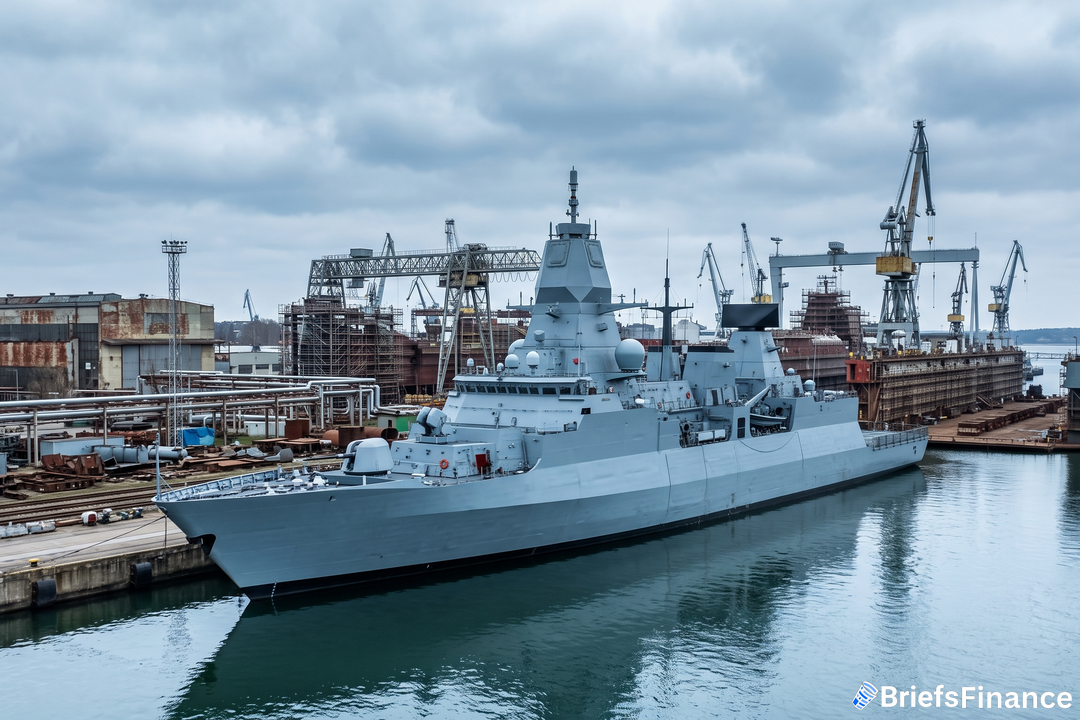
Germany promised NATO it would improve its anti-submarine warfare in northern Europe by 2029. The United States is pulling military assets away from Europe to focus on China in the Indo-Pacific. That leaves a gap. But Germany's first attempt to fill it, the F126 frigate project, ended in failure with costs spiraling to up to €18 billion.
The urgency of the 2029 deadline is underscored by NATO's 2023 defense planning requirements, which highlighted a critical shortfall in anti-submarine warfare capabilities in the North Atlantic and Baltic Sea. With Russia increasing its submarine patrols, Berlin faced intense pressure to field new vessels quickly. The F126 program, originally intended to deliver six ships starting in 2028, could not meet that timeline, leading to its cancellation. This forced Germany to turn to a proven off-the-shelf design like the MEKO A-200, which TKMS has already built for several other navies.
The New Contract
Now Germany is moving ahead with a new plan: a €12 billion contract for up to eight MEKO A-200 frigates from TKMS AG & Co. KGaA. Among the subcontractors are Lockheed Martin, Saab Deutschland, and a variety of other firms including Rolls-Royce Solutions, GE Aerospace, and Kongsberg, plus many more defense and engineering companies.
Why the Switch?
The need to fulfill its NATO obligations arose because the United States intends to redeploy military resources toward the Indo-Pacific, responding to a more confident and expansionist China. With fewer American ships in northern Europe, Germany had to step up its own anti-submarine capabilities by 2029. The old F126 project, led by Damen Shipyards Group NV and Rheinmetall AG's naval unit NVL, could not deliver on time.
Further reading: The German warship contract switch has dealt a blow to Rheinmetall's defense aspirations.
Get your free investing masterclass bonus when you join Market Briefs, our free daily newsletter
Who Benefits, Who Loses?
The new contract spreads work across many companies. The subcontractor network is vast, covering Saab Deutschland GmbH, Lockheed Martin Corp., Rheinmetall Waffe Munition, Rolls-Royce Solutions, GE Aerospace, Kongsberg, Leonardo, RENK, MSI Defence, Eurotorp, Wärtsilä France, SEC Innovation, Northrop Grumman LITEF, KAEFER Schiffsausbau, TKMS ATLAS ELEKTRONIK, Noske-Kaeser Germany, Elbit Systems Deutschland, Stahlbau Nord, Actemium SAM Electronics, and Hagenuk Marinekommunikation. Rheinmetall is still involved through its ammunition unit, but its naval unit NVL lost out when the F126 was canceled.
Some companies that were part of the F126 are not included in the new contract. Hensoldt AG was to supply radar for the F126, with a contract value just over €200 million. More than a third of that had already been booked as revenue.
Hensoldt now faces a loss of that future business. Thales SA, which was to provide the combat management system for the F126, is also excluded.
Related coverage: The German frigate cancellation has stirred up shipyards and subcontractors.
What to Watch
Germany's Bundestag committees for defense and budget are expected to give approval for the warship contract during next week's closed-door sessions.
Subscribe to Market Briefs, our free daily newsletter, and claim your bonus investing masterclass