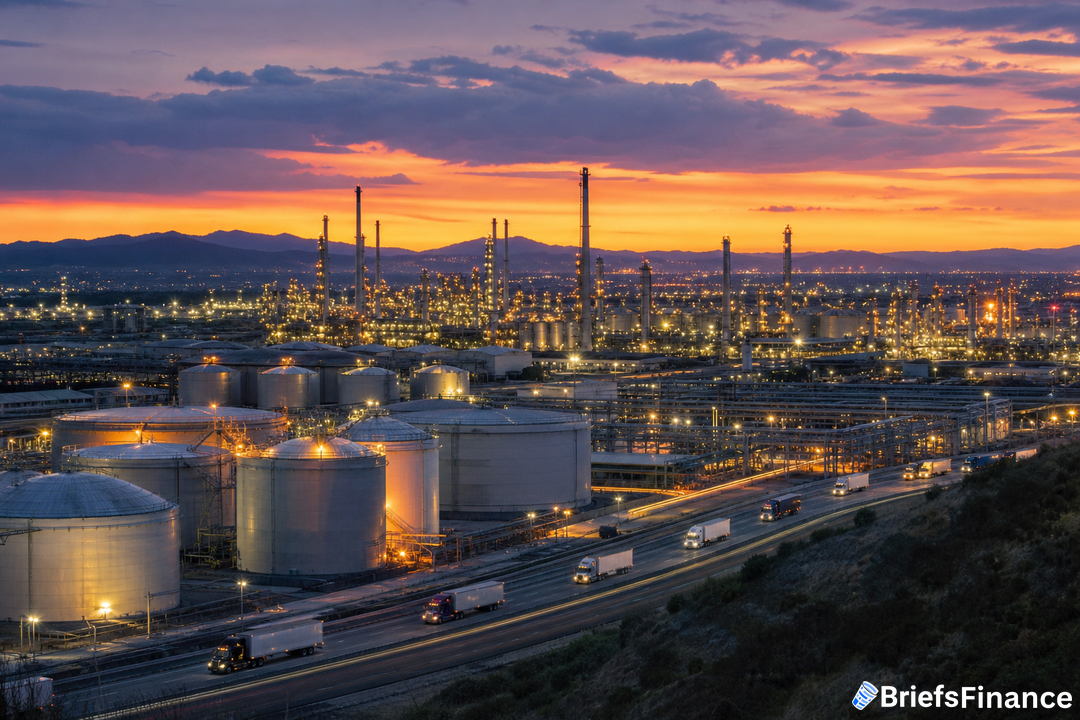
What Trump said and why it matters now
Facing pressure over fuel costs ahead of November's midterm elections, Donald Trump said, "We're thinking about it very seriously," while attending the Presidents Cup in Illinois.
AAA data show the nationwide diesel average was about $6.50 per gallon on Friday. That is up sharply from a year ago and just below the $6.53 peak recorded on Sept. 22. Tensions involving the U.S. and Iran, along with the Russia-Ukraine conflict, have disrupted important oil and fuel routes and helped drive the spike.
What is actually on the table
According to Energy Secretary Chris Wright, the White House is weighing restrictions instead of a complete ban. Last week, Politico said the Trump administration was drafting a 90-day diesel export ban plan. The prospect of the world's largest diesel exporter moving to a full ban has already drawn firm opposition from U.S. energy companies.
The American Petroleum Institute weighed in quickly. API CEO Mike Sommers said that "restricting U.S. energy exports would only compound the problem - exacerbating refining challenges and ultimately hurting consumers." He added, "The answer is more supply and more flexibility - not new restrictions that risk making a difficult situation worse."
How the ripple could hit markets
Morgan Stanley's commodity team noted that the U.S. now serves as a key marginal supplier of diesel as flows from Russia and the Middle East have fallen. They wrote that a U.S. export restriction would likely push down domestic diesel at first, "but with potentially adverse reactions downstream." In their words, "Not only would diesel prices be higher globally, but there could be a feedback loop to US gasoline prices as refinery runs adjust."
Argus Media's head of European product pricing, Benedict George, said any U.S. move to curb diesel exports would probably drive European diesel prices and crude premia "to a new unprecedented level." He pointed out that over the past couple of months, the U.S. provided roughly half of Europe's diesel imports. George emphasized there is no measure yet, that it is unclear whether one will be introduced at all, and that European oil traders mostly doubt Washington will move ahead given how difficult such a step would be for U.S. companies.
When policy winds shift, steady investors revisit how to protect and grow savings. Join Briefs Finance CEO Jaspreet Singh on September 29th for a FREE live investor workshop, How to Profit From A Dollar That's Losing its Value, where he shows how we're spotting investment opportunities as the dollar falls. Save your spot.
The bigger supply squeeze and what to watch
High diesel costs are straining farmers, agricultural workers and households in the U.S. Trump called on Ukrainian President Volodymyr Zelenskyy to stop strikes targeting Russian oil refineries, arguing the attacks are "hurting the world." Ukraine has described Russian refineries as valid military targets. According to Argus' George, the strikes have introduced an additional strain on worldwide supply, making diesel "the biggest problem for the global oil system, whereas before it was one of several very big problems."
George said some traders have stopped trying to forecast the market given the uncertainty. "We don't know if the U.S. will introduce any restrictions, but I think all anybody has talked about is a short-term measure, so two or three months at an absolute most … so there is a kind of time horizon on the U.S. restriction of exports, if it were to happen," he said. Regarding the Russia-Ukraine war and the partial shutdown of the Strait of Hormuz, he added, "who knows?" The duration of those pressures is anyone's guess.
What this means for your money: if export limits happen, U.S. diesel could ease briefly, while higher global prices and refinery shifts could tug gasoline higher at home. Europe would likely pay more for diesel and supply risk would stay high. In other words, choppy and unpredictable.
A calm approach and regular review help money weather whatever lies ahead. Our CEO Jaspreet Singh is hosting a FREE live investor workshop, How to Profit From A Dollar That's Losing its Value, on September 29th. Sign up free to join him live.