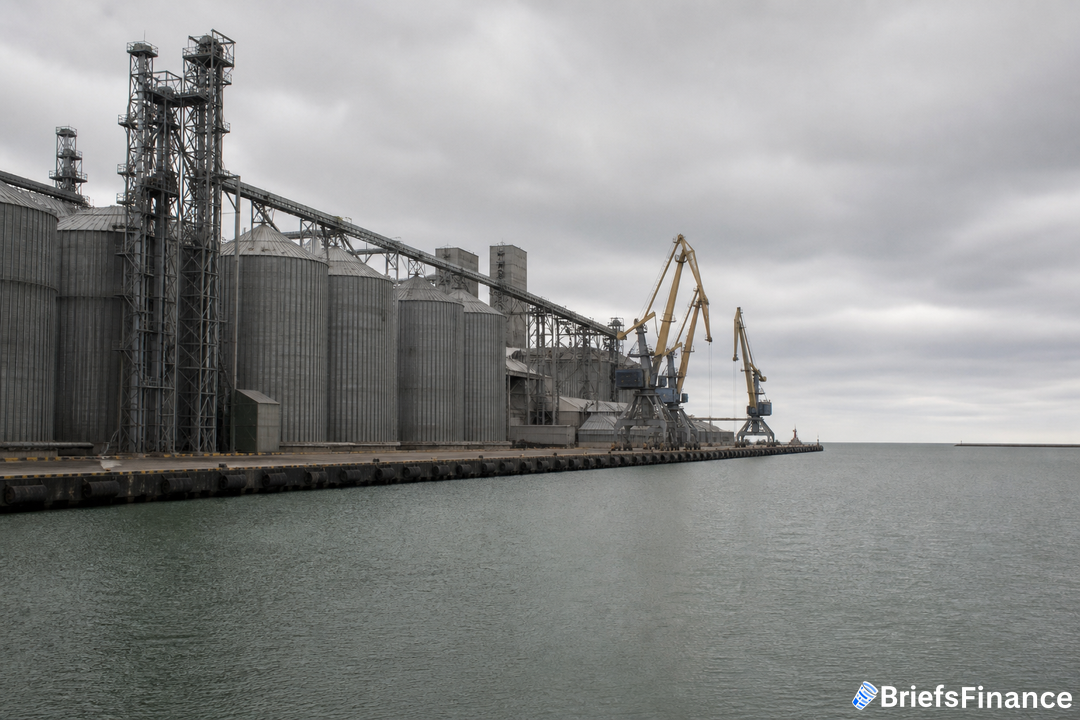
No ceasefire in sight and why it matters
Ukraine's agriculture minister, Taras Vysotskyi, said in Brussels that he cannot see a path in the next few months to a truce specifically covering grain flows through the Black Sea. He was set to brief EU counterparts later on Monday. According to Vysotskyi, countries involved in facilitating talks told Ukraine that Russia has rejected every proposal from Kyiv's partners, saying "all of the possible rounds have been tried, and so far none of the results." His bottom line: "Unfortunately, it's hard to imagine any possible solutions in the nearest months on this issue," and "We have to really prepare that the situation remains as critical as it is now."
Strikes have sharply reduced export capacity, and with Russia and Ukraine together providing more than a quarter of global wheat shipments, grain prices have climbed. Hopes tied to discussions about a narrowly scoped ceasefire or a pause on strikes to allow grain exports did ease prices earlier this month. Turkey was among the countries that said it was working to revive a corridor for those exports.
How Ukraine is moving grain now
Kyiv has leaned harder on alternatives to the Black Sea and is now moving the equivalent of 45% of what it needs to ship through those routes. Even so, Ukraine's assessment is those substitute paths can likely handle at most half of agricultural commodities. On that math, Vysotskyi cautioned that roughly 30 million tons might remain stuck domestically this marketing year.
That export squeeze helps explain why markets are jumpy. When supply from a region that big is uncertain, prices tend to react fast.
In uncertain times a steady investment strategy keeps your long term goals intact. Join Briefs Finance CEO Jaspreet Singh on September 29th for a FREE live investor workshop, How to Profit From A Dollar That's Losing its Value, where he shows how we're spotting investment opportunities as the dollar falls. Save your spot.
Money, aid requests, and what was decided
Ukraine has sought targeted help for its farm sector beyond the EU's broader financial assistance, asking the European Commission for €220 million for farmers plus a mechanism to support liquidity. Vysotskyi said the Commission turned that down. EU Agriculture Commissioner Christophe Hansen, in an interview earlier this month, said the bloc was considering "at all possible lanes" to help move Ukrainian grain.
Vysotskyi said Ukraine expects near term relief through a World Bank loan of $250 million at a low interest rate. "It's going to more or less provide us a possibility to survive until the new year," he said, though planning already needs to account for "what's going to happen from the spring after the new year."
Trade quotas and the next moves
Back in August, Ukraine asked the EU to raise, for 2027, its tariff-free quota levels on bioethanol and sugar to push more of what the bloc needs. If those increases go through without complications, Vysotskyi said Kyiv will pursue higher quotas for other farm goods next.
For regular investors, the takeaway is straightforward: with no quick fix for Black Sea shipments and hard limits on detours, grain supply looks tighter than usual. That tension tends to filter into food prices and inflation, which shows up in your day-to-day budget more than your brokerage account.
Protecting your savings starts with steady habits and a focus on long term growth. Our CEO Jaspreet Singh is hosting a FREE live investor workshop, How to Profit From A Dollar That's Losing its Value, on September 29th. Sign up free to join him live.