Free NewsletterPro Login

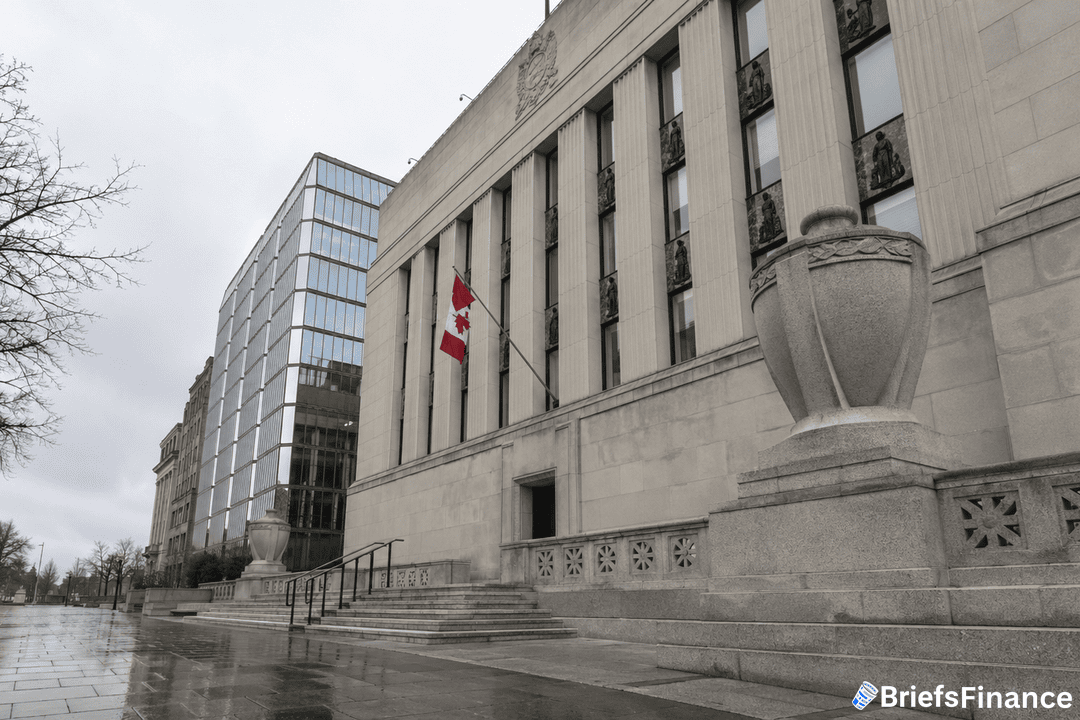
The Bank Of Canada Held Rates At 2.25% For The Third Time This Year

Published Apr 29, 2026
Share:
Summary:
  • The Bank of Canada held its overnight rate at 2.25% on April 29, the third hold this year.
  • April CPI is forecast at about 3%, up from 2.4% in March, on higher gas prices.
  • Governor Tiff Macklem said the current rate "looks appropriate" to support the economy.

The Bank of Canada is doing something rare for a central bank during a global energy crisis. Nothing.

For the fourth meeting in a row, Governor Tiff Macklem held the rate at 2.25%. The bank's outlook leans on a slow drift in oil prices back toward $75 a barrel by mid-2027. That call assumes the Iran war winds down on schedule.

Why Canada Can Sit Still

Most countries would be cutting right now to offset the war's hit to growth. Canada has a problem most countries do not. It is a net oil exporter.

Higher crude prices show up in two places at once. They squeeze drivers at the pump. They also pad the dollars flowing into Canadian producers.

Macklem flagged the trade-off in his statement. He said the war "may alter its composition" but does not really change overall growth.

In plain English, Canada gets paid more for the oil it sells. That helps cover what drivers lose at the pump.

The Inflation Catch

Holding has a cost. CPI prices already jumped to 2.4% in March on the gas pass-through, and Macklem said April will likely come in around 3%.

Core prices strip out things like fuel and food. They are still steady just above 2%. Long-term price hopes are anchored, which gives the bank cover to wait.

The forecast itself is modest. GDP growth is pegged at 1.2% this year. It rises to 1.6% in 2027 and 1.7% in 2028.

Jobless rates sit between 6.5% and 7%. Housing is also soft. The economy is not strong enough to need cooling, and the price pop is not broad enough to need fighting.

What The Loonie Is Doing

The Canadian dollar has been mostly stable against the U.S. dollar since the war started. That is partly because the U.S. dollar itself has been strong against most major currencies.

Bond yields are a touch higher than they were in January. Stock markets sold off when the war broke out in late February. They have already bounced back.

Why? Buyers have decided Canada is well buffered against this specific crisis. Tariffs and trade risk are still weighing on exports and business spending, but oil exports help.

The Q4 2025 numbers were ugly. The economy actually shrank that quarter. Growth then resumed in early 2026, helped by spending from both consumers and the government.

Trade is still the weak spot. Tariffs and trade policy have hit business spending and held back exports.

Housing is also a problem. Activity dropped in the fourth quarter and has stayed soft. Slow population growth, economic doubt, and ongoing affordability issues are all weighing on it.

The labor market has not rebounded either. Hiring has been slow over the past year, with job losses in sectors hit by U.S. tariffs.

What To Watch

The next BoC meeting is June 10. TD Economics and other major forecasters now expect rates to stay at 2.25% for the rest of 2026.

Macklem said the bank stands ready to respond if higher energy prices start spreading into the prices of other goods and services. So far, they have not. The bank's job is to sit and see.

Disclosure

Get Market Briefs delivered to your inbox every morning for free!

No fluff. No noise. No politics. Just finance news you can read in 5 minutes.

Blogs

May 30, 2026
Financial Literacy Books That Actually Build Wealth
  • The best financial literacy books don't just teach budgeting, they shift how you think about money.
  • Two classics stand out: The Intelligent Investor for valuing investments, and Rich Dad Poor Dad for the owner's mindset.
  • Reading is only step one. The real wealth comes from acting on what you learn.
Read More
May 30, 2026
What Is a Roth Conversion? A Simple Guide
  • A Roth conversion moves money from a traditional retirement account into a Roth account.
  • You pay taxes on the money now, in exchange for tax-free growth and withdrawals later.
  • It can pay off if you expect higher taxes or more income in the future, but the timing and tax hit matter a lot.
Read More
May 30, 2026
Trailing Stop Loss: How to Protect Your Gains
  • A trailing stop loss is an order that automatically sells a stock if it falls a set percentage from its recent high.
  • As the stock rises, the sell point rises with it, locking in gains while capping losses.
  • It's most useful for active strategies like momentum investing, not for long-term buy-and-hold.
Read More
May 30, 2026
5 Types of Wealth: Why Money Is Only One of Them
  • Real wealth is more than a bank balance. It spans your finances, health, mind, purpose, and freedom.
  • Money is powerful, but it amplifies the life you already have rather than fixing a broken one.
  • True financial wealth means your cash flow covers your expenses, so your money works while you live.
Read More
May 30, 2026
How to Invest in Private Equity: A Beginner's Guide
  • Private equity means investing in companies that aren't listed on the stock market.
  • Traditional private equity is built for experienced, high-net-worth investors with large amounts to invest.
  • New rules have opened more accessible paths, like startup crowdfunding and real estate deals, often starting around $100.
Read More
May 30, 2026
What Is a Call Option? A Simple Guide With Examples
  • A call option gives you the right to buy a stock at a set price by a set date.
  • Investors buy calls when they expect a stock to rise, using less money than buying the shares outright.
  • The most you can lose buying a call is the premium, but time works against you, so it's an advanced tool.
Read More
May 30, 2026
EBITDA Formula: How to Calculate It Step by Step
  • EBITDA stands for Earnings Before Interest, Taxes, Depreciation, and Amortization, a measure of a company's core profit.
  • The formula adds those four items back to net income to show what the underlying business earns.
  • Investors use EBITDA to compare companies and to judge how many times earnings a stock is selling for.
Read More
May 30, 2026
What Is a Stock Option? A Plain-English Guide
  • A stock option is a contract giving you the right, but not the obligation, to buy or sell a stock at a set price by a set date.
  • There are two types: calls (the right to buy) and puts (the right to sell).
  • Options are powerful but risky, so they suit investors who already have the basics down.
Read More
May 30, 2026
Put Option: What It Is and How It Works
  • A put option gives you the right to sell a stock at a set price by a set date.
  • Investors use puts to bet a stock will fall, or as insurance to protect shares they own.
  • The most you can lose buying a put is the premium you paid, which makes it a defined-risk tool.
Read More
May 30, 2026
Operating Margin: What It Is and How to Calculate It
  • Operating margin shows how much profit a company keeps from its core business after paying its running costs.
  • The formula is operating income divided by revenue, shown as a percent.
  • A strong, steady operating margin signals a well-run business that controls its costs.
Read More
1 2 3 22
Share via
Copy link










