Free NewsletterPro Login
S&P 500 6,287 +0.42%
DOW 44,521 -0.18%
NASDAQ 21,103 +0.71%
S&P 500 +12.4%
Briefs Finance Fund +24.8%
JOIN THE FUND →

QatarEnergy Extends Gas Shipment Suspension to October

Published Jul 22, 2026
[tts_player]
Share:
Summary:
  • QatarEnergy intends to extend its force majeure on LNG deliveries until roughly mid-October.
  • The extension follows intensified Middle East tensions and fading prospects for US-Iran peace talks.
  • European and Asian buyers expect a formal notification soon, which could further tighten global gas supply.

A Longer Pause on Gas Deliveries

Sources familiar with the matter stated, "QatarEnergy intends to keep its force majeure declaration on LNG deliveries in place until around mid-October." This legal provision is used when unforeseen events stop a business from honoring its contract terms.

In June, QatarEnergy notified various purchasers in Asia and Europe that shipments would be paused during August and September. If the suspension is prolonged further, it would place additional strain on global supply at a time when both European and Asian buyers are vying for scarce cargoes, spurred by hot weather driving up demand in some nations and the need to refill storage before winter.

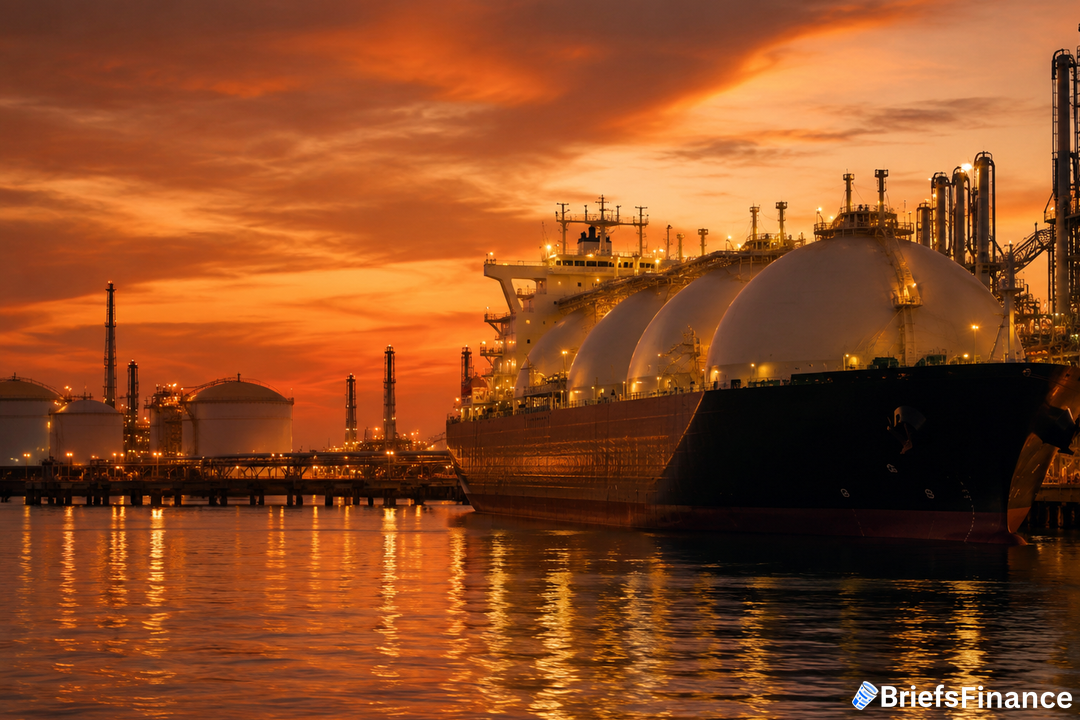
Before the recent Middle East crisis, roughly 20% of worldwide LNG shipments passed through the Strait of Hormuz.

Why the Delay Is Growing

The expected longer pause comes as Middle East hostilities escalate, reducing hopes for a quick recovery in regional gas flows. This week, both Washington and Tehran dismissed the possibility of swift negotiations, causing a sharp rise in gas prices across Europe and Asia.

Get the market news that matters in a five-minute read with Market Briefs, our free daily newsletter

Multiple purchasers in Europe and Asia have indicated that they anticipate an official notice within the next few weeks. QatarEnergy did not reply to a request for comment sent by email.

Geopolitical and Market Context

Qatar's role as a top LNG exporter makes the prolonged halt especially consequential. For European nations weaning themselves off Russian pipeline gas, Qatari cargoes have become a critical alternative. Asian economies, meanwhile, rely on steady LNG flows to power industry and air conditioning during summer heatwaves.

The Strait of Hormuz remains a volatile chokepoint: any escalation in hostilities could disrupt shipping lanes further, compounding supply anxiety. With storage inventories still recovering from last winter's drawdown and peak demand months ahead, the continuation of force majeure threatens to keep prices elevated and intensify competition among buyers for the limited volumes available.

Broader Energy Security Concerns

QatarEnergy's force majeure declaration occurs against a backdrop where energy security has become a top priority for many governments. The company, which operates the world's largest LNG export capacity, originally halted August and September deliveries after a sharp spike in Middle East tensions. This extended suspension not only disrupts immediate cargo schedules but also raises doubts about long-term contractual reliability, especially for European and Asian buyers that have come to depend on Qatari gas to replace Russian pipeline volumes and to meet soaring summer cooling demand.

European nations, already grappling with higher energy costs, have been accelerating storage fill rates, but the prolonged force majeure threatens to slow that progress. Asian buyers, facing record heat in some areas, are competing fiercely for alternative cargoes from the United States and Australia, though those supplies are also limited.

Join Market Briefs, our free daily newsletter, for a quick daily rundown of the markets
Disclosure

Recent News

1 2 3 41

Get Market Briefs delivered to your inbox every morning for free!

No fluff. No noise. No politics. Just finance news you can read in 5 minutes.

Blogs

June 29, 2026
Portfolio Diversification: Why Putting All Your Eggs in One Basket Destroys Wealth
  • Real diversification means spreading investments across all 11 economic sectors plus bonds, alternatives, and cash so no single bet can sink the portfolio.
  • Different sectors perform at different times, so a diversified portfolio captures upswings while smoothing the brutal drawdowns that wipe out concentrated bets.
  • Total market index funds offer the simplest path to diversification, and annual rebalancing is what keeps the structure working over time.
Read More
June 29, 2026
Non Taxable Income: What It Is and Why It Matters
  • Non taxable income is money you receive that you don't owe income tax on.
  • The tax code treats workers, investors, and business owners very differently, and investors often come out ahead.
  • Learning how income is taxed is a quiet superpower for keeping more of what you earn.
Read More
June 29, 2026
Semiconductor Stocks: A Simple Guide for Investors
  • Semiconductor stocks are companies that design and make computer chips, the brains inside nearly every modern device.
  • The AI boom has turned chips into one of the market's most important and most watched groups.
  • They offer big growth potential, but come with high valuations and a notoriously cyclical history.
Read More
June 25, 2026
How Stocks Work: A Simple Guide for Beginners
  • A stock is a slice of ownership in a company - buy one, and you own a piece of the business.
  • You make money two ways: the share price rising over time, and dividends paid to shareholders.
  • The simplest path for most beginners is buying into the whole market through a low-cost index fund.
Read More
June 25, 2026
Stop Loss vs Stop Limit: What's the Difference?
  • A stop loss order sells your stock once it hits a trigger price, prioritizing getting you out.
  • A stop limit order only sells within a price range you set, prioritizing price over a guaranteed exit.
  • The trade-off: a stop loss almost always executes; a stop limit might not if the price moves too fast.
Read More
June 25, 2026
Energy Stocks: A Simple Guide for Investors
  • Energy stocks are companies that produce and supply the power the world runs on, from oil and gas to newer sources.
  • They make up one of the 11 sectors of the market and tend to move with energy prices and big-picture shifts.
  • Like any sector, the key is diversification and understanding the forces driving demand.
Read More
June 18, 2026
What Is a Stop Loss Order? A Simple Guide
  • A stop loss order automatically sells a stock once it falls to a price you set.
  • It's a tool to cap losses or lock in gains without watching the market all day.
  • It works best for active strategies, and can backfire if used carelessly on long-term holdings.
Read More
June 18, 2026
Best S&P 500 Index Fund: How to Choose One
  • The best S&P 500 index fund for most investors is simply the cheapest, most established one that tracks the index well.
  • Funds like VOO, IVV, and SPY all hold the same 500 companies, so the biggest difference is the fee.
  • Pick one, automate your buys, and let time do the heavy lifting.
Read More
June 17, 2026
What Are Penny Stocks? Risks and Rewards Explained
  • Penny stocks are very low-priced shares of very small companies, often trading for just a few dollars or less.
  • They promise huge gains but carry huge risks: low liquidity, high failure rates, and wild price swings.
  • Most investors are better served by quality companies and funds than by chasing cheap shares.
Read More
June 17, 2026
Best Stocks for Beginners With Little Money
  • The best stocks for beginners with little money usually aren't individual stocks at all - they're low-cost index funds.
  • You can start with $100 or less and use small, regular investments to build wealth over time.
  • Focus on diversification and consistency, not on picking the next big winner.
Read More
1 2 3 24
Share via
Copy link











