Oracle beat Wall Street last quarter. The stock fell 11% anyway.
That was its worst day since January 2025. So what went wrong?
The good news was easy to see, and the bad news was not. It was hiding in the cash.
A Strong Quarter The Market Still Sold Off
Sales hit $19.18 billion, which topped what analysts wanted. Adjusted profit beat too, at $2.03 per share.
There was even a bright spot in the cloud. Cloud infrastructure sales jumped 93% to $5.8 billion.
So why did the stock drop? Look at the cash flow.
Free cash flow is the money left after a firm pays its bills. For Oracle, that number was negative $23.7 billion.
In plain terms, it spent way more than it took in. A firm can grow fast and still drain its bank account.
That gap is what scared buyers off. The drop also pushed Oracle into the red for the year, while the Nasdaq sits up about 9%.
We break down what moves like this mean for your money in Market Briefs - five minutes each morning, and you get a free investing masterclass when you join.
Why Oracle Needs $40 Billion More
Oracle now wants to raise about $40 billion in new debt and stock. Part of that is a $20 billion share sale it had already flagged.
And this ask is not the first. Last year it raised $43 billion in debt and $5 billion in stock.
Think of a homeowner who guts the kitchen on a credit card. The house may be worth more later, but the bills still show up now.
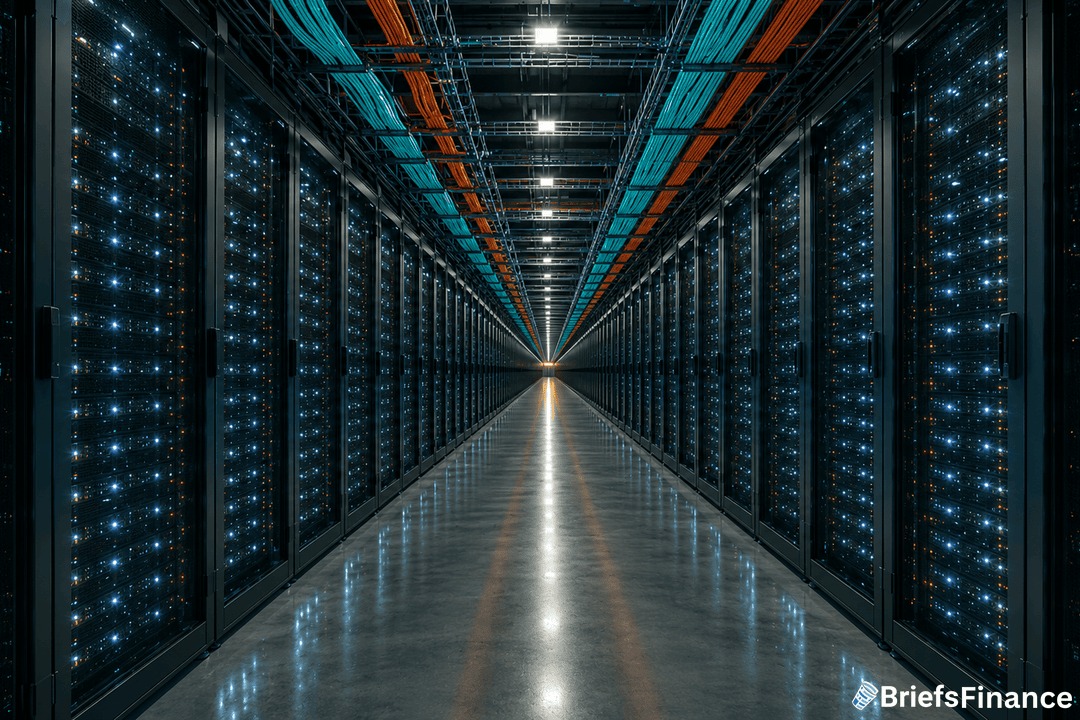
The cash is going into AI data centers, and the price is steep. Building costs jumped 162% to $55.7 billion last year, and could hit about $70 billion next year.
The CEO, Clay Magouyrk, says huge new computing power is on the way. He plans to switch on nearly a full gigawatt this quarter alone.
Why Some Analysts Still Like The Stock
There is a bull case here, and it rests on demand. Oracle's backlog of signed work hit $638 billion, more than triple a year ago.
More than half of it ties back to one customer: OpenAI. The two share a giant data center plan called Stargate.
That single deal is now Oracle's biggest growth engine. It is also its biggest risk if OpenAI ever pulls back.
That much in one place is risky. Even so, the team at Piper Sandler still tells clients to buy.
Oracle also raised its profit outlook. It now sees adjusted earnings of about $8.05 per share next year.
What To Watch
The question is simple, even if the answer is not. Will all this AI spending turn into real profit before the cash burn scares buyers first?
Oracle is betting tens of billions that it will. The next few quarters will tell.
Want this kind of read before the market opens? Join 350,000+ investors reading Market Briefs - it also comes with a 45-minute investing course as a bonus.