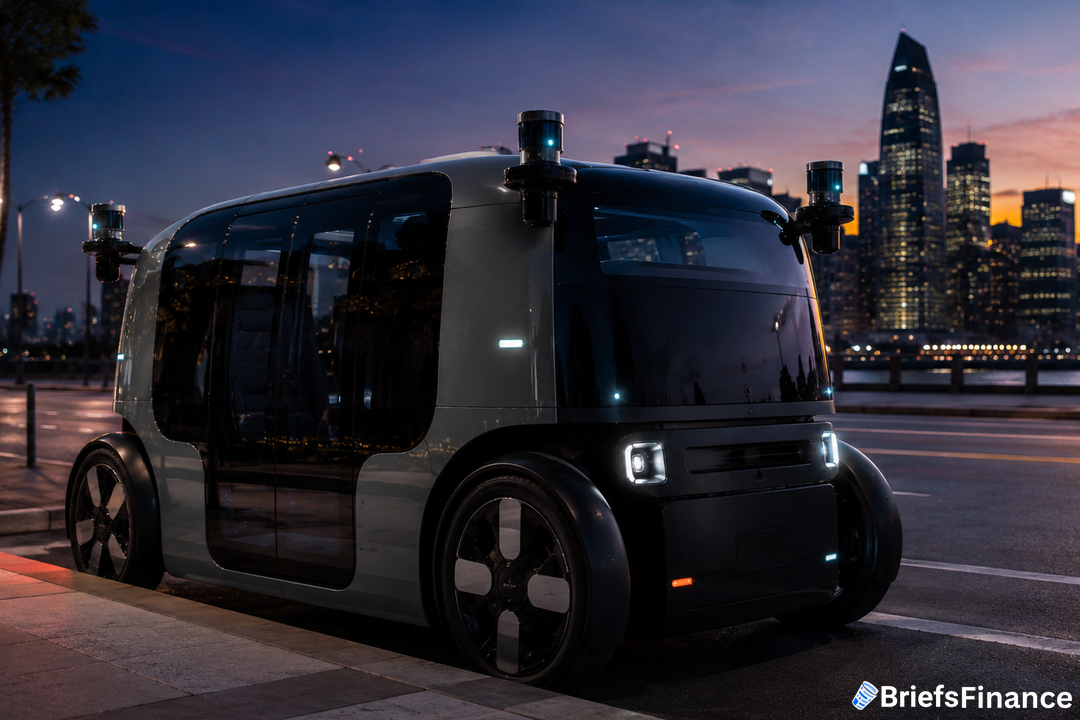
The Safety Exemption That Unlocks Paid Rides
Zoox's purpose-built autonomous vehicles are designed without steering wheels or pedals, and the company has been providing free rides. Federal law requires traditional controls, so the company needed a special exemption from the National Highway Traffic Safety Administration (NHTSA) before it could charge customers. Approximately twelve months back, while NHTSA had previously allowed Zoox to demonstrate its self-driving cars and provide complimentary rides, the company was not permitted to charge passengers.
Zoox CEO Aicha Evans said in a statement: "We are honored to receive the first-ever commercial exemption for a purpose-built robotaxi from NHTSA, enabling us to begin charging for our service and take another step toward bringing autonomous ride-hailing to more communities."
Get the market news that matters in a five-minute read with Market Briefs, our free daily newsletter
The exemption granted to Zoox marks an important milestone both for the firm and for the wider self-driving car industry, which has encountered regulatory obstacles. The company's unique vehicle design - a bidirectional, four-passenger pod without traditional controls - represents a departure from retrofitting existing cars. With Amazon's backing, Zoox has been testing in multiple cities, and this commercial approval could accelerate deployment of purpose-built robotaxis.
Acquired by Amazon in 2020 for more than $1 billion, Zoox has dedicated years to creating its distinctive bidirectional car, which accommodates four passengers seated opposite each other. This exemption marks a major milestone for the autonomous vehicle industry as it moves from testing toward commercial deployment and revenue generation. Zoox has been conducting tests in several urban areas, including San Francisco and Las Vegas, with plans to expand as it secures state-level permits. As state-level requirements for commercialization are met, additional cities will be added.
Supported by Amazon's resources, Zoox has dedicated years to honing its bidirectional pod and autonomous software, testing extensively in locations such as San Francisco and Las Vegas. This exemption allows the company to transition from free demonstrations to a paid service, a critical step toward commercial viability. The approval also signals NHTSA's willingness to accommodate innovative vehicle designs that deviate from traditional safety standards.
A Balanced Approach from Regulators
In conjunction with Zoox's approval, NHTSA revised its exemption procedure, permitting carmakers to market a small number of non-conforming vehicles on a temporary basis, chiefly for evaluating new innovations. Additionally, NHTSA announced a collaboration with SAE Industry Technologies Consortia; this group will finance a $5 million, three-year consortium aimed at collecting information and speeding up the development of AV performance benchmarks. The initiative's goal is to establish a unified national safety standard for autonomous vehicles.
Jonathan Morrison, who leads NHTSA, said in a statement: "These advancements will ensure that the United States continues to lead the world in AV technology in a safe and responsible manner."
NHTSA also said Thursday it is examining an exemption request from Robomart, a Los Angeles startup, for its slow-moving autonomous vehicle. The company has built a self-driving delivery van capable of transporting up to 500 pounds of cargo. NHTSA indicated that it will release a separate notice inviting public feedback on the application after completing its initial review.
Join Market Briefs, our free daily newsletter, for a quick daily rundown of the markets