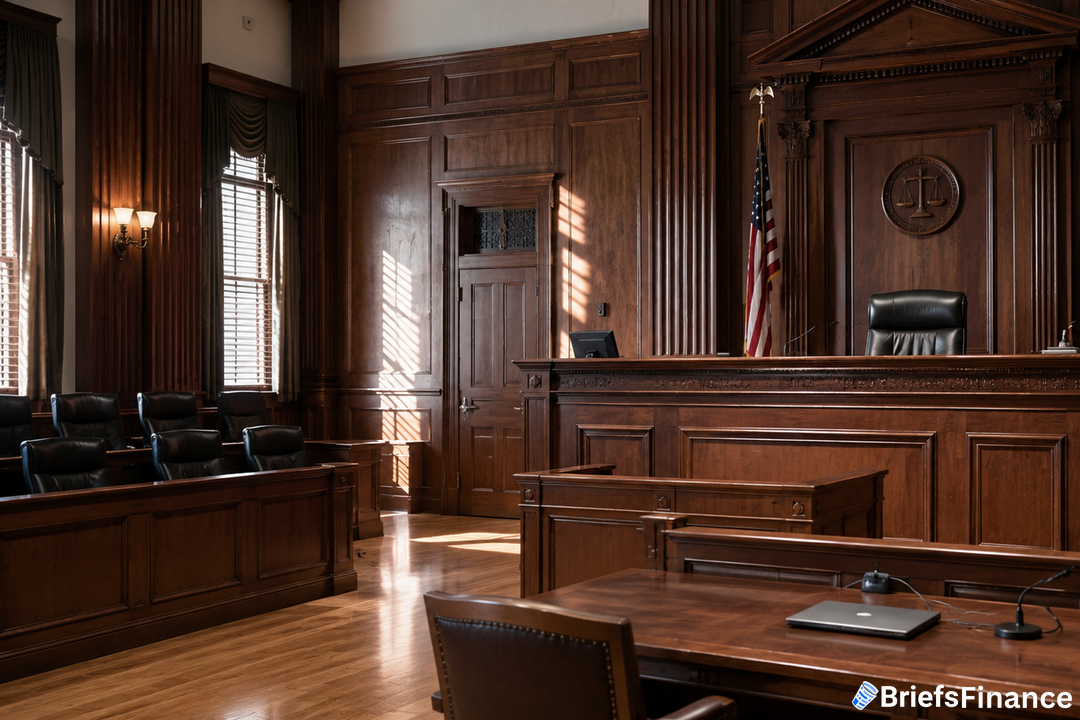
On Thursday, Judge Lin remarked that the government's reasoning - that Anthropic's public criticism of the Pentagon warranted the ban - is "really troubling" "and risks setting a precedent for other federal contractors who might disagree with the government".
"Then the government can go ahead and retaliate against the contractor by labeling them as a subversive, by saying they're an enemy of the state, taking away their contracts, threatening to take away contracts from anyone who might do business with them," said Judge Lin, who was named to the San Francisco bench by former President Joe Biden.
On Thursday, Judge Lin stated that the evidence before her had not changed much since March.
"If anything, it seems like the record, in some ways, has gotten worse for the government," she said.
Anthropic, the company behind Claude, filed a lawsuit earlier this year, alleging that the government unlawfully retaliated against the firm because of a dispute over proper safeguards for AI technology employed by the military. Anthropic's legal team has stated that the prohibition could lead to billions of dollars in missed earnings.
Get the market news that matters in a five-minute read with Market Briefs, our free daily newsletter
At the court session, a government attorney emphasized that trust is a vital element of the relationship between the U.S. Department of Defense and its vendors, and that Anthropic damaged that trust by trying to dictate how the Pentagon could use its tools.
Consequently, the attorney stated, the administration worries that Anthropic might engage in what he called "AI model poisoning" - altering its technology in subsequent software updates to secretly impose restrictions on government usage.
"If the company were to feel that its technology shouldn't be used for these kinds of things, then it would slip that into the model, and [the Department of War] might not know about that," said the lawyer, who asked not to be identified in court.
He noted that the department has been progressively phasing out its utilization of Anthropic's offerings and aims to finish that phase-out by September 30.
Anthropic's attorney asserted that the firm cannot influence how the Pentagon utilizes its products after they are deployed.
Anthropic's lawsuit in California represents one of two court battles it initiated after being designated a supply chain threat. Separately, Anthropic filed a lawsuit in Washington, DC, employing a distinct legal theory.
A three-judge panel at the D.C. Circuit Court of Appeals still hasn't delivered a decision, but showed doubt during a May hearing about Anthropic's ability to legally challenge the government's determination that it represented a supply chain risk.
The court proceedings are docketed as Anthropic v. US Department of War, case number 26-cv-01996, in the US District Court for the Northern District of California.
Join Market Briefs, our free daily newsletter, for a quick daily rundown of the markets