Why the surplus moved out
Bain's new report, coauthored by Chung-Yen Wong and released Thursday, pins the timing change on the Middle East conflict. The consultancy had penciled in a surplus for late 2028 or early 2029, but after US and Israeli strikes against Iran in late February, it moved the forecast to around 2030, with the excess persisting through 2034. Disrupted flows and delayed projects have lengthened the current tight patch.
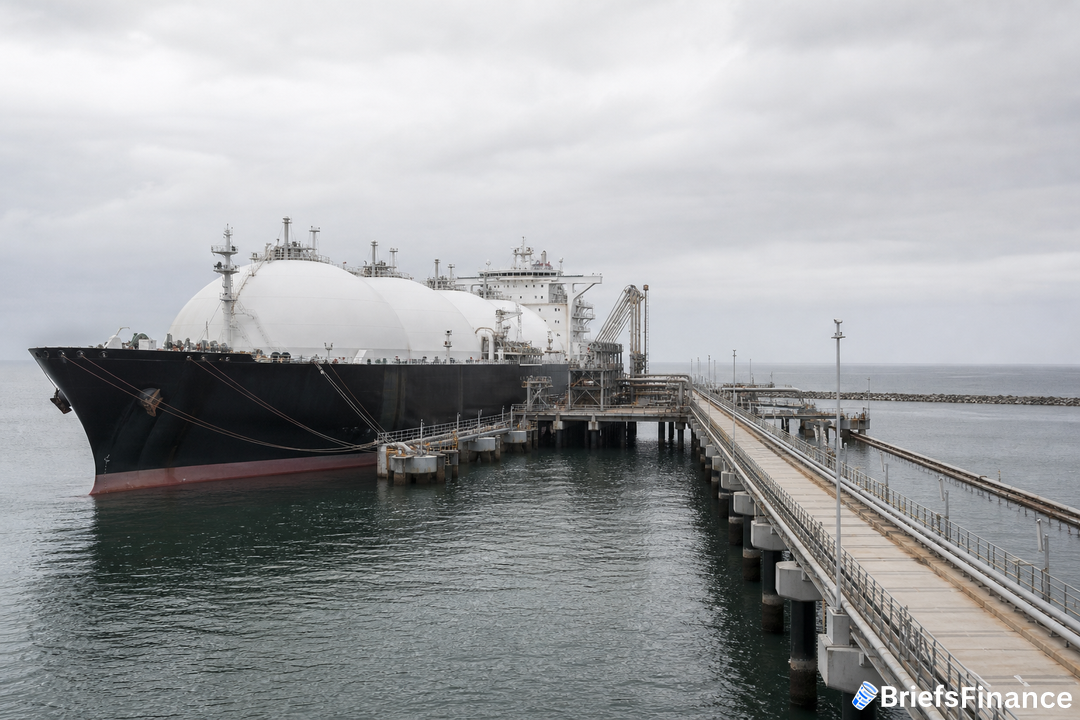
That fighting has checked exports from the Persian Gulf, which supplied about one fifth of global LNG last year, and pushed back the start of Qatar's large-scale expansion at Ras Laffan. It also upended the earlier assumption that big new capacity in the US and Qatar would swiftly tip the market into excess. As Wong put it, the glut is not gone, "it's just pushed to the start of the next decade."
Utilization and profits: tight now, looser later
Plants are running hot, with global LNG utilization averaging about 90%. Bain expects that to ease to roughly 85% next year and sink below 75% from 2030 as new plants outpace demand growth. The firm views sub 75% as a clear marker of oversupply.
That squeeze is showing up in trading income. Bain puts global gross trading profits at about $20 billion this year, marking the highest level since the 2022-2023 energy crunch that followed Russia's invasion of Ukraine. Once the surplus hits, profits are forecast to settle near $5.5 billion a year from 2030 through 2034, and losses from canceled US cargoes could total $5.8 billion, pulling the sector below break-even. "It is probably the last windfall," Wong said.
Energy and geopolitical news can be hard to follow, so sign up for the free Market Briefs newsletter today.
Contracts born from the last crisis
From 2022 through 2025, buyers entered a surge of long-term purchase agreements to broaden their sourcing after the Russia-Ukraine war, with more than half linked to US projects.
The bottom line for investors
A tighter market into the decade's end means richer trading margins now, but Bain's outlook points to slimmer profits and possible cancellation losses once new capacity arrives. Utilization is your early read: a steady slide is the on-ramp to the surplus phase.
When supply and demand stories shift quickly, get clear context in five minutes with our free Market Briefs.