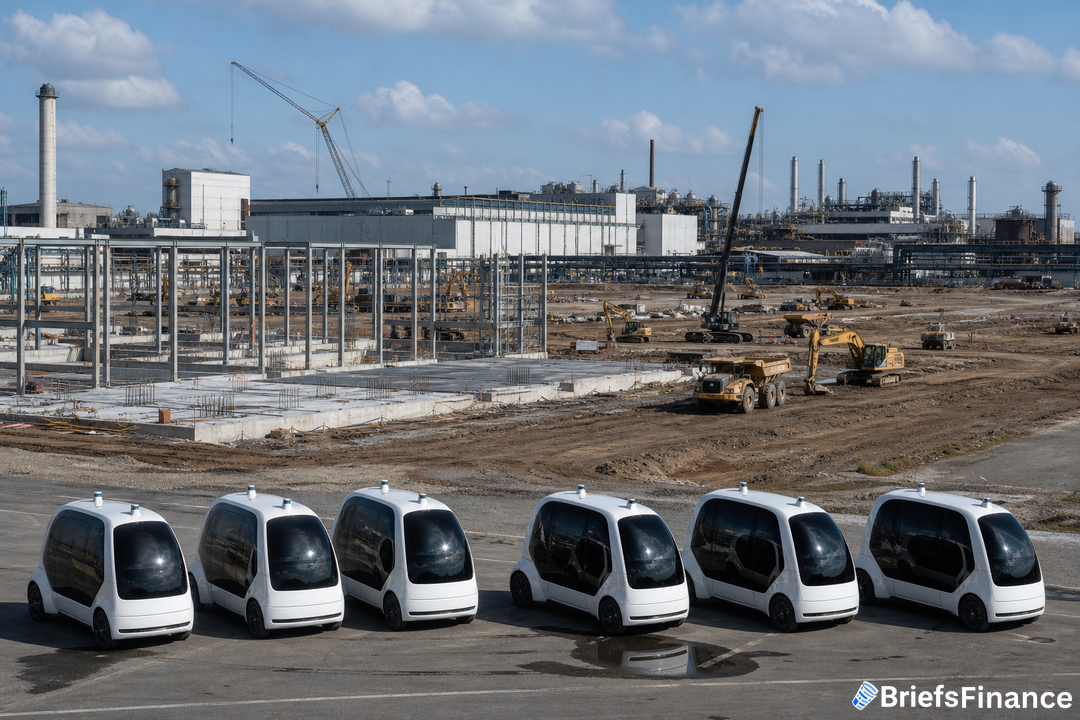
What Tesla is building and why it matters
Tesla is earmarking around 3 billion euros to expand its Berlin-Brandenburg footprint with a facility dedicated to the Cybercab, shortly after opening sales to a limited group of customers. This site is listed as Tesla's first manufacturing base in Europe and has been running since March 2022.
Cybercab production is slated for 2029, with capacity targeted to climb to 1 million vehicles a year over time. He added that building the facility will create jobs.
Product, pricing, and regulatory notes
The Cybercab is a two-door vehicle without a steering wheel or pedals that had previously been used only in Tesla's taxi fleet. On Friday, the company posted on X that "select customers are now being invited to purchase Cybercab for personal use," at an estimated $29,990 and a $299-per-month autonomy software subscription.
Tesla began adding Cybercabs to its Austin robotaxi fleet in September. Afterward, the National Highway Traffic Safety Administration opened a probe to assess whether these steering-wheel-free vehicles comply with safety standards. In a filing, the agency said Tesla told it the Cybercab meets all applicable standards.
When major projects reshape industry landscapes, stay informed with our free Market Briefs newsletter for clear updates in five minutes or less
Context in Germany and Europe
The Berlin-Brandenburg plant already turns out hundreds of thousands of Model Y units and produces millions of battery cells that power EVs. In May, Thierig said the company would invest $250 million to raise EV battery cell output at the site.
Musk recently said Tesla would wind down Cybertruck production at its Texas gigafactory next year to free up capacity for more self-driving Cybercabs. A new facility in Germany would put Cybercab manufacturing on both sides of the Atlantic.
The expansion arrives as Germany's auto sector struggles. Domestic automakers are recording large write-downs and trimming tens of thousands of positions to remain competitive with Chinese brands. Separately, ACEA data indicated that Volkswagen and Renault saw their European sales fall on a monthly basis in September, whereas Tesla models registered a surge, continuing a streak of positive monthly results this year. After declining in 2025, Tesla's European sales began to pick up earlier this year, and the company has been pushing to increase production in Germany.
How this could affect your portfolio
In plain English: Tesla is lining up European production for a vehicle it has just opened to select U.S. buyers, while shifting Texas capacity toward the same model. If Cybercab demand builds, plants in Germany and the U.S. could shorten delivery lines and stabilize volume. The bottom line: Berlin-Brandenburg's growing role feeds into Tesla's mix, margin potential, and Europe-side sales trajectory.
Big developments can change the outlook you follow, so sign up for the free Market Briefs to get concise daily context