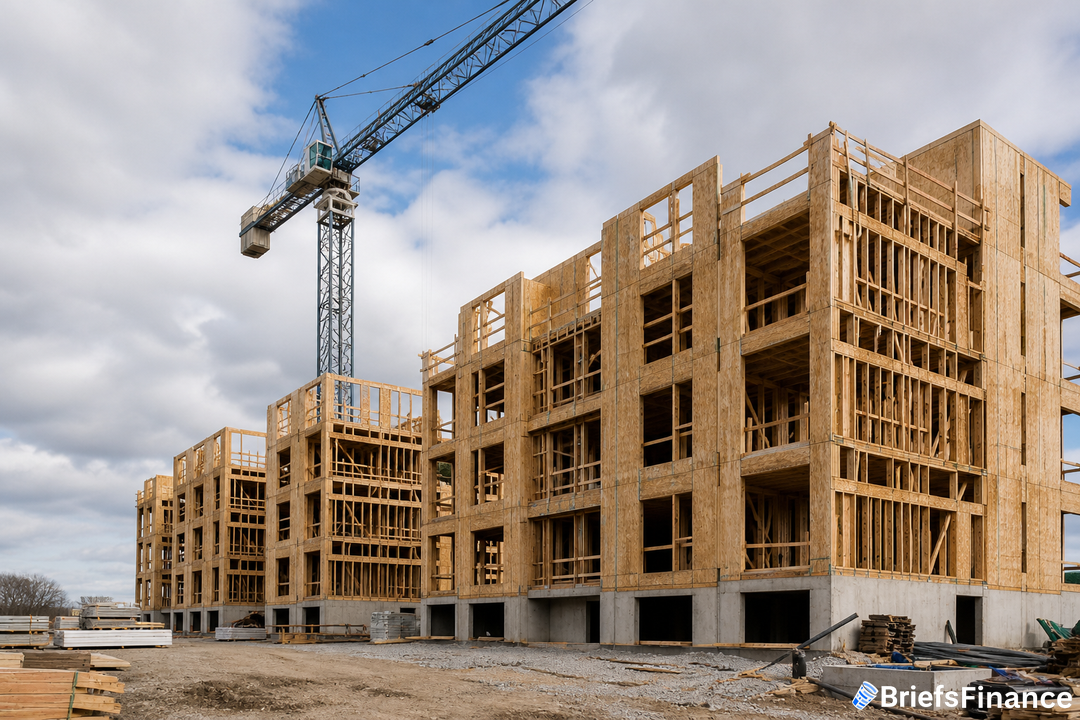
October's rebound and what moved the numbers
Builders broke ground on more homes in October, lifting overall starts to a 1.31 million annualized clip that topped economists' 1.25 million median call. The US Census Bureau and HUD released the figures Wednesday.
Apartments and other multifamily projects did most of the lifting, up almost 24% from September. Single family starts also firmed, up 4% to an 864,000 annual rate, but that corner of the market remains close to its slowest run of the year. The report also flagged how choppy this series can be, with a 90% confidence range for the monthly change that runs from a 6.9% drop to a 26.7% gain.
Permits, rates, and how builders are adapting
Permits, a forward read on future building, moved the other way. Overall authorizations declined 7.4% to a 1.3 million annual rate, the softest since May 2020. Approvals for single family houses slid to their lowest level since 2023, pointing to builders pausing amid mortgage rates north of 7% and affordability worries.
Pantheon Macroeconomics' senior US economist, Olivia Cross, wrote, "Homebuilders are likely to continue cutting back on new projects over the next six months." Elevated mortgage rates are already sapping buyer interest, and she added that "higher corporate bond yields and bank loan interest rates are raising borrowing costs for large and small developers alike."
When housing trends can shift quickly, stay informed with our free Market Briefs newsletter that explains it simply.
D.R. Horton, which serves many first time buyers, is leaning into smaller formats, including duplexes and townhomes.
Regions and the macro backdrop
Starts climbed in the Midwest and the South, with the South - the country's largest homebuilding region - hitting its strongest level since April. The West fell to its weakest in more than six years.
Housing has been a drag on growth lately. Residential construction weighed on GDP in six of the past seven quarters, and before the latest report the Atlanta Fed's GDPNow indicated residential investment may again subtract from fourth quarter growth.
What this means for your portfolio
In plain English: developers are leaning into apartments while tapping the brakes on single family plans, and the permit slump says that caution could stick around. Economists see little momentum until borrowing costs ease, and Fannie Mae projects that housing starts will see only scant improvement, with that tepid trend lasting at least until the end of 2028. The bottom line: track the mix shift toward multifamily, the downtrend in permits, and still high financing costs when sizing up homebuilder stocks, building materials names, and other rate sensitive housing plays.
Because small shifts matter to everyday decisions, sign up for the free Market Briefs newsletter and get concise daily context.