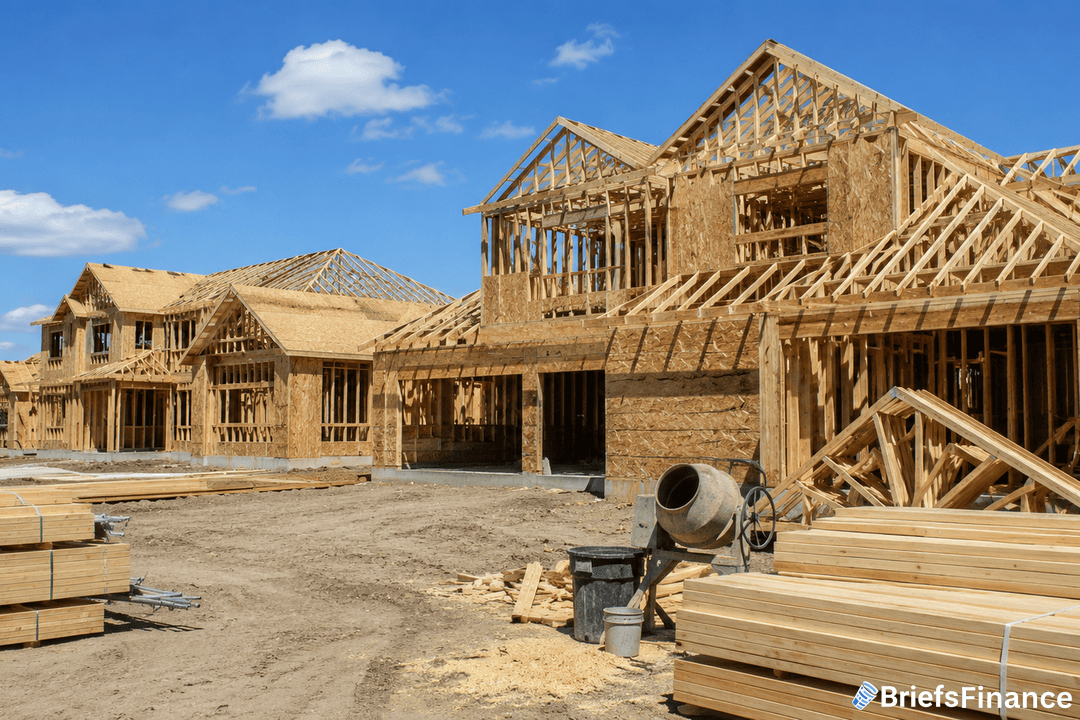
The easy fix for high prices sounds simple. Build more homes.
So why don't builders just flood the market with cheap ones? Because the math does not work.
Building a starter home barely pays off. And the numbers show how tight the squeeze has gotten.
The Affordability Math Is Brutal
Start with a family earning the median income of $104,200. Late last year, that family needed 34% of its pay to cover a new home.
The old rule of thumb says housing should take no more than 30% of income. So even the typical family is over the line.
Now look lower down the ladder. A family earning half the median would owe 67% of its pay for the same home.
Existing homes are barely better. A low-income family would need about 69% of its pay for a typical existing home.
That is not a budget. That is a wall.
There was a small bit of progress, though. The share of income needed slipped from 36% earlier in 2025 to 34% by year-end.
Market Briefs makes numbers like these click in five minutes a day, plus a free investing masterclass when you sign up.
Why Cheap Homes Don't Get Built
Land, labor, and materials all cost more than they used to. Red tape adds even more on top.
A builder can earn far more on one big home with nice finishes. The other option is a handful of small starter homes that earn less.
So guess what gets built. The starter home is the least money-making house on the lot, even though first-time buyers need it most.
The price of a new home has actually come down a bit. The typical new home ran about $405,300 late last year, down from earlier in 2025.
That flips the usual order. A typical existing home sold for only about 1% more than a new one last year.
How Builders Are Coping
Builders are not slashing list prices across the board. Instead, they work the edges.
In a recent survey, 64% offered sales incentives. Many of those help cover part of the buyer's mortgage rate.
About 37% trimmed prices. Builders are also going a bit smaller and moving to cheaper parts of the country.
The typical new home now runs about 2,155 square feet. That is roughly flat from the year before.
New homes are also piling up a little. At the current pace, there is close to a 9.7-month supply of them.
Smaller homes cost less to build. That is part of why they help buyers at all.
It helps at the margins. It does not solve the core cost problem.
What To Watch
Watch whether builders keep buying down rates to make sales. As long as base prices hold, that is the lever doing the heavy lifting.
Also watch new-home supply. If it keeps building, builders may have to cut base prices for real.
For more like this, sign up for Market Briefs and get a free 45-minute investing course as a bonus.