Free NewsletterPro Login

McDonald's Shares Rise On Earnings Beat

A stylized illustration of a cylindrical cup with blue arrows and lines indicating a swirling or rotational motion inside the cup.
Published Feb 12, 2026
Share:
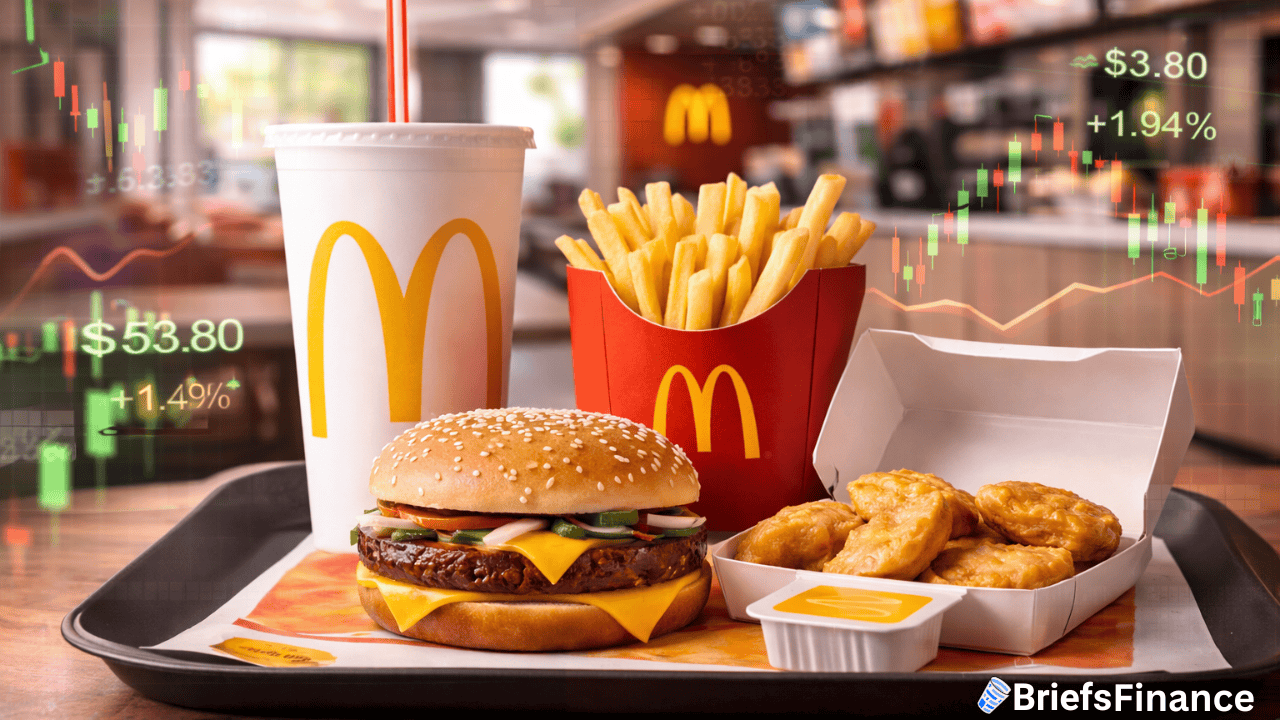
A McDonald’s meal with a burger, fries, nuggets, and a drink on a tray is overlaid with financial stock charts and price data, reflecting the recent movement in McDonald's shares after the company’s earnings report.
Summary:
  • Comeback complete. McDonald's saw sales jump nearly 7% year-over-year after recovering from last year's E. coli crisis.
  • Value menu works. The company's $5 Meal Deal strategy helped drive traffic back through the door.
  • Quarter Pounder bounce. U.S. same-store sales surged 6.8% in Q4, lapping a brutal period when the outbreak tanked sales.

The fast food giant just posted Q4 numbers that crushed expectations.

Global systemwide sales jumped 7% for the full year to over $139 billion.

But here's the real story.

Bouncing Back From E. Coli

This time last year? McDonald's was in crisis mode.

An E. coli outbreak linked to slivered onions on Quarter Pounders sickened over 100 people across 14 states and killed one person.

The damage was immediate. U.S. same-store sales dropped 1.4% in Q4 2024.

Traffic plunged 10% nationwide right after the outbreak hit the news.

Fast forward to Q4 2025 and U.S. sales surged 6.8%.

The $5 Meal Deal Effect

What changed? McDonald's went all-in on value.

The company launched its $5 Meal Deal in June 2024 for what was supposed to be a limited run.

Then it kept extending it, and made it permanent as part of the McValue platform that launched January 2025.

The deal includes your choice of a McDouble or McChicken, small fries, 4-piece Chicken McNuggets, and a small drink. All for five bucks.

CEO Chris Kempczinski told analysts the company's "relentless focus on delivering leadership in value and affordability" was working.

Translation: cheap food brings people back.

More Than Just The Meal Deal

McDonald's didn't stop at one promotion. They brought back Extra Value Meals in September.

Added a Buy One, Add One for $1 offer. Kept pushing app deals.

The Grinch Meal was such a hit that McDonald's became the largest seller of socks in the world for nearly a week.

Kempczinski said they sold 50 million pairs globally in the first few days.

Analysts at QSR Magazine pointed out that even with inflation and the E. coli mess, U.S. franchisees still pulled in over $500,000 per unit in cash flow.

What's Next

McDonald's is planning to open about 2,600 new locations in 2026, including roughly 750 in the U.S.

New beverages are coming later this year - energy drinks, fruity refreshers, and crafted sodas. Lessons learned from the now-shuttered CosMc's spinoff.

The company's also testing hand-breaded chicken strips and wings in Chicago-area locations.

Bottom line? McDonald's proved you can recover from a food safety crisis if you give customers what they actually want: affordable food that doesn't suck.

Disclosure

Get Market Briefs delivered to your inbox every morning for free!

No fluff. No noise. No politics. Just finance news you can read in 5 minutes.

Blogs

May 30, 2026
Financial Literacy Books That Actually Build Wealth
  • The best financial literacy books don't just teach budgeting, they shift how you think about money.
  • Two classics stand out: The Intelligent Investor for valuing investments, and Rich Dad Poor Dad for the owner's mindset.
  • Reading is only step one. The real wealth comes from acting on what you learn.
Read More
May 30, 2026
What Is a Roth Conversion? A Simple Guide
  • A Roth conversion moves money from a traditional retirement account into a Roth account.
  • You pay taxes on the money now, in exchange for tax-free growth and withdrawals later.
  • It can pay off if you expect higher taxes or more income in the future, but the timing and tax hit matter a lot.
Read More
May 30, 2026
Trailing Stop Loss: How to Protect Your Gains
  • A trailing stop loss is an order that automatically sells a stock if it falls a set percentage from its recent high.
  • As the stock rises, the sell point rises with it, locking in gains while capping losses.
  • It's most useful for active strategies like momentum investing, not for long-term buy-and-hold.
Read More
May 30, 2026
5 Types of Wealth: Why Money Is Only One of Them
  • Real wealth is more than a bank balance. It spans your finances, health, mind, purpose, and freedom.
  • Money is powerful, but it amplifies the life you already have rather than fixing a broken one.
  • True financial wealth means your cash flow covers your expenses, so your money works while you live.
Read More
May 30, 2026
How to Invest in Private Equity: A Beginner's Guide
  • Private equity means investing in companies that aren't listed on the stock market.
  • Traditional private equity is built for experienced, high-net-worth investors with large amounts to invest.
  • New rules have opened more accessible paths, like startup crowdfunding and real estate deals, often starting around $100.
Read More
May 30, 2026
What Is a Call Option? A Simple Guide With Examples
  • A call option gives you the right to buy a stock at a set price by a set date.
  • Investors buy calls when they expect a stock to rise, using less money than buying the shares outright.
  • The most you can lose buying a call is the premium, but time works against you, so it's an advanced tool.
Read More
May 30, 2026
EBITDA Formula: How to Calculate It Step by Step
  • EBITDA stands for Earnings Before Interest, Taxes, Depreciation, and Amortization, a measure of a company's core profit.
  • The formula adds those four items back to net income to show what the underlying business earns.
  • Investors use EBITDA to compare companies and to judge how many times earnings a stock is selling for.
Read More
May 30, 2026
What Is a Stock Option? A Plain-English Guide
  • A stock option is a contract giving you the right, but not the obligation, to buy or sell a stock at a set price by a set date.
  • There are two types: calls (the right to buy) and puts (the right to sell).
  • Options are powerful but risky, so they suit investors who already have the basics down.
Read More
May 30, 2026
Put Option: What It Is and How It Works
  • A put option gives you the right to sell a stock at a set price by a set date.
  • Investors use puts to bet a stock will fall, or as insurance to protect shares they own.
  • The most you can lose buying a put is the premium you paid, which makes it a defined-risk tool.
Read More
May 30, 2026
Operating Margin: What It Is and How to Calculate It
  • Operating margin shows how much profit a company keeps from its core business after paying its running costs.
  • The formula is operating income divided by revenue, shown as a percent.
  • A strong, steady operating margin signals a well-run business that controls its costs.
Read More
1 2 3 22
Share via
Copy link










