The Rhine Is Germany's Economic Lifeline
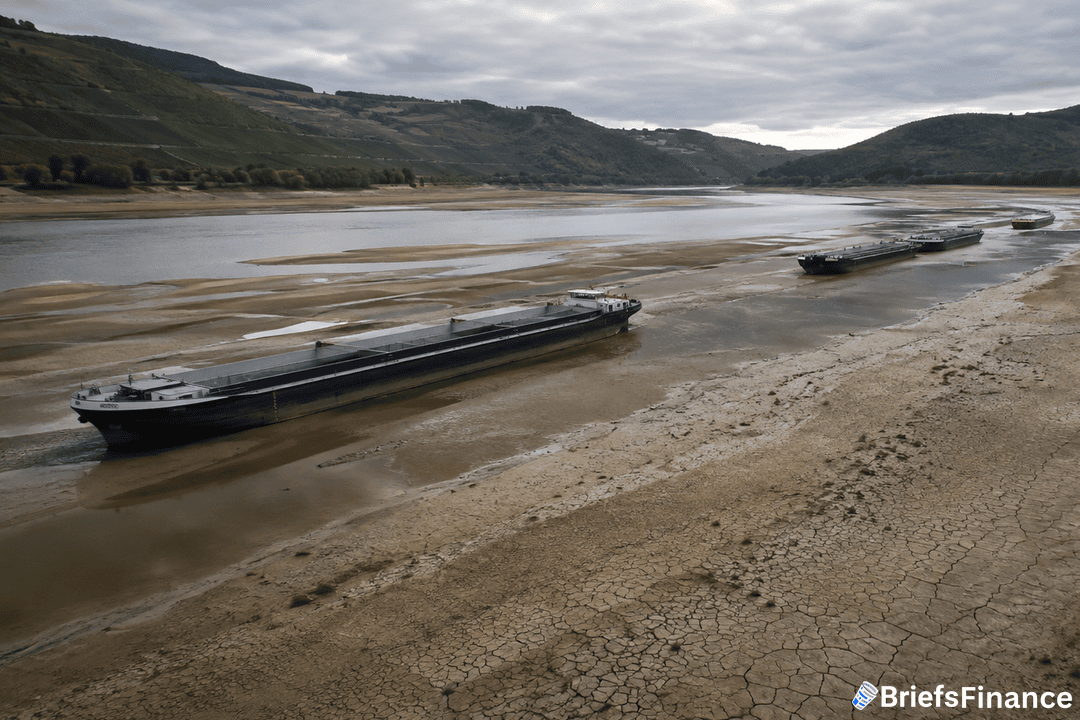
The Rhine, which carries a large share of Germany's steel, chemicals, and machinery, is unusually shallow.
The Rhine had fallen to new lows just before Transport Minister Steffen Bilger met industry officials in Bonn, a Rhine-side city. His warning was direct: the harder it is to use the river, the more cargo will move to rail and road.
"Every extra centimeter of water means more shipments and less cargo on rail and roads," Bilger said.
"We have a very challenging situation and it's very challenging for our economy," he added. Via Rotterdam, Europe's busiest seaport, the river serves three industrial centers: the Rhine-Ruhr steel region, the Rhine-Main area around Frankfurt, and Ludwigshafen's chemicals complex.
What Low Water Does to the Economy
Shipping becomes harder as the river gets shallower. Freight shifts to trucks and trains, a more costly and less efficient alternative.
This is not a new problem. After a severe drought in 2018, officials drew up an action plan to strengthen Rhine shipping.
Get the free Always Be Buying eBook and learn the simple system for building wealth on any income
Forecasting has advanced since then, but infrastructure improvements remain unfinished. Oliver Krischer, the state transport official in North Rhine-Westphalia, told German radio that "things have gone a bit dormant again."
Steffen Bauer, who runs Cologne's port, says the situation is still manageable.
"Such a situation will be more frequent in the future and we need to learn how to handle it," he said.
Germany Is Better Prepared, but Still Under Strain
Bilger told reporters, "We stand here in a better situation than a few years ago."
The strain is already showing.
Deutsche Bank economist Marc Schattenberg says he doubts deeper dredging would solve it. Dredging could speed up the river's flow and harm the environment, while shifting cargo to trains or trucks often raises costs significantly.
"Unfortunately, we'll just have to accept for now that supply chains are under strain," he said.
The low-water problem is an early test for Bilger, who took the transport job last month after a widely criticized cabinet overhaul.
A photo from July 29 showed a dry stretch of the Rhine riverbed near Evonik Industries AG's plant in Wesseling. By August 6, 2026, the problem was still at the top of the agenda for German officials.
The Bigger Picture
The latest warning reflects a broader concern about how Germany's most important river route will hold up under repeated dry spells. The 2018 drought exposed vulnerabilities, and this year's low water is forcing companies to re-examine inventory levels, shipping schedules, and their dependence on rail and road networks. While companies have built up more stock than they had before the 2018 crisis, the delayed infrastructure improvements mean they cannot always rely on the river to carry goods as cheaply as it once did. If low-water years become more common, the added costs will spread through industrial and consumer prices.
The Bottom Line
Beyond its role as a scenic landmark, the river's recurring low-water conditions could affect corporate earnings, transport expenses, and the cost of German-made products. Eventually, those effects can show up in your portfolio.
Download the free Always Be Buying eBook and start putting your money to work today