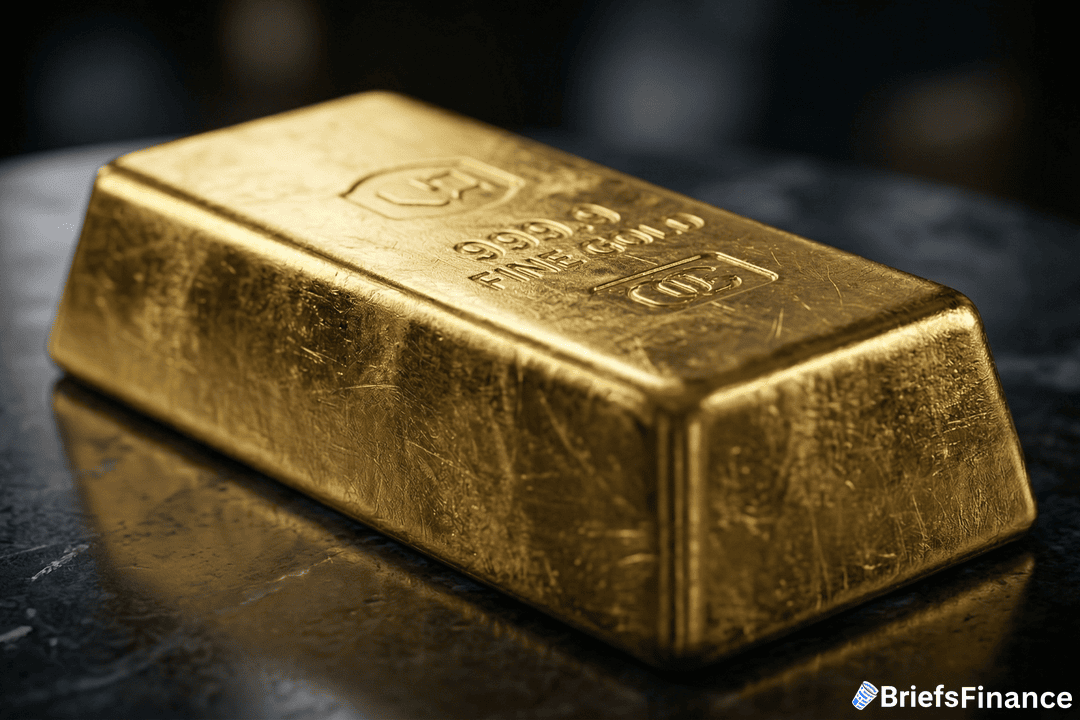
Gold just hit a price that would have seemed impossible a few years ago. The metal blew past $5,000 per ounce in January, then rocketed above $5,300 when the Iran war erupted.
Investors are treating gold like the ultimate insurance policy - and they're paying record prices for it.
The Fear Trade in Action
Gold has always been where money runs when the world gets scary. Think of it like a fireproof safe in a burning building - everyone wants one at the same time, and the price spikes.
That's exactly what happened on Feb 28 when coordinated U.S.-Israeli strikes on Iran triggered panic buying across precious metals markets. Gold jumped from roughly $5,100 to above $5,300 in a single session.
This year's gains top 18% so far, building on an already-strong 2025. Two big forces are working together: fear of what's next in the Middle East, plus expectations that the Federal Reserve will eventually cut interest rates.
When rates fall, gold becomes more attractive because it doesn't pay interest - so the cost of holding it shrinks.
Central Banks Are Loading Up
Behind the headlines sits something bigger: countries are actively buying gold. Central banks worldwide are diversifying away from U.S. dollars as part of a larger shift, especially as U.S. policy strains traditional alliances.
This steady institutional buying creates a floor under prices that didn't exist before. Deutsche Bank and Societe Generale both forecast $6,000 per ounce by year-end - another 17% jump from current levels.
What to Watch
Any escalation in the Middle East sends gold higher. Any de-escalation triggers profit-taking. Also track Fed comments about rate cuts - they'd provide another boost.
Central bank purchase data, released quarterly, will show whether institutional demand is still growing.