Ford just had its best month in 17 years. The catalyst? A battery business that doesn't turn a profit until 2028.
In May, the stock climbed more than 40% - its strongest month for Ford since April 2009. The last time it ran this hot, Ford was somehow staying solvent while GM and Chrysler filed for bankruptcy.
This time, the story is AI.
What's Actually Driving The Rally
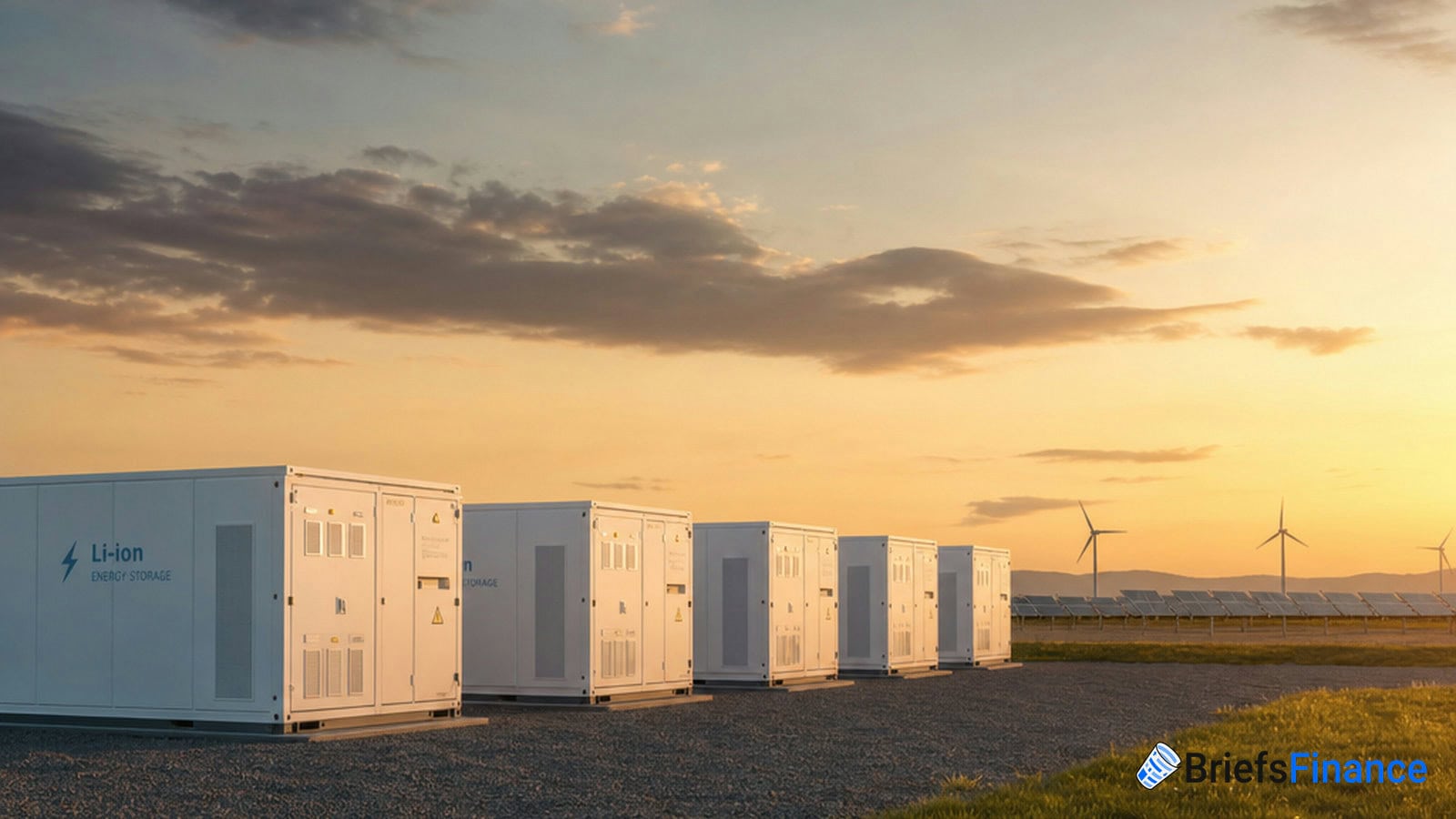
It started with a May 12 note from Morgan Stanley's Andrew Percoco. He valued Ford Energy - the carmaker's grid-battery arm - at potentially $10 billion, and said the company could soon land contracts with hyperscalers (the giant cloud players like Amazon, Microsoft, and Google that run the world's AI data centers).
The pitch is simple: AI tools eat huge amounts of electricity, and data centers need that power delivered steadily around the clock.
Battery storage is what makes that possible - and Ford already builds EV batteries, so the leap into grid storage isn't a stretch.
For context: Tesla's energy storage business pulled in 13.5% of its revenue last year.
This is the kind of move Market Briefs breaks down every morning - the actual story behind why a stock is running, in five minutes a day, plus a free 45-minute investing masterclass when you sign up.
The "AI Adjacency" Trade
Ford isn't a one-off. Investors are paying a premium for any old-economy company with a credible AI angle:
- Caterpillar - the bulldozer maker - is up more than 150% over the past year on the back of its power generation gear.
- Vertiv, which builds data center equipment, has jumped 190%.
- Ajinomoto, a Japanese maker of food seasonings, is up 55% year to date because one of its films is used to insulate semiconductor chips.
GM and Stellantis don't have that story, with May gains of just 10% and 13%.
Even after the rally, Ford still trades at 9.7 times forward earnings (the stock price compared to expected profits), while the S&P 500 sits at 21 and the Nasdaq 100 is closer to 25.
Worth Noting
This isn't a retail rally. Vanda Research says individual investor participation has been "relatively subdued."
What's moving the stock is institutional buying - and short sellers getting squeezed out. Over the past 30 days, short sellers have covered 22.3 million shares worth $369 million, and remaining Ford shorts are sitting on $395 million in mark-to-market losses - a 24% hit.
The base business is still just okay, and battery storage won't earn real money for about two more years - but the stock is up 40% anyway.
If you want this kind of read on what's actually moving markets, join 350,000+ investors reading Market Briefs - delivered every morning, with a free investing masterclass thrown in as a bonus.