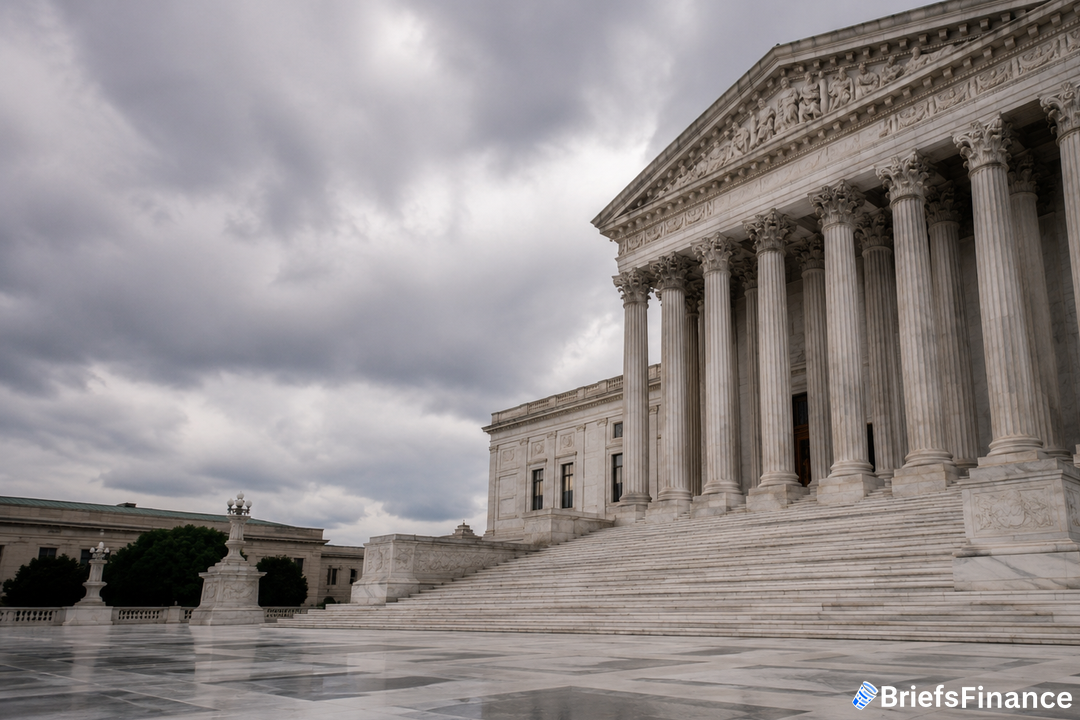
The Deal Hits a Legal Speed Bump
The agreement now freezes the merger while two separate legal challenges are decided.
As a result of this pause, Paramount is highly likely to go to trial to justify its acquisition of WBD, barring any pre-trial settlements. That outcome would push the timeline out by several months.
What the Company Says
In a statement, a Paramount representative described the arrangement as a "significant win" that provides the firm with a clear route to a trial where evidence can be presented.
Get the market news that matters in a five-minute read with Market Briefs, our free daily newsletter
"This is the fastest and clearest way to prove that this transaction is good for competition, good for consumers, and good for creators," the spokesperson said. They also pushed back on the states' case, arguing the lawsuit's market definitions "bear no relationship to the realities of today's marketplace and cannot withstand scrutiny."
The spokesperson added that regulators in dozens of other countries have already reached the same conclusion. "We look forward to proving our case at trial."
Stock Market Reaction
On the announcement, both Paramount and Warner Bros. Discovery stocks fell sharply, with Paramount down 3.3% and WBD down 0.7%.
Deeper Look at the Legal Challenges
The 12‑state lawsuit, led by attorneys general from states including New York and California, contends that combining Paramount and WBD would create a dominant player in streaming and content licensing, potentially raising prices for consumers. The Writers Guild of America's separate challenge focuses on how the merger might depress writers' compensation and reduce bargaining power. Paramount has argued that the states' market definitions are outdated and ignore the rise of global competitors like Netflix and Amazon. A trial, if it proceeds, would examine extensive evidence on market shares, pricing trends, and the competitive landscape of the entertainment industry.
Background and Context
Although competition regulators in numerous other countries had already approved the deal, the lawsuits filed in the United States pose a major obstacle.
With the pause in place, both sides will now prepare for a courtroom battle that could shape the future of the entertainment industry. The legal proceedings are expected to examine whether the combined entity would dominate key segments such as film distribution, television production, and digital advertising, potentially raising prices for consumers and limiting choices for creators. Paramount has previously noted that the deal would allow it to compete more effectively with larger rivals like Netflix and Amazon, which already command significant market share.
The drawn-out timeline also injects uncertainty into the near‑term financial outlook for both companies, with investors now factoring in months of legal wrangling before any potential closing.
Join Market Briefs, our free daily newsletter, for a quick daily rundown of the markets