Free NewsletterPro Login

Warning: Undefined variable $stocks in /var/www/briefs.co/htdocs/wp-content/plugins/oxygen/component-framework/components/classes/code-block.class.php(133) : eval()'d code on line 448

Warning: foreach() argument must be of type array|object, null given in /var/www/briefs.co/htdocs/wp-content/plugins/oxygen/component-framework/components/classes/code-block.class.php(133) : eval()'d code on line 448

Warning: Undefined variable $funds in /var/www/briefs.co/htdocs/wp-content/plugins/oxygen/component-framework/components/classes/code-block.class.php(133) : eval()'d code on line 472

Warning: foreach() argument must be of type array|object, null given in /var/www/briefs.co/htdocs/wp-content/plugins/oxygen/component-framework/components/classes/code-block.class.php(133) : eval()'d code on line 472
/* the link was here */

California Wildfire Liability Bill Sends Utility Stocks Lower

Published Aug 31, 2026
[tts_player]
Share:
Summary:
  • Lawmakers unveiled a wildfire liability bill that omits Governor Gavin Newsom's sought-after protections for utilities.
  • PG&E fell as much as 21% (biggest intraday drop since 2020), Edison tumbled 24% (largest since 2018), and Sempra slid 5.6% (steepest since April 2025).
  • The proposal drew cheers from a broad alliance of wildfire survivors, insurers, local officials, consumer advocates and attorneys, while utilities and several analysts warned of heightened financial risk.

What happened this week

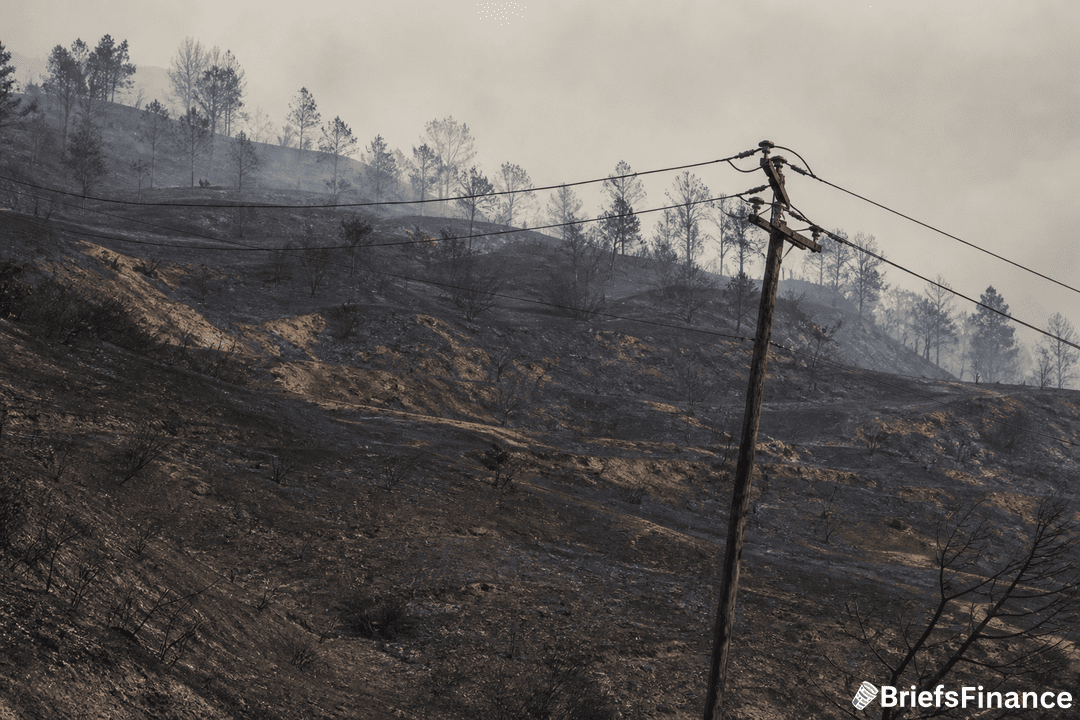
State lawmakers introduced a bill on Saturday to remake California's wildfire liability framework without the utility protections Governor Gavin Newsom had pursued. The omission sent the state's utility stocks sharply lower. PG&E Corp. dropped as much as 21% intraday, its worst such move since 2020. Edison International plunged 24%, the biggest single-day slide since 2018. Sempra declined up to 5.6%, its sharpest intraday fall since April 2025. The companies had rallied earlier this year on expectations for favorable legislation and anticipated power demand growth from data centers.

For it to take effect, the bill still needs approval from both the assembly and the senate, followed by the governor's signature. Newsom's office did not respond to a request for comment.

Why the bill matters to markets

Investors had counted on liability relief that didn't materialize in the draft, triggering downgrades. BMO Capital Markets' James Thalacker cut PG&E to market perform from outperform, writing that the proposal does not ensure the state wildfire fund's financial strength or protect utilities from bankruptcy tied to fire risk. He added that investor caution around fire liabilities could make capital raising tougher for PG&E versus peers. Wells Fargo's Shahriar Pourreza cautioned that, without legal protections, utilities remain exposed to potentially billions in losses from severe, utility-sparked fires; he cut PG&E's rating to equal weight from overweight, while maintaining underweight on Edison. Mizuho's Anthony Crowdell moved PG&E, Edison and Sempra to neutral from outperform and reduced price targets, and he expects utilities to seek friendlier legislation next year - an "uphill climb" given that a different state administration will be in place following the November election.

The politics and the debate over costs

Before the bill appeared, Newsom floated a plan - supported by utilities - that would have prevented insurers from seeking reimbursement from utilities that ignite fires. He argued those reimbursements represent the largest pool of post-fire money, leaving less for survivors. Amid a warming climate, he has made overhauling liability and reinforcing mitigation and recovery central aims of his concluding legislative session.

Insurers, ratepayer advocates and fire victims countered that his idea would shift costs and could lift premiums by up to 20%, citing an analysis by the American Property Casualty Insurance Association. They also argued that allowing insurers to continue recovering payments from utilities would not drain California's wildfire fund and that the plan favored utility investors over survivors. "This outcome keeps costs with the parties responsible for wildfires and helps protect the progress California is making in stabilizing its insurance market," the insurance association said after lawmakers filed the bill. Opponents also told lawmakers the fund's solvency was not in jeopardy, saying the top-end damage estimate for the Eaton Fire remains below the wildfire fund's original capacity. As Every Fire Survivors Network wrote in an August letter, "Bankruptcy is hardly around the corner. So show us the emergency."

When policy shifts remind you to keep perspective, learn a simple system in the free Always Be Buying E-Book

What utilities said and what's next

PG&E warned Sunday that the bill "does not adequately address the financing risks created by California's current wildfire liability framework," adding it falls short of delivering the long-term durability needed to attract "affordable investment to support a safer, more reliable energy system and help keep costs down for customers." PG&E's vulnerability is acute: it filed for Chapter 11 in 2019 after billions in wildfire liabilities, and, according to BMO's Thalacker, management has signaled that without meaningful improvements to the wildfire fund framework that both preserve the fund and protect investor-owned utilities against another bankruptcy, the company would contemplate alternative capital allocation strategies. Edison International's Southern California utility was "disappointed that the state couldn't develop a comprehensive wildfire reform," spokesperson Kathleen Dunleavy said.

For investors, the takeaway is that California policy remains a powerful driver of utility valuations. Watch the bill's progress in Sacramento and further analyst revisions, as the companies are likely to renew their push for liability relief next year.

Disclosure

Recent News

1 2 3 64

Get Market Briefs delivered to your inbox every morning for free!

No fluff. No noise. No politics. Just finance news you can read in 5 minutes.

Blogs

August 31, 2026
America Is Running Out of Debt Buyers. Treasury Bills Are the Government's Fix
  • The government took in about $5 trillion in taxes in 2025 and spent about $7 trillion, and the national debt is now over $40 trillion.
  • Investors, banks, and foreign countries are all lending less to the U.S., so starting September 9 the government plans to sell more short-term treasury bills and use that cash to buy back its long-term debt.
  • Government interest rates set the floor for your mortgage, your car loan, and your credit card, and short-term Treasury ETFs like SGOV are one way investors are playing it.
Read More
August 23, 2026
How to Get the Most From Your Guideline 401k
  • Guideline is a company that provides low-cost 401k plans, popular with small businesses and their employees.
  • A "Guideline 401k" follows the same core rules as any 401k: tax-advantaged growth, contribution limits, and often an employer match.
  • The biggest results come from capturing the full match, choosing low-cost funds, and picking Roth or traditional to fit your situation.
Read More
August 23, 2026
Principal 401k: What to Know About Your Plan
  • Principal is one of many companies that manage workplace 401k plans, so a "Principal 401k" is simply a 401k where Principal is the provider.
  • The rules of a 401k are the same no matter who runs it: pre-tax or Roth contributions, tax-advantaged growth, and often an employer match.
  • The biggest wins come from grabbing the full match, picking low-cost funds, and knowing whether Roth or traditional fits you.
Read More
August 23, 2026
What a Tariff Dividend Means for Your Money
  • A "tariff dividend" is the idea of taking money the government collects from tariffs and paying some of it back to citizens.
  • To judge the idea, you first need to know what a tariff is: a tax on imported goods, usually paid by the companies bringing them in.
  • Tariffs ripple through prices, businesses, and your investments, so the smart move is understanding those ripples, not just the headline.
Read More
August 23, 2026
No Tax on Overtime: How Overtime Pay Is Taxed
  • "No tax on overtime" refers to a tax break that lets certain workers deduct some overtime pay, lowering the income they get taxed on.
  • A deduction does not mean overtime is truly tax-free. It means part of that pay is subtracted before your tax is figured.
  • The bigger money lesson: how you earn money changes how it is taxed, and investors often get the friendliest treatment of all.
Read More
August 23, 2026
Reading the Silver Price Forecast for 2026
  • Nobody can honestly promise a specific silver price for 2026. Any exact number is a guess, so treat forecasts as opinions, not facts.
  • Silver is unusual because it is both a precious metal and an industrial metal, so its price answers to two very different forces.
  • Instead of chasing a forecast, learn the drivers - inflation, interest rates, recession fear, and industrial demand - so you can judge any prediction yourself.
Read More
August 23, 2026
What to Do When Reddit Stocks Go Viral
  • "Reddit stocks" usually means stocks getting hyped in online communities, where crowds can send a price soaring or crashing fast.
  • These tips can be entertaining and sometimes useful, but they are opinions, not research, and often come loaded with hype.
  • The safe move is to treat every online tip as a starting point, then do your own homework before risking a dollar.
Read More
August 23, 2026
Why Is Bitcoin Dropping Right Now?
  • Bitcoin drops for a mix of reasons: interest rates, big-picture money policy, regulation news, and simple shifts in how much risk investors want to take.
  • Bitcoin has a fixed supply and no earnings, so its price runs almost entirely on supply, demand, and sentiment.
  • Sharp drops are normal for bitcoin. Understanding the drivers matters more than reacting to any single day.
Read More
August 23, 2026
The Fidelity 500 Index Fund, Made Simple for Beginners
  • The Fidelity 500 Index Fund is a low-cost fund that tracks the S&P 500, an index of 500 large U.S. companies.
  • Buying it means owning a tiny slice of 500 businesses at once, which spreads your risk in a single purchase.
  • Index funds like this win over time mostly by keeping fees low and letting compounding do the work.
Read More
August 23, 2026
USA Penny Stocks: Risks and Rewards Explained
  • USA penny stocks are very low-priced shares of very small companies, often trading under $5 and sometimes under $1.
  • They dangle the dream of huge, fast gains, but carry brutal risks: low liquidity, wild swings, and high failure rates.
  • Most investors build wealth faster with quality companies and funds than by chasing cheap shares.
Read More
1 2 3 25
Share via
Copy link










