Free NewsletterPro Login

Bitcoin Investors Just Pulled $2.8 Billion From ETFs In A Record 9-Day Streak

Published May 29, 2026
Share:
Summary:
  • Investors pulled $2.8 billion from U.S. bitcoin ETFs over nine consecutive days, the longest outflow streak on record since the funds launched in January 2024.
  • Glassnode says demand is too weak to push bitcoin above $78,000, the average cost basis for recent buyers, capping every rally over the past month.
  • A stat showing long-term holders sitting on a record 15.8 million BTC looks bullish but is misleading, with roughly 900,000 of those coins parked in Coinbase cold storage rather than held by conviction buyers.

Risk assets are climbing on news that the U.S. and Iran might reopen the Strait of Hormuz. Bitcoin isn't joining the party.

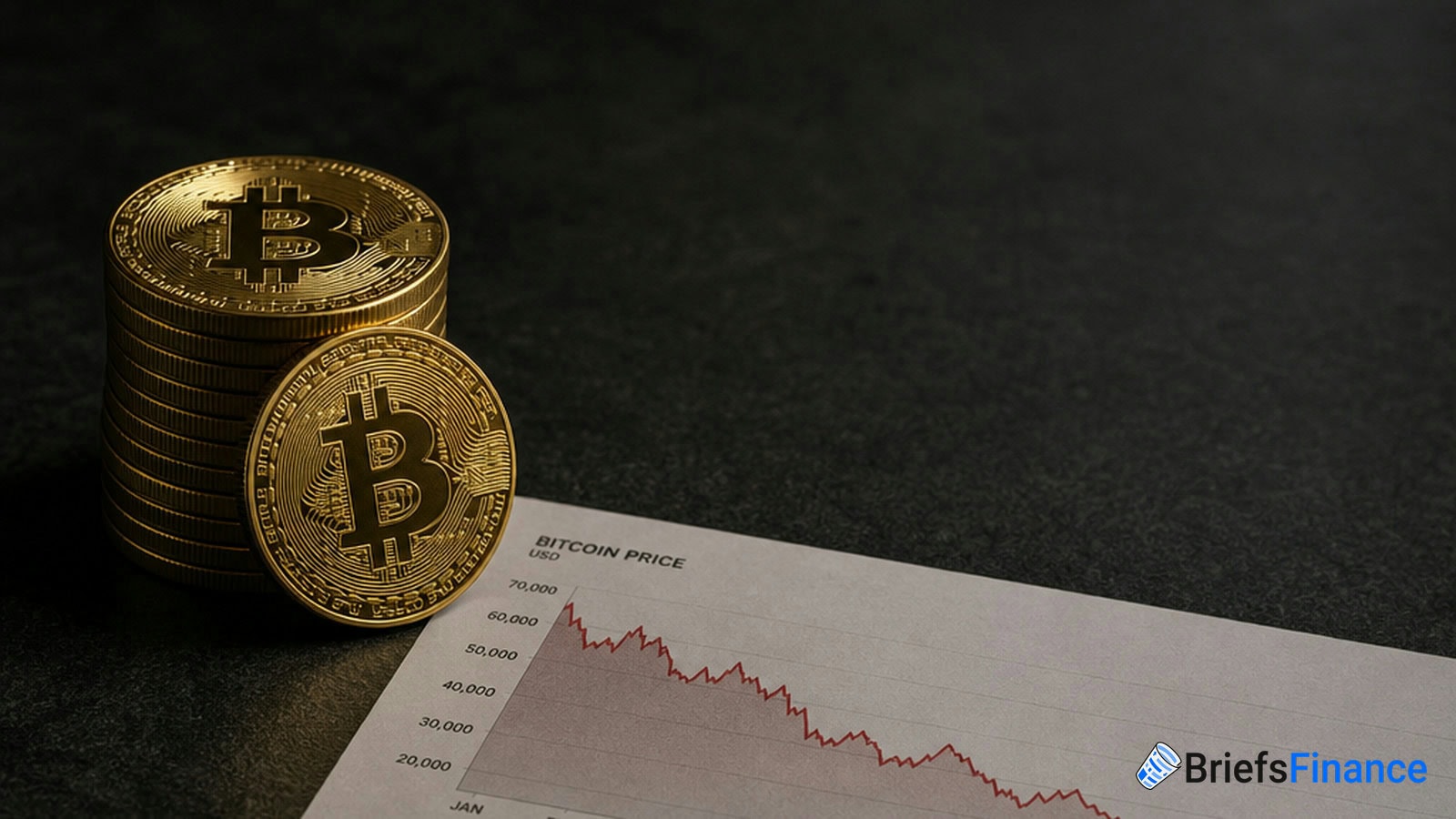
Investors just pulled $2.8 billion from U.S. bitcoin ETFs - funds that hold bitcoin and trade like stocks - over nine straight days. That's the longest outflow streak on record.

A risk-on rally like this usually lifts bitcoin - but not this time.

The buyer drought

Spot bitcoin ETFs were the engine of the last two years of crypto gains. New money flowed in, funds bought bitcoin, and prices rose.

That engine has stalled.

The ETFs launched in January 2024 and pulled in over $35 billion in their first year. They became the easiest way for regular investors to own bitcoin - no wallets, no exchanges, just a brokerage account.

Glassnode, a crypto research firm, says demand is now too weak to push bitcoin back above $78,000 - the average price recent buyers paid to get in. Until new money shows up, every rally runs into the same ceiling.

The Iran news is a useful tell - stocks are climbing and oil is falling on hopes for a calmer Middle East. Crypto traders aren't biting.

That makes bitcoin's weakness look less like a macro problem and more like a crypto-specific one.

Want a daily read on what's actually moving markets - not just crypto? Join 350,000+ investors reading Market Briefs every morning, with a free investing masterclass when you sign up.

A record that's hiding something

There's a stat going around that sounds bullish for bitcoin. Long-term holders - investors who haven't moved their coins in over 155 days - now hold a record 15.8 million BTC.

Normally that's a strong signal. It means investors are holding, not selling.

CryptoQuant, another crypto research firm, says the record is hollow. Roughly 900,000 of those coins belong to Coinbase - mostly parked in cold storage on behalf of customers.

They crossed the long-term threshold because nobody moved them for five months. That's stillness, not conviction.

The flip side: short-term holder supply has dropped 2.2 million BTC since December. That's not because new buyers turned into committed holders.

It's because there aren't enough new buyers to count.

The bull case needs fresh demand - and right now, the chart just shows quiet.

What to watch

The key level is $78,000 - the average price recent buyers paid. A move above it would mean enough new demand to lift everyone back into profit.

Bitcoin hasn't been able to get there. Every rally over the past month has stalled before that level.

On Polymarket, a prediction market where users bet on real-world events, the odds favor bitcoin closing the month between $72,000 and $76,000. That's a holding pattern, not a recovery.

Until ETF flows turn positive, the path of least resistance is sideways.

If you want to know which signals actually matter when the market gets quiet like this, Market Briefs breaks it down every weekday in five minutes - with a 45-minute investing course thrown in as a bonus when you join.

Disclosure

Get Market Briefs delivered to your inbox every morning for free!

No fluff. No noise. No politics. Just finance news you can read in 5 minutes.

Blogs

May 30, 2026
Financial Literacy Books That Actually Build Wealth
  • The best financial literacy books don't just teach budgeting, they shift how you think about money.
  • Two classics stand out: The Intelligent Investor for valuing investments, and Rich Dad Poor Dad for the owner's mindset.
  • Reading is only step one. The real wealth comes from acting on what you learn.
Read More
May 30, 2026
What Is a Roth Conversion? A Simple Guide
  • A Roth conversion moves money from a traditional retirement account into a Roth account.
  • You pay taxes on the money now, in exchange for tax-free growth and withdrawals later.
  • It can pay off if you expect higher taxes or more income in the future, but the timing and tax hit matter a lot.
Read More
May 30, 2026
Trailing Stop Loss: How to Protect Your Gains
  • A trailing stop loss is an order that automatically sells a stock if it falls a set percentage from its recent high.
  • As the stock rises, the sell point rises with it, locking in gains while capping losses.
  • It's most useful for active strategies like momentum investing, not for long-term buy-and-hold.
Read More
May 30, 2026
5 Types of Wealth: Why Money Is Only One of Them
  • Real wealth is more than a bank balance. It spans your finances, health, mind, purpose, and freedom.
  • Money is powerful, but it amplifies the life you already have rather than fixing a broken one.
  • True financial wealth means your cash flow covers your expenses, so your money works while you live.
Read More
May 30, 2026
How to Invest in Private Equity: A Beginner's Guide
  • Private equity means investing in companies that aren't listed on the stock market.
  • Traditional private equity is built for experienced, high-net-worth investors with large amounts to invest.
  • New rules have opened more accessible paths, like startup crowdfunding and real estate deals, often starting around $100.
Read More
May 30, 2026
What Is a Call Option? A Simple Guide With Examples
  • A call option gives you the right to buy a stock at a set price by a set date.
  • Investors buy calls when they expect a stock to rise, using less money than buying the shares outright.
  • The most you can lose buying a call is the premium, but time works against you, so it's an advanced tool.
Read More
May 30, 2026
EBITDA Formula: How to Calculate It Step by Step
  • EBITDA stands for Earnings Before Interest, Taxes, Depreciation, and Amortization, a measure of a company's core profit.
  • The formula adds those four items back to net income to show what the underlying business earns.
  • Investors use EBITDA to compare companies and to judge how many times earnings a stock is selling for.
Read More
May 30, 2026
What Is a Stock Option? A Plain-English Guide
  • A stock option is a contract giving you the right, but not the obligation, to buy or sell a stock at a set price by a set date.
  • There are two types: calls (the right to buy) and puts (the right to sell).
  • Options are powerful but risky, so they suit investors who already have the basics down.
Read More
May 30, 2026
Put Option: What It Is and How It Works
  • A put option gives you the right to sell a stock at a set price by a set date.
  • Investors use puts to bet a stock will fall, or as insurance to protect shares they own.
  • The most you can lose buying a put is the premium you paid, which makes it a defined-risk tool.
Read More
May 30, 2026
Operating Margin: What It Is and How to Calculate It
  • Operating margin shows how much profit a company keeps from its core business after paying its running costs.
  • The formula is operating income divided by revenue, shown as a percent.
  • A strong, steady operating margin signals a well-run business that controls its costs.
Read More
1 2 3 22
Share via
Copy link