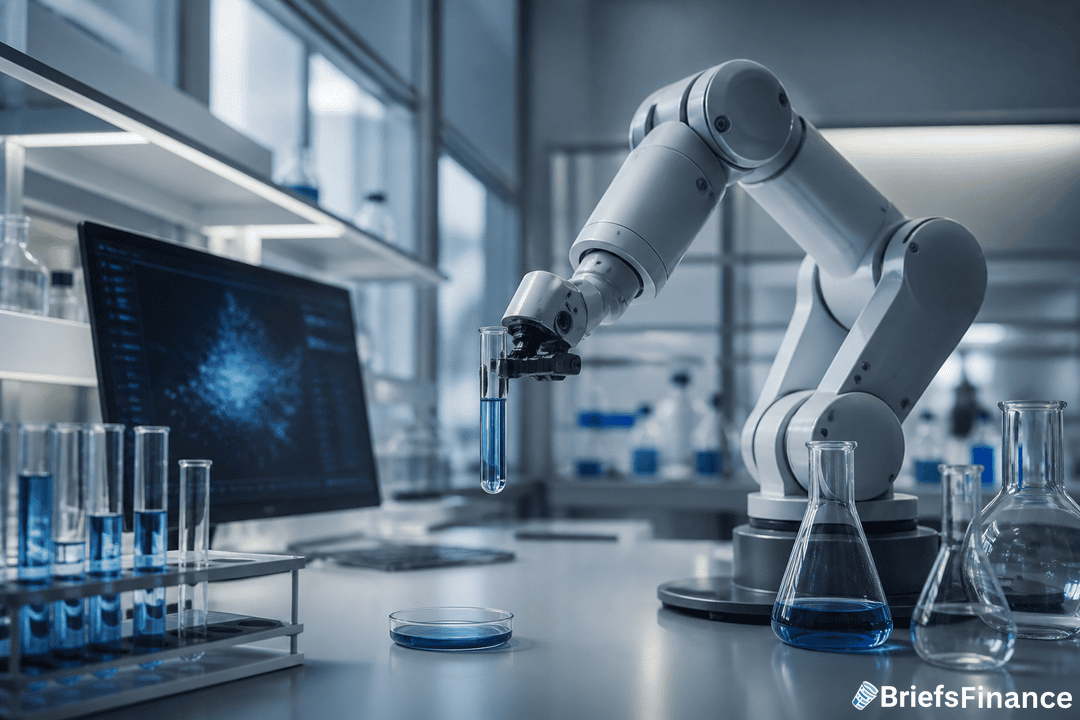
Getting lab equipment to work with AI just got easier.
Anthropic, the company behind the Claude AI assistant, is testing a new way for its models to directly control robots and scientific tools. The system could help researchers automate experiments that were too technical or time-consuming before. This development comes as laboratories increasingly adopt AI to handle repetitive tasks, freeing scientists to focus on breakthrough discoveries.
How MHS Works
The new standard gives AI systems the technical details they need to control hardware - things like safe movement limits for a robot arm or temperature settings for a lab device. Rather than searching through documentation or waiting for technical support, researchers can now instruct Claude to configure and operate instruments automatically.
Genentech recently demonstrated this capability during a trial. Their team provided Claude with experimental parameters in a PDF document, and the AI executed the entire procedure independently.
"With MHS, Claude can be that kind of enabler for scientists as they can use the right equipment in an expert manner," said Jonah Cool of Anthropic.
The Bigger Picture
This initiative builds on Anthropic's earlier work bridging AI and physical systems. The company previously released the Model Context Protocol (MCP) to integrate Claude with popular software platforms including Gmail and Slack.
Building wealth starts with consistency, so grab your free Always Be Buying E-Book to learn how
Aleks Kemeny of Anthropic explained the significance: "What MCP did for software, MHS will do for the hardware world." He emphasized that research facilities, which often manage hundreds of specialized devices, stand to benefit most from this standardization.
Why Investors Should Watch
The emerging market for AI-driven laboratory automation presents substantial growth potential. Successful adoption of MHS could create new revenue opportunities for Anthropic while giving partner companies an edge in the rapidly expanding automation industry. The involvement of major players like Danaher signals strong commercial interest in the technology.
Anthropic is currently refining MHS through private trials with select partners before releasing it as open-source software. This approach mirrors their successful strategy with previous AI integrations.
The bottom line: Automation is coming to labs and workshops, and AI is learning to speak the language of machines. That could mean fresh opportunities - and fresh competition - in the years ahead.