An Irish company is quietly becoming a giant U.S. building supplier. Its latest move is an $8.5 billion all-cash deal.
The target is a Texas firm called Arcosa. And analysts think a bigger shake-up could follow.
What CRH Is Getting
CRH is paying $150 a share for Arcosa. That is about 10% more than where the stock closed last week.
That extra is called a premium. A premium is just what a buyer pays above the current price.
The offer pushed Arcosa shares up about 8%. Investors clearly liked the price.
Arcosa is based in Dallas, Texas. It makes building parts and grid gear.
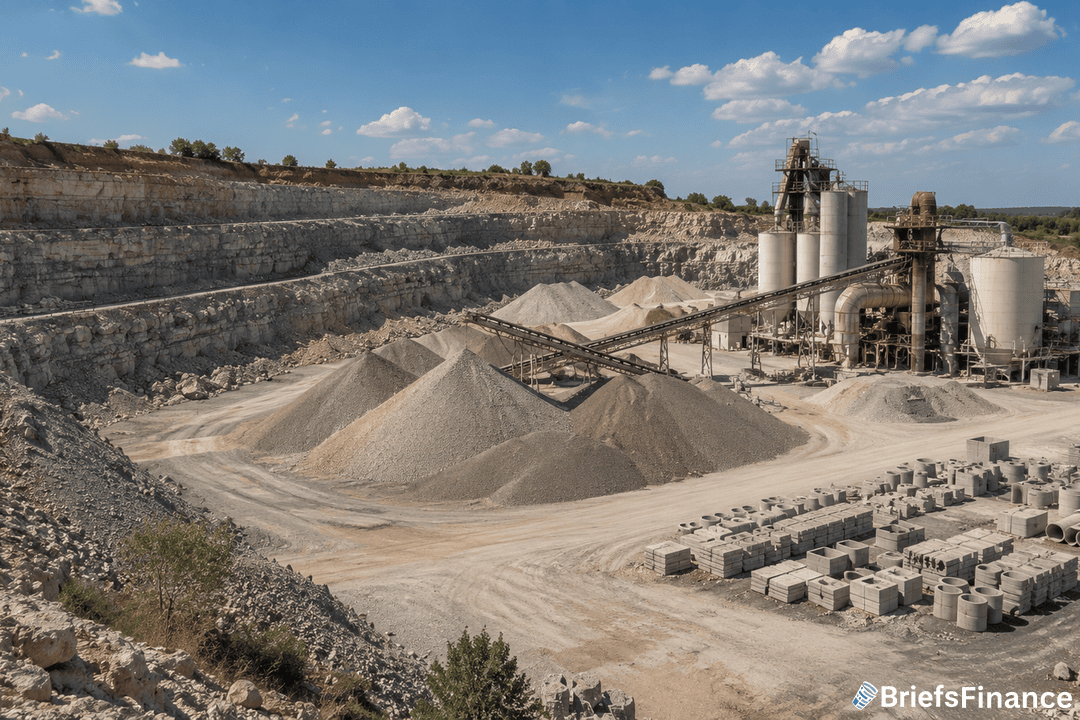
The deal hands CRH a lot of hard assets. It adds more quarries, storage yards, and asphalt plants.
It also adds gear used to upgrade the power grid and build data centers. That last part matters most.
The same AI buildout driving demand for power also needs concrete and steel. CRH wants to be the one selling it.
The AI story isn't just chips, it's the concrete and power lines too, and we connect those dots every morning in Market Briefs, a five-minute read that comes with a free investing masterclass when you join.
A Buying Spree With A Bigger Plan
CRH does not sit still. It has spent $9.1 billion on nearly 80 deals in two years.
Most of those were small. Arcosa stands out for its size and timing.
Bigger deals are harder to pull off. This one ranks among its largest ever.
Building-products firms are racing to grow fast. They also want local supply chains to dodge tariffs.
Making heavy materials close to home is like baking bread locally instead of shipping it in. It cuts both cost and risk.
Others are chasing the same edge. QXO struck a $17 billion deal for TopBuild this year.
Commercial Metals bought Foley Products for $1.84 billion last year. That wave shows how much money is betting on a long U.S. building boom.
Why The Timing Works
CRH is no stranger to big deals. Its largest before this came back in 2015.
It bought cement assets for about $7.4 billion then. That deal turned it into a global player.
This time, CRH expects to cut $175 million in yearly costs by year three. It also says the deal will add to profits within 12 months.
That fast payback is rare in deals this big. It helps explain why CRH moved now.
Demand looks steady, too. New housing, repairs, and big public projects all need materials.
That keeps quarries and plants busy for years. Steady demand makes the high price easier to justify.
What To Watch
The deal is set to close in early 2027. The bigger question is what CRH does next.
Analysts at Berenberg think it could spin off its smaller European arm. That would leave a pure North American building company.
A firm born in Dublin may end up betting its whole future on America.
Want to spot the next angle on the building boom? Read Market Briefs with 350,000+ investors and get a 45-minute course on finding investments as a bonus.