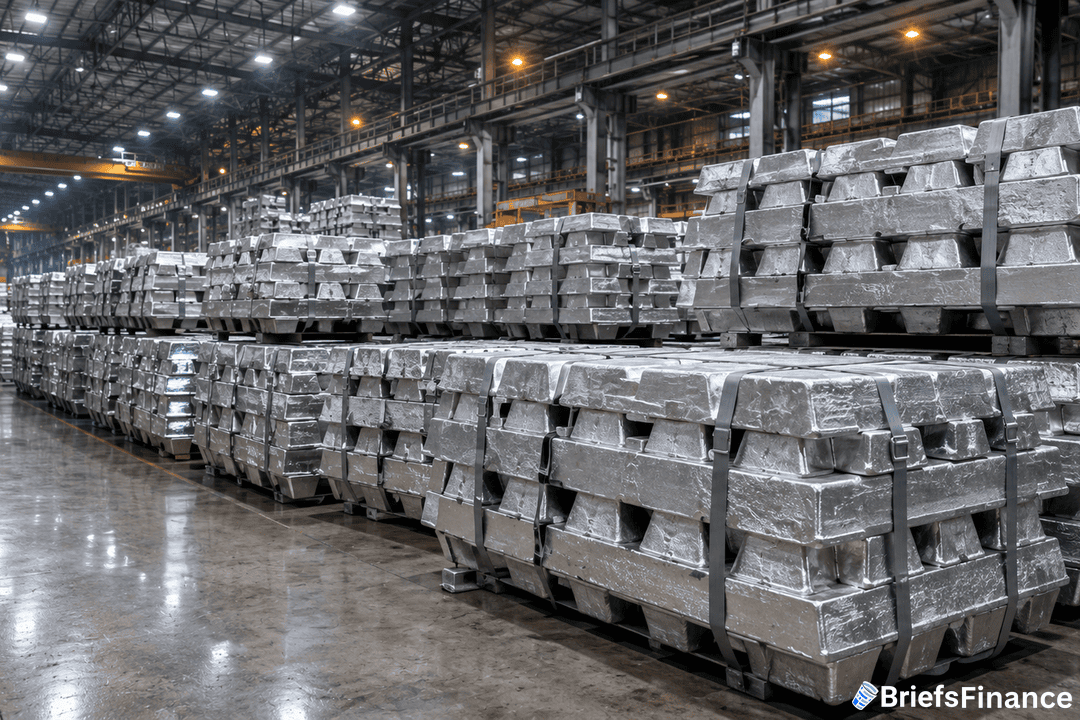
When the Iran war broke out, the aluminum market braced for a mess. Smelters were weeks from running dry.
Many warned prices could blow past $4,000 a ton. The mess never showed up.
A mix of clever shipping and Chinese output quietly kept the metal flowing.
How The Shortage Got Dodged
The Gulf makes nearly a tenth of the world's metal. Those plants need a raw input called alumina.
With the Strait of Hormuz blocked, that supply line looked dead. Buyers feared the plants would go quiet within weeks.
So makers found a way. A few ships switched off their tracking and slipped through the strait anyway.
It was the same trick that kept a trickle of oil moving during the war.
Other loads were dropped in Oman. Trucks then carried them by road to the plants.
That detail came from ship-tracking data at a firm called Kpler. The flows tell the story the headlines missed.
By May, raw shipments into the Gulf were back to where they sat before the fight. Iran had even fired missiles at some of the region's plants, which made the comeback even harder to believe.
The plants also leaned on stored supplies to ride out the worst weeks. That gave them time while the new shipping routes got going.
That kind of behind-the-scenes scramble is exactly what decides where commodity prices land - and we break it down in plain English in Market Briefs, delivered every morning with a free investing masterclass when you join.
China Changed The Math
Then there is the other side of the world. Before the war, China was pushing up against a state cap on how much metal it could make.
That had traders betting on tight supply.
The war flipped that. China started running its plants above the cap, at a yearly pace near 47 million tons.
Running them that hot is like flooring a car in low gear. It works for a while, until something gives.
Indonesia is adding more too. Its plants are shifting power away from other work.
Wall Street Cannot Agree
The pros are split on what comes next. Goldman Sachs sees prices easing toward $3,000 a ton.
JPMorgan still expects a climb to $4,000, just slower than it first thought.
The gap is even wider on supply. One big bank calls it the worst metal shock in 50 years.
Another says supply and demand are now roughly even. Both camps agree on one point, though.
The war was a real shock to a market this big. The only fight is over how fast it heals.
Following where the smart money places its bets is often the best read on a split like this.
Worth Noting
The hidden piece is stored metal. A lot of it sits in private sheds nobody can fully count, and once those piles run low, prices could jump.
The big risk now is time. If buyers wait too long, the cheap metal may not last.
Much of it trades through London futures, the deals that set a price for metal weeks ahead. For now, the squeeze everyone feared has turned into a standoff between the bulls and the bears.
If you'd rather skip the noise and get the one read that matters each morning, sign up for Market Briefs - 350,000+ investors already do, and a 45-minute investing course comes with it.