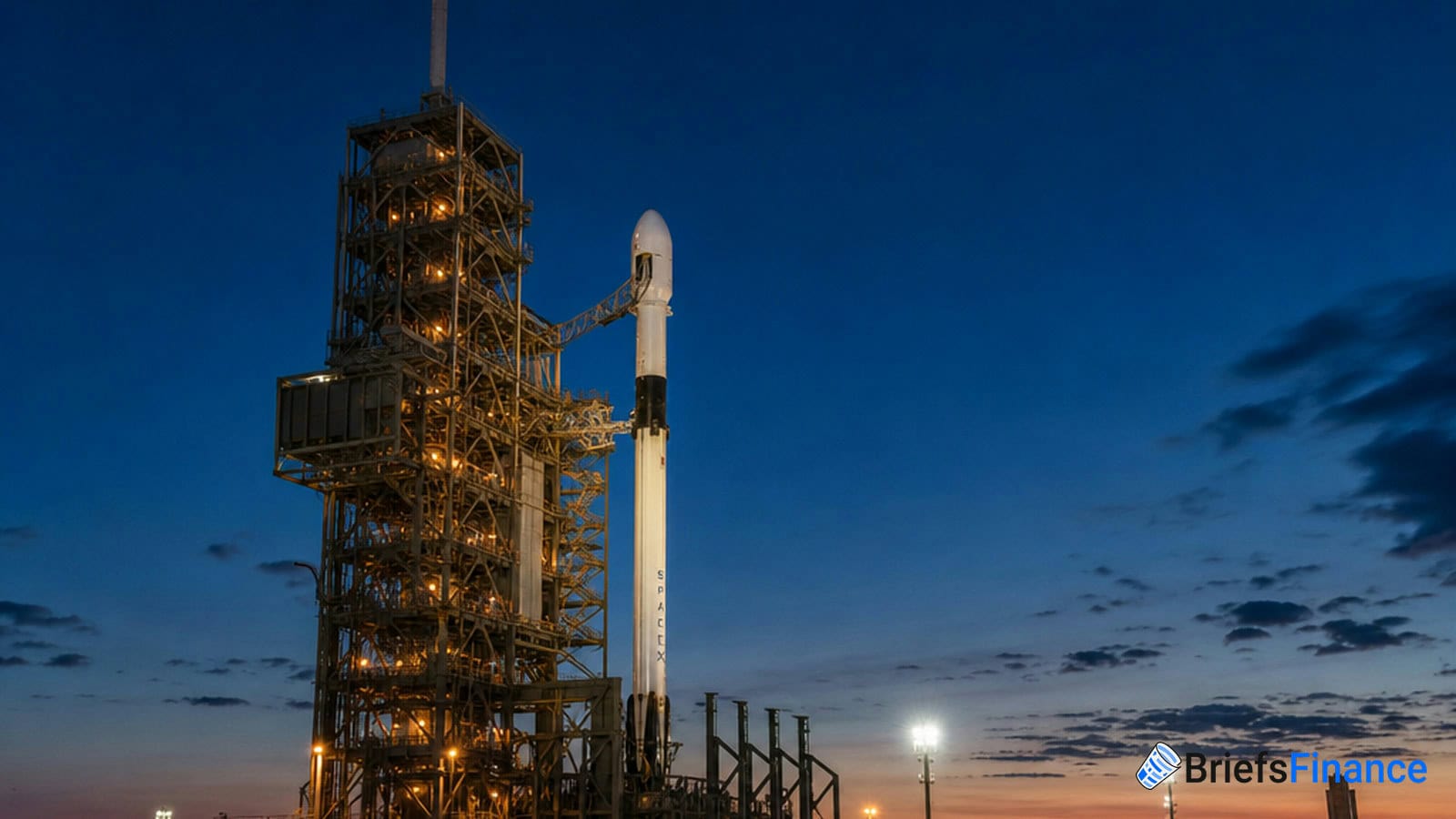
SpaceX is now one of the most valuable companies in the world, having just completed the largest IPO in history on June 12, 2026, when it debuted on Nasdaq under the ticker SPCX at $135 per share and closed Day 1 up 19% at $160.95 - a valuation north of $2 trillion.
It just went public in the biggest listing ever - and now its bankers are reportedly already lining up a $20 billion bond sale to put that fresh public-market status to work.
Every morning, Market Briefs breaks down the deals shaping where the money is moving - in five minutes a day, plus a free investing masterclass when you sign up.
A Fresh IPO Borrowing Like A Blue Chip
Reuters reports that bankers working with SpaceX are preparing to speak with investors as early as next week about a possible bond offering of at least $20 billion, following the company's blockbuster Nasdaq debut last week.
For comparison, $20 billion is the kind of number you usually see from Apple or Microsoft - household names that have been public for decades and tap the bond market through routine investor relations channels.
SpaceX only started trading publicly days ago, which makes a debt raise of this size unusual on its face.
The company has tapped credit markets through smaller loans before, including a $20 billion bridge loan from Goldman Sachs, Bank of America, Citigroup, JPMorgan Chase, and Morgan Stanley used earlier this year to retire roughly $17.5 billion of high-interest junk debt tied to X and xAI. A $20 billion bond offering would put it in the same conversation as the largest corporate bond deals on Wall Street.
The cash would help fund two of SpaceX's most expensive bets - the Starship rocket program meant to eventually carry people to Mars, and the ongoing buildout of the Starlink satellite network.
Starlink has grown into a major revenue stream with more than 12 million subscribers across over 160 countries and territories, which gives bond buyers a real cash flow they can count on.
Why SpaceX Is Layering On Debt After Going Public
Now that SpaceX is public, the IPO solved part of the cash problem - it raised about $75 billion at a $1.77 trillion valuation - but a $20 billion bond on top of that gives Musk more firepower without selling more equity into the market.
Debt lets Musk avoid further dilution of his voting control, which sits above 80% post-IPO thanks to a dual-class share structure, while still tapping the capital markets at scale.
The trade-off is interest payments, which can run into the hundreds of millions per year on a deal this size. But for a company tied to two fast-growing businesses, bond buyers have shown up before and are expected to again.
What To Watch
The deal isn't priced yet, the size could still change, and SpaceX hasn't officially confirmed any of it.
What matters is whether the offering actually gets done at $20 billion, because pricing at that level would signal that the bond market is ready to fund a freshly listed mega-cap at a scale that usually takes years of public-company seasoning to access.
Credit markets have been welcoming to large borrowers lately, with investors hungry for yield and willing to back riskier deals. That backdrop helps explain why bankers think a deal this size is even feasible right now.
If the deal lands, it sets a template for the next wave of mega-IPOs - names like OpenAI and Anthropic, which have both confidentially filed - to pair a public listing with a massive debt raise and stack capital from both sides of the market at once.
Newly public companies don't usually borrow this much this fast, but SpaceX isn't a usual newly public company.
Join 350,000+ investors who read Market Briefs every weekday morning - you also get a 45-minute investing course thrown in as a bonus.