Free NewsletterPro Login

Warning: Undefined variable $stocks in /var/www/briefs.co/htdocs/wp-content/plugins/oxygen/component-framework/components/classes/code-block.class.php(133) : eval()'d code on line 448

Warning: foreach() argument must be of type array|object, null given in /var/www/briefs.co/htdocs/wp-content/plugins/oxygen/component-framework/components/classes/code-block.class.php(133) : eval()'d code on line 448

Warning: Undefined variable $funds in /var/www/briefs.co/htdocs/wp-content/plugins/oxygen/component-framework/components/classes/code-block.class.php(133) : eval()'d code on line 472

Warning: foreach() argument must be of type array|object, null given in /var/www/briefs.co/htdocs/wp-content/plugins/oxygen/component-framework/components/classes/code-block.class.php(133) : eval()'d code on line 472
/* the link was here */

Crude Jumps 4% as Iran Eyes Second Oil Chokepoint

Published Jun 1, 2026
[tts_player]
Share:
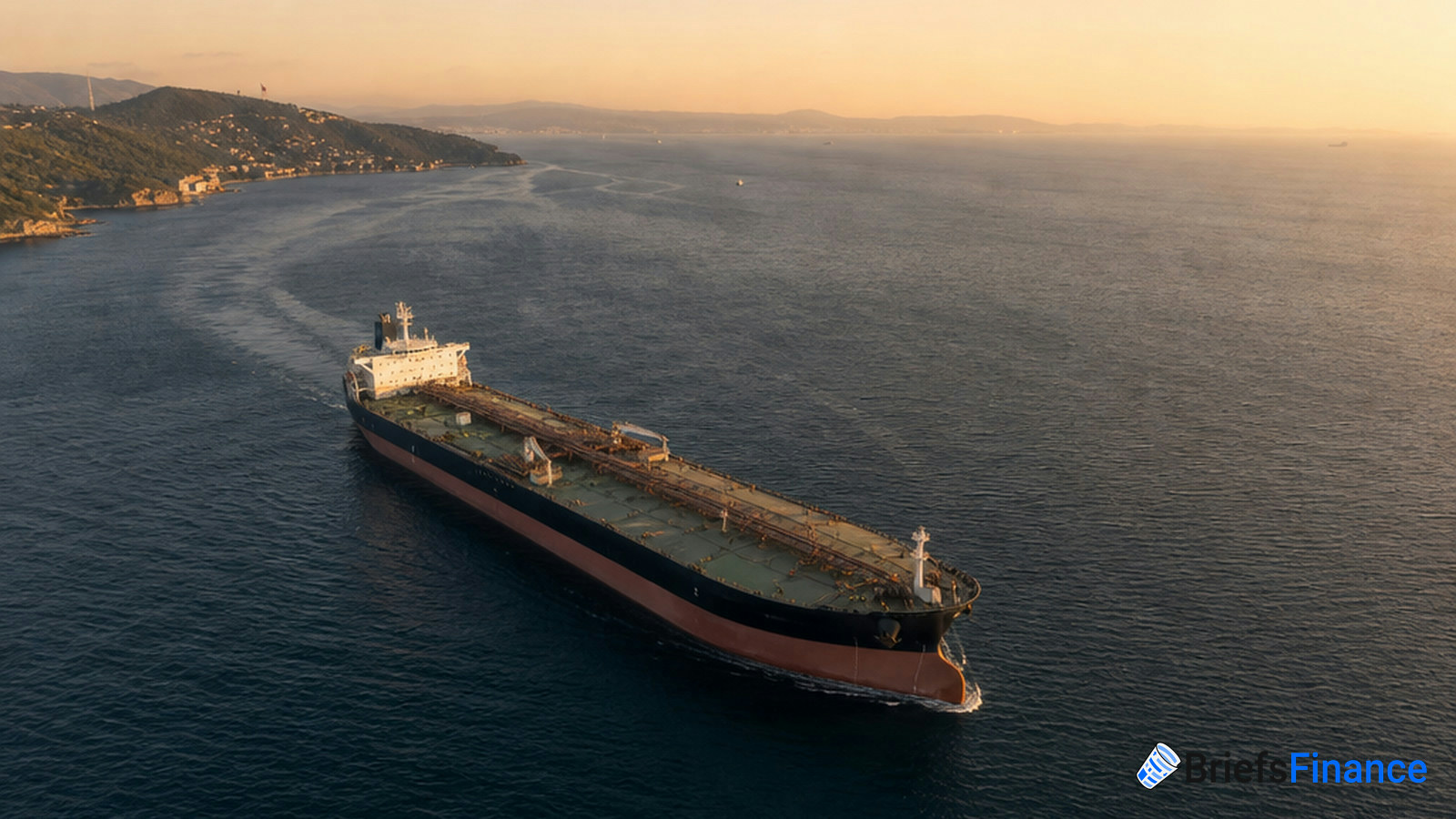
A large cargo ship sails through calm waters near a coastline at sunset, with hills and distant land visible in the background.
Summary:
  • Brent crude jumped 4.2% after Iran reportedly halted nuclear talks and threatened to target the Bab el-Mandeb Strait, a second major oil shipping route.
  • The Strait of Hormuz moves about a fifth of the world's oil and a fifth of global LNG, and visible commercial traffic through it has already thinned since Friday.
  • If both chokepoints close, tankers must reroute around Africa, adding roughly 15 days per trip from the Arabian Sea to Europe and raising costs across energy markets.

Trump says a deal with Iran is a week away, but Tehran reportedly just walked out of the talks, sending crude up 4% - its biggest one-day move in about a month - as traders tried to price both stories at once.

Two Chokepoints, Not One

The Strait of Hormuz has always been the one to watch, moving about a fifth of the world's oil and about a fifth of global liquefied natural gas - LNG, the fuel that powers a huge share of global heating and electricity.

Shut it, and the global energy map rearranges overnight.

Now Iran is reportedly putting a second waterway on the table: the Bab el-Mandeb Strait at the southern end of the Red Sea, the backup route the world has been quietly relying on.

Roughly 12% of seaborne oil trade has historically moved through the Red Sea route - Bab el-Mandeb and the Suez Canal - on its way to Europe, and Houthi attacks on shipping already disrupted that route once before.

If Tehran closes both, there is no backup - tankers go the long way around Africa, adding roughly 15 days to each trip from the Arabian Sea to Europe and pushing up the cost of everything that runs on oil.

That's why a 4.2% jump in Brent feels small next to what could still come, with visible commercial traffic through Hormuz already thinning since Friday.

The market is already pricing in less oil moving, not more.

We unpack how stories like this actually hit your portfolio every morning in Market Briefs - in five minutes a day, plus a free 45-minute investing masterclass when you sign up.

Trump Talks Deadline While Markets Stay Skeptical

Trump told ABC News a memorandum of understanding with Iran on Hormuz - a written agreement that lays out terms before a formal deal - could happen "over the next week," with a few more points to lock down before a deal is on the table.

The problem is the rest of the picture: Iran's semi-official Tasnim news agency reported Tehran is halting talks over Israel's strikes in Lebanon.

Trump and Netanyahu gave different accounts of their own call about the same fighting, while the ceasefire between Israel and Hezbollah is being renegotiated this week.

"As long as flows through Hormuz have not fully normalized and the US-Iran negotiation process remains uncertain, oil prices are likely to stay elevated and volatile," said Linh Tran, a market analyst at XS.com.

Traders aren't going to take Trump's word for it until ships are actually moving.

What To Watch

The number that matters this week isn't a price - it's the count of tankers moving through Hormuz, and if traffic picks back up, the 4% jump unwinds fast.

But if Iran makes a real move against the Bab el-Mandeb, the conversation shifts from "elevated" to something else entirely.

Until the ships start moving through Hormuz, every other market is taking its cues from oil.

If you want this kind of read on oil, geopolitics, and what they mean for your money, join 350,000+ investors reading Market Briefs - the free investing course is thrown in as a bonus.

Disclosure

Recent News

1 2 3 68

Get Market Briefs delivered to your inbox every morning for free!

No fluff. No noise. No politics. Just finance news you can read in 5 minutes.

Blogs

September 4, 2026
An Interest Rate Hike in 2026? The Fed Just Broke Its Own Script
  • The Federal Reserve spent a year signaling cheaper money, and its new chairman just warned that an interest rate hike may be coming instead.
  • The Fed is stuck between high inflation and a weak job market, and fixing one makes the other worse.
  • Higher rates also reprice roughly a third of America's $40 trillion national debt this year, which is why Washington wants cuts so badly.
Read More
September 3, 2026
5 Passive Income Ideas That Pay You Whether You Work or Not
  • School teaches one formula: work, earn, spend. Stop working and the money stops, so the wheel never ends.
  • Five assets pay you without your labor - dividends, rent, interest, royalties, and the things you already own.
  • $80,000 a year of cash flow takes about $1 million invested at 8%, or roughly 20 years of $1,000 a month.
Read More
September 2, 2026
The Best Way to Invest 10k: Three Options To Transform 10K into 10 Million
  • Passive investing in stocks or real estate targets around 10% a year, and time in the market matters more than the price you get in at.
  • Active investing means putting your time in alongside your money, which raises the target to roughly 20% a year and raises the risk of losing it all.
  • Investing in yourself has no ceiling, because a new skill can create a new income that no market return can match.
Read More
September 1, 2026
The Tax Write Offs the Rich Are Using in 2026 While the IRS Shrinks
  • The 2026 tax brackets landed lower than they were headed, and the standard deduction jumped from a planned $8,350 to $16,100 for single filers.
  • New write offs for overtime, tips, seniors and car loan interest are live now, and most of them are written to expire in 2028.
  • About a third of IRS auditors have been fired, and four assets do most of the work for people who want income without a matching tax bill.
Read More
August 31, 2026
America Is Running Out of Debt Buyers. Treasury Bills Are the Government's Fix
  • The government took in about $5 trillion in taxes in 2025 and spent about $7 trillion, and the national debt is now over $40 trillion.
  • Investors, banks, and foreign countries are all lending less to the U.S., so starting September 9 the government plans to sell more short-term treasury bills and use that cash to buy back its long-term debt.
  • Government interest rates set the floor for your mortgage, your car loan, and your credit card, and short-term Treasury ETFs like SGOV are one way investors are playing it.
Read More
August 23, 2026
How to Get the Most From Your Guideline 401k
  • Guideline is a company that provides low-cost 401k plans, popular with small businesses and their employees.
  • A "Guideline 401k" follows the same core rules as any 401k: tax-advantaged growth, contribution limits, and often an employer match.
  • The biggest results come from capturing the full match, choosing low-cost funds, and picking Roth or traditional to fit your situation.
Read More
August 23, 2026
Principal 401k: What to Know About Your Plan
  • Principal is one of many companies that manage workplace 401k plans, so a "Principal 401k" is simply a 401k where Principal is the provider.
  • The rules of a 401k are the same no matter who runs it: pre-tax or Roth contributions, tax-advantaged growth, and often an employer match.
  • The biggest wins come from grabbing the full match, picking low-cost funds, and knowing whether Roth or traditional fits you.
Read More
August 23, 2026
What a Tariff Dividend Means for Your Money
  • A "tariff dividend" is the idea of taking money the government collects from tariffs and paying some of it back to citizens.
  • To judge the idea, you first need to know what a tariff is: a tax on imported goods, usually paid by the companies bringing them in.
  • Tariffs ripple through prices, businesses, and your investments, so the smart move is understanding those ripples, not just the headline.
Read More
August 23, 2026
No Tax on Overtime: How Overtime Pay Is Taxed
  • "No tax on overtime" refers to a tax break that lets certain workers deduct some overtime pay, lowering the income they get taxed on.
  • A deduction does not mean overtime is truly tax-free. It means part of that pay is subtracted before your tax is figured.
  • The bigger money lesson: how you earn money changes how it is taxed, and investors often get the friendliest treatment of all.
Read More
August 23, 2026
Reading the Silver Price Forecast for 2026
  • Nobody can honestly promise a specific silver price for 2026. Any exact number is a guess, so treat forecasts as opinions, not facts.
  • Silver is unusual because it is both a precious metal and an industrial metal, so its price answers to two very different forces.
  • Instead of chasing a forecast, learn the drivers - inflation, interest rates, recession fear, and industrial demand - so you can judge any prediction yourself.
Read More
1 2 3 26
Share via
Copy link










