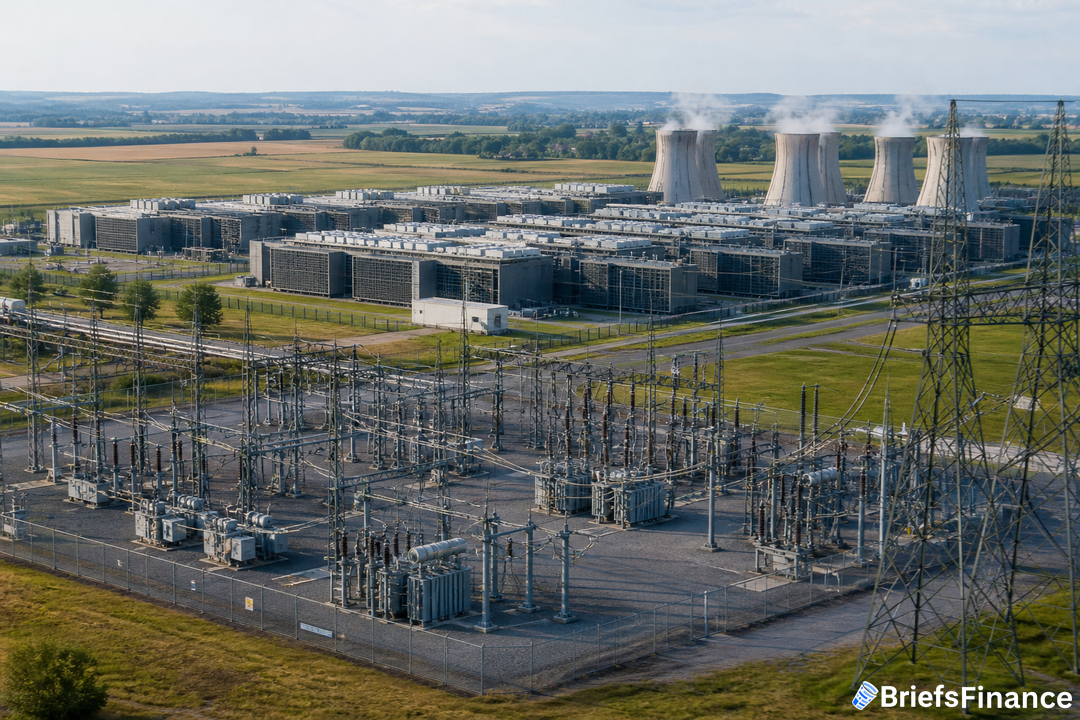
What Anthropic told would-be shareholders
In its S-1, Anthropic said it anticipates more intense examination of how it manages environmental and social challenges as it builds out AI infrastructure. The company also cautioned that efforts to line up power could face regulatory obstacles if those activities are viewed as pushing up utility bills or harming the broader environment.
It wrote that "Data center development has prompted public controversy and regulatory scrutiny regarding environmental impact, land and water use," and added that its "brand is subject to heightened scrutiny with respect to perceived societal, environmental, labor, health, and safety-related impacts." The filing also pointed to "increasing scrutiny" of its ESG practices and disclosures in the United States and abroad, noting a "particular focus" on AI's social and environmental effects, including energy intensity, public concern over water use and reliance on critical minerals.
Power and climate risks, in plain English
Anthropic flagged that rules for how power is generated "continue to evolve, including as a result of changing governmental priorities and shifting public and political views regarding climate change and the appropriate treatment of various power generation sources." If it cannot secure enough electricity, or if new legal or regulatory actions limit supply, or if energy or compliance costs jump, that could "adversely affect our cost structure." In turn, it said such constraints could "limit our ability to scale our compute infrastructure, develop and deploy our models, and service our customers."
Climate change itself is a direct operating risk. Anthropic wrote, "The physical effects of climate change may increase our operating costs over time, as higher average temperatures can increase the power consumption and water usage required to cool equipment at the facilities on which we depend."
Pushback on data centers and what investors want to see
Tensions around AI infrastructure are already surfacing on the ground. Last month, Oracle Corp. invoked force majeure, saying efforts to obtain electricity for a New Mexico data center complex were hindered by pushback from environmental nonprofits and regulatory delays; the site was meant to supply compute for OpenAI.
The broader pattern is similar. A September University of Massachusetts Amherst poll found 65% of US voters opposed local AI data centers, versus 11% in favor.
When new technologies raise complex questions, stay informed with our free Market Briefs newsletter that explains what matters
Investors are pressing for clearer disclosure. At Bailard, Blaine Townsend oversees sustainable, responsible & impact investing, and he said, "Such concerns are now core financial and fiduciary considerations, not side issues." He said Bailard's research focuses on three material footprints for AI: data centers in communities already burdened by pollution, water usage and energy demand, and the firm checks whether companies address each area in their reporting.
Lionella Pezza, who heads impact research at Domini Impact Investments, views Anthropic's filing as highlighting that sustainability is fundamental for AI companies, and she further maintained the company has not offered enough specificity. She noted there is "not sufficient disclosure about the company's environmental impact," with "no quantitative information on Anthropic's greenhouse gas emissions, energy consumption, or water use." The risks, she said, are discussed only "in general terms," without sizing the exposure or tying it to costs, compute capacity or service continuity.
The filing also contrasts with SpaceX's, which initially omitted climate change. SpaceX later amended its document to include water scarcity as a risk factor. More broadly, activist groups, communities, regulators and investors are scrutinizing AI companies, some states have considered or pursued moratoriums on new data centers, and Anthropic acknowledged that backlash could harm its reputation. The company also warned, "Some investors may use these non-financial performance factors to guide their investment strategies and, in some cases, may choose not to invest in us if they believe our policies and actions relating to ESG are inadequate."
Why it matters for your portfolio
Anthropic's own risk list ties environmental scrutiny, changing power rules and physical climate impacts to higher operating and compliance costs and to potential limits on scaling compute for customers. Public sentiment and permitting friction add another constraint, which can delay projects and raise capital intensity.
The bottom line: if you are tracking this IPO, watch for how the company secures electricity, discloses water and energy usage, and navigates evolving standards. Peers' experience shows opposition can slow or reshape projects, and Anthropic's filing makes clear these pressures could hit cost structure, capacity and service.
When infrastructure debates touch energy and communities, get free Market Briefs in five minutes or less to stay current