The pitch
Four people with knowledge of the talks said Modern Way has proposed moving wheat and other agricultural cargo via Abkhazia's Ochamchire port, and that several Russia based traders and brokers are weighing containerized shipments to Turkey. The terminal can begin moving grain to Gebze in Turkey once a quality inspection service opens by the end of next month, a Modern Way employee said, asking not to be named.
The company moves containers by sea and rail, lists offices in Russia and China, and also offers air freight and storage, per its website. Emailed questions went unanswered by Modern Way; by the administration of the Ochamchire port; by Abkhazia's economy ministry; and by Russia's transport and agriculture ministries.
Why this workaround now
Russia normally accounts for about one-fifth of the global wheat trade, and roughly 90 percent of its exports move through Black Sea ports. Attacks between Russia and Ukraine have largely stalled shipments from both countries' primary grain hubs, pushing wheat to a three year peak in August and forcing a scramble for new routes. The disruption has squeezed revenues for farmers and traders, while Moscow has applied both pressure and incentives to preserve Russia's market lead.
So far that has meant reaching for the Arctic port of Murmansk, using Baltic ports, and railing grain to the Far East. Traders have also increased the use of containers running across Russia to ports as far apart as St Petersburg and Vladivostok, but these channels have not met needed volumes to date. "Russia's willingness to consider virtually every available export outlet indicates that security and continuity of supply are becoming almost as important as conventional freight economics," said Swithun Still, a consultant with decades in the grain trade. It "tells us how seriously exporters are taking the disruption to their traditional Black Sea logistics." Data from ProZerno show Russia's wheat exports have fallen since August as attacks shut the country's main hubs.
When global trade routes can affect supply chains, stay informed with our free Market Briefs newsletter that summarizes markets in minutes
How it would operate - and the limits
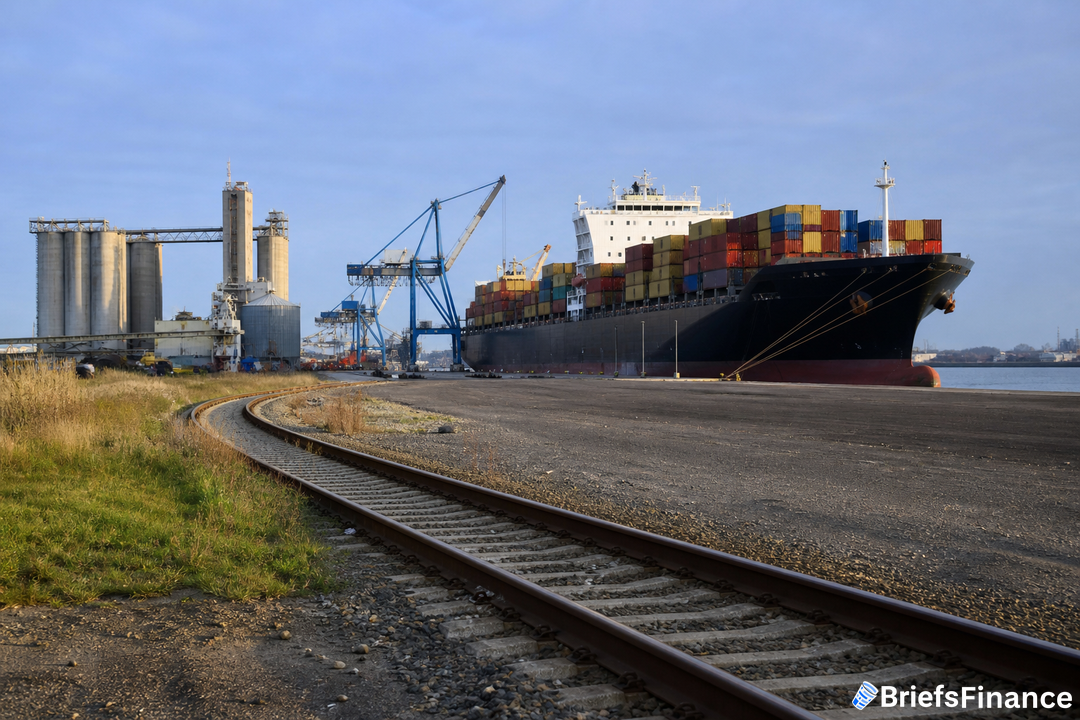
Ochamchire is small, and loading grain into containers is costly and uncommon, usually used for higher value or perishable foods like spices and bananas. By comparison, bulk carriers for grain can top 100,000 tons, while freight specialists at Kpler say a standard 20 foot container holds about 23 tons and requires extra time and handling.
Even with those hurdles, containers have gained ground in recent months as rail subsidies and a slump in domestic wheat prices, with unsold supplies building up on farms, help offset higher freight bills. "Container shipments have moved into this economic gap," said Arkady Zlochevsky, head of the Russian Grain Union. "But they are more expensive, so nobody sees them as a long-term solution for cargoes of this size."
The backdrop and the investor angle
Abkhazia is a Kremlin backed separatist region that most countries consider part of Georgia. The region split from Tbilisi in the 1990s, and Russia recognized it as independent in 2008 following a short war with Georgia. Russia financed completion of the Ochamchire container port last year as one element of a wider push to diversify Black Sea logistics. How many traders choose the Ochamchire route remains uncertain, said people familiar with the matter.
The bottom line: Russia is testing every outlet it can find, but alternatives have not matched Black Sea capacity, and containerized grain remains a costlier stopgap.
Because geopolitics and logistics often ripple through prices, sign up for Market Briefs for a five minute digest of markets and economy