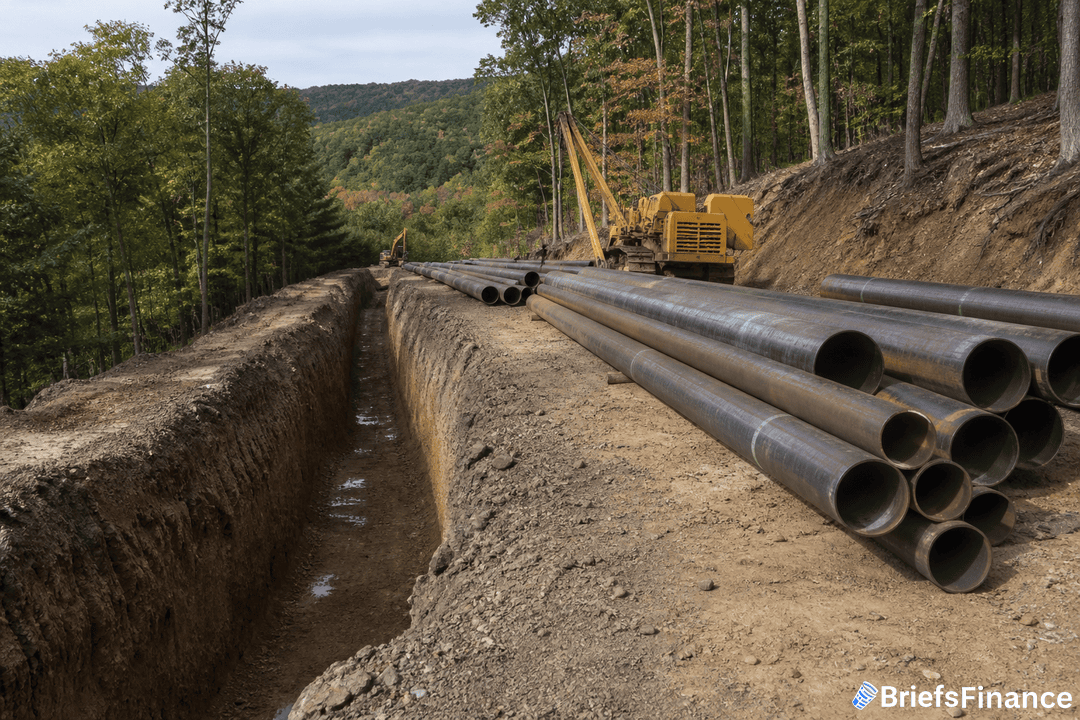
The Move: Emergency Law and Fresh Funding
The administration is turning to a wartime-era authority to bolster a natural gas pipeline the president has promoted as a way to tamp down Northeast prices. On Monday, the Energy Department said it would award $42 million for permitting and early-stage work on the Constitution Pipeline, owned by Williams Co.
Energy Secretary Chris Wright unveiled the funding in New York's Hudson Valley, in the area represented by Republican Mike Lawler, who is in a close re-election fight. At a Citadel Securities event in New York, Wright said the project "will meaningfully lower electricity costs, lower the risks of blackouts and allow expansion in electricity production in New York and New England."
The authority is the Defense Production Act, which lets presidents steer parts of the economy for national security. In April, Trump laid the foundation by issuing determinations that back U.S. coal-fired generation, liquefied natural gas, U.S. petroleum production, and upgrades to the power grid. And just last week, Vice President JD Vance said the administration would use the same law to aid a refinery expansion in Texas. Williams shares fell Monday.
What the Pipeline Would Do - And Why It Stalled
First unveiled in 2012, Constitution aimed to ship natural gas out of Pennsylvania's shale plays to New York and New England, where it would link up with a pair of already-built pipelines located in Upstate New York. After years of opposition from environmental groups, Williams dropped the effort in 2020 when it could not obtain key New York permits tied to water quality.
Williams brought the project back last year with Trump's backing. He has argued the line would reduce energy costs in the Northeast by as much as 70%. Republicans, meanwhile, have been pressing the case that Democrats blocked pipelines and related infrastructure, contributing to higher energy prices ahead of next month's contests.
Energy headlines can shift quickly, so get the free Market Briefs newsletter to understand the economy and markets in minutes
Timelines, Demand Questions, and a Court Fight
Wright said that, if progress stays on track, construction could begin this spring, with operations starting before the winter of 2028. But advancing the line has been difficult in part because some utilities have hesitated to commit to buy gas from it. Analysts who track gas markets and routing note that while Northeast power companies want more pipelines, Constitution would not actually deliver gas to the biggest demand centers.
Wright rejected the idea that buyers are scarce. "There is tremendous interest in the gas from this pipeline. We've had at least two players say 'We'll take all the gas,'" he said, adding that one is a trading firm and the other a large local utility.
Separately, New York State is contesting the project in federal court, arguing regulators must complete a new environmental review before it can move forward.
Why It Matters for Investors
This is a clear signal that the administration will use the Defense Production Act to push energy and grid projects. If permitting stays on schedule, Wright says the line could help ease electricity costs and blackout risks in New York and New England, which would show up in regional power bills. Delays tied to litigation or customer contracts would push that impact out. For energy investors, keep an eye on Williams' permitting milestones, the conditional spring start window, and whether the two interested buyers translate into signed contracts that underpin financing and build-out.
When policy and infrastructure collide, staying informed is easier with Market Briefs, our free daily newsletter covering money and markets clearly