What was announced
Two longtime rivals just found a project they both like. Meta and Apple said Thursday they're working together on getting Meta's latest open-weight AI model running on Apple's top desktop hardware. The effort centers on Muse Spark Open, which Meta bills as its most capable open-weight model under a license that permits limited commercial use. It's built with 816 billion parameters and a mixture-of-experts design.
As an open-weight release, developers can download the model's weights and run it on different hardware. This came after months of joint work and signals how the AI boom is reshuffling old rivalries in Silicon Valley.
Mark Zuckerberg posted a photo on X of a Meta agent running on a Mac and wrote, "Muse Spark Open -- weights releasing today -- runs great on new Mac Studios thanks to work with @johnternus and Apple." John Ternus replied, "Congrats to the team! Amazing to run a model of Muse Spark Open's caliber and scale this efficiently, right from your desk. Mac Studio keeps pushing the boundaries of on-device AI!"
How it runs on Macs
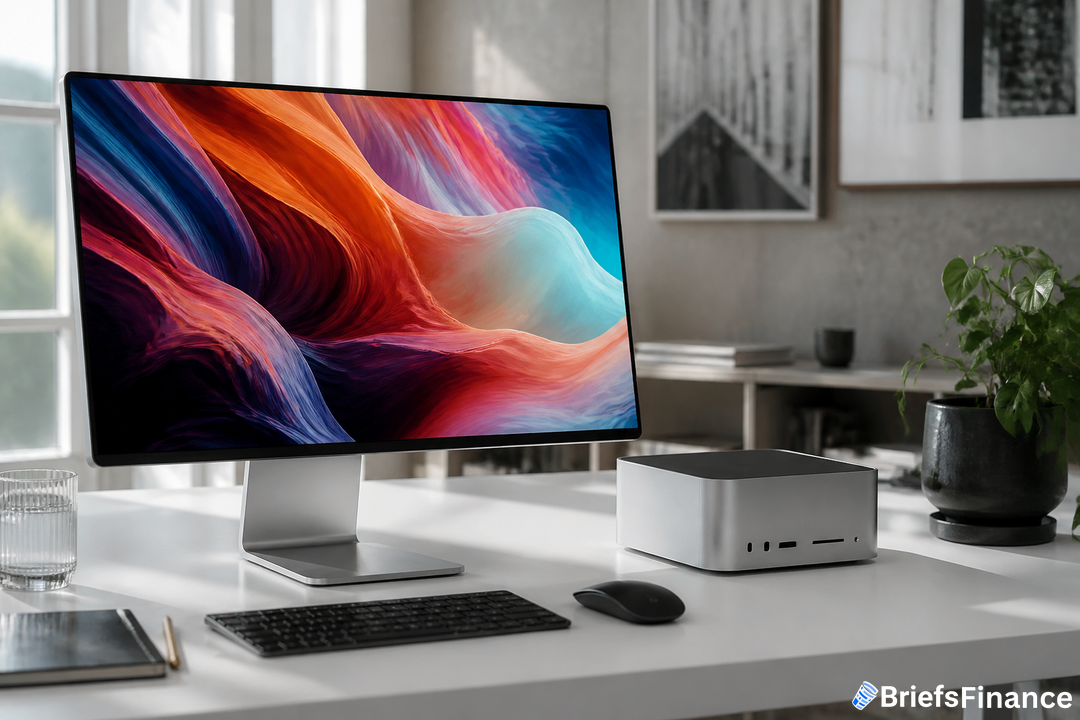
Customers will be able to link two to four Mac Studio PCs to run Muse Spark for coding, video analysis, and other agentic tasks. The model runs on the machines themselves instead of in the cloud, which the companies said adds a security layer and can save money. Meta AI chief Alexandr Wang said many powerful open-weight models are too large for most personal computers, but Mac Studios expose enough memory to make Muse Spark Open practical.
"We worked with Apple to bring leading Agent capabilities to your desktop for the first time on the Apple M5 Ultra Mac Studios, so you know we're really excited about this," he said. Developers can grab a build from platforms such as Hugging Face that works on Apple silicon out of the box. Apple shared new chip benchmarks and released technical docs describing how its MLX AI framework can partition open-source models over several machines, and Muse Spark Open has been optimized to run faster on Apple hardware.
Price, hardware, and who benefits
The gear is pricey. A Mac Studio configured with an M5 Ultra and 256GB of memory starts at $10,799, and a 512GB RAM configuration will be released later this month. On top of that, users will need multiple machines.
Earlier this year, Meta's engineers purchased hundreds of Macs to enable its Superintelligence team to test local AI and agents. The move is a confidence boost for Meta's AI reboot and could raise the stakes for OpenAI and Anthropic. It also hints at Apple's growing strength in AI-class chips, a market Nvidia dominates today because of their ubiquity in large data centers.
When technology shifts how we work and invest, stay calmly informed with the free Market Briefs newsletter delivered in minutes a day.
The bigger picture for Apple, Meta, and your money
There is plenty of history here. Apple and Meta kept each other at a distance for years and avoided public partnerships once Apple pulled the system-level Facebook tie-in from the iPhone in 2017. Tensions spiked when Apple's 2021 privacy changes limited ad targeting, a shift Meta estimated in early 2022 would reduce that year's revenue by $10 billion.
"Most of the animosity predates my tenure at the company, but obviously there's been a long history between Meta and Apple," Wang said, citing Daniel Gross - an AI researcher who previously served as an Apple director - as one reason the collaboration was possible. Last year, as Zuckerberg reworked Meta's AI strategy, he made a high-profile hire in Gross, who joined alongside former GitHub CEO Nat Friedman.
The executives have traded barbs. During the Cambridge Analytica fallout in 2018, Tim Cook said, "I wouldn't be in this situation." Zuckerberg told Joe Rogan last year that Apple "hasn't invented anything great since the iPhone." Cook, Apple's CEO up until Ternus took over last month, frequently faulted Meta for undermining user privacy. A hardware engineer by background, Ternus has begun to alter Apple's product release timing. And the Apple hardware is showing up in the wild: the new Mac Studio and Studio Display were on display at Apple's Fifth Avenue store in Manhattan on March 18, 2022, per Reuters.
Apple is working with multiple AI partners. In 2024, it revealed it was teaming up with OpenAI to bring ChatGPT into Siri; however, OpenAI later stated in a filing tied to its legal dispute with xAI that the integration "dramatically underperformed" and failed to increase OpenAI's user base. In July, Apple sued OpenAI over alleged trade secret theft, and OpenAI denied the allegation.
Apple also unveiled an agreement with Google to employ Gemini models within Apple Intelligence and to leverage Google Cloud infrastructure. Even so, investors and customers have criticized Apple's AI approach, arguing that the new Siri, released last month, still lags the top chatbots and agent systems in sophistication.
Meta has been juggling open and closed strategies. Recent launches - including the Muse personal agent app and Meta's newest proprietary foundation model, Muse Wonder, which debuted earlier this week - have energized investors looking for fresh AI revenue. Open weight remains part of the playbook.
In August, Meta rolled out a smaller model named Muse Glimmer, and Zuckerberg pledged to eventually ship something larger. Muse Spark Open isn't as advanced as Muse Wonder, but Wang said it could entice more coders to upgrade: "These aren't the most capable models that we've developed or released," he said, adding that many teams will tinker at small scale and then ramp up.
Policymakers are watching as the companies align around open-source AI while Washington worries that free Chinese models could undercut U.S. efforts.
Markets and tech evolve together, so get a clear daily roundup in the free Market Briefs newsletter to stay grounded.