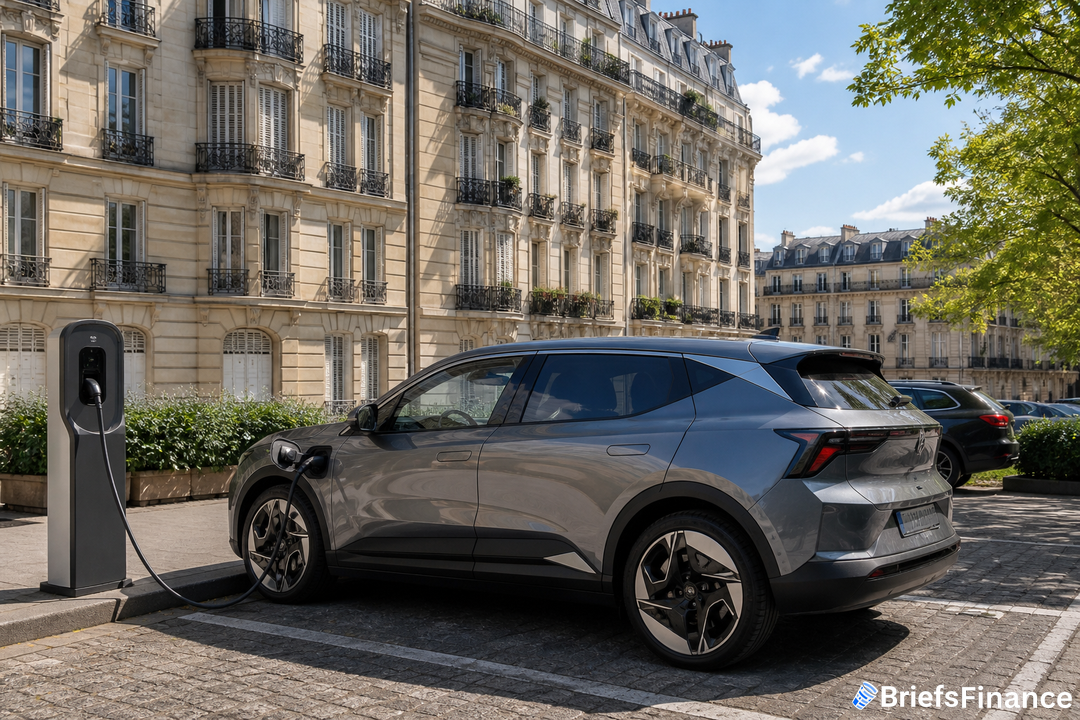
What Renault is committing to
Renault's chief executive Francois Provost said Saturday on France Inter radio that the company will keep backing electric vehicles in its home market, so long as the climate in France allows. In the past five years, the carmaker poured €13 billion ($14.6 billion) into expanding EV production in France. Looking ahead, Provost said, "Over the next five years, if the social and political context in France allows it, we will invest more than €10 billion to continue pushing ahead with electric vehicles and make cars more affordable." Renault is 15% owned by the French state.
Politics and markets are the backdrop
France is heading into an uncertain stretch with about seven months until elections that would close out President Emmanuel Macron's decade in office. The strain is showing in parliament, where an increasingly bitter budget fight has the minority government trying to advance a plan that leans on unpopular spending cuts and higher taxes on large companies to contain a swollen deficit. Recent polls suggest April's vote could end in a second-round faceoff between far-right front-runner Marine Le Pen and far-left leader Jean-Luc Mélenchon. The jitters have spilled into markets, fueling a selloff in French assets and sending sovereign yields this week to their highest since the euro-area debt crisis 15 years ago.
Carmakers commit capital years ahead of demand, and politics can redirect it almost overnight. Market Briefs tracks those bets free every morning.
Why it matters to Renault and its people
Provost called the market swings "worrying" for Renault, noting how tied the company is to France: 20% of its business comes from the country and 40% of its workforce is based there. "We have really bet on France and we will continue to bet on France," he said. "So any scenario of instability in France would have a major impact on Renault, a major impact on our employees and a major impact on our suppliers, so yes, I am worried."
Trade with China is a pressure point too
Provost also pressed for European Union action on the auto trade imbalance with China. "The flow of imports coming from China is currently too rapid and not really under control," he said, adding that "The answer is not a tariff war, but an agreement between China and Europe that says Chinese carmakers are welcome provided they not only manufacture here, but also use European suppliers and bring technology." For your wallet, the takeaway is simple: Renault's next wave of EV spending - and the jobs tied to it - depends on calmer French politics and clearer rules on China. Those forces can sway everything from car prices to local investment.
Industrial policy, trade fights, and EV spending all end up in the sticker price of a car. Get Market Briefs free each morning and watch where the money moves.