Berkshire's move and what it signals
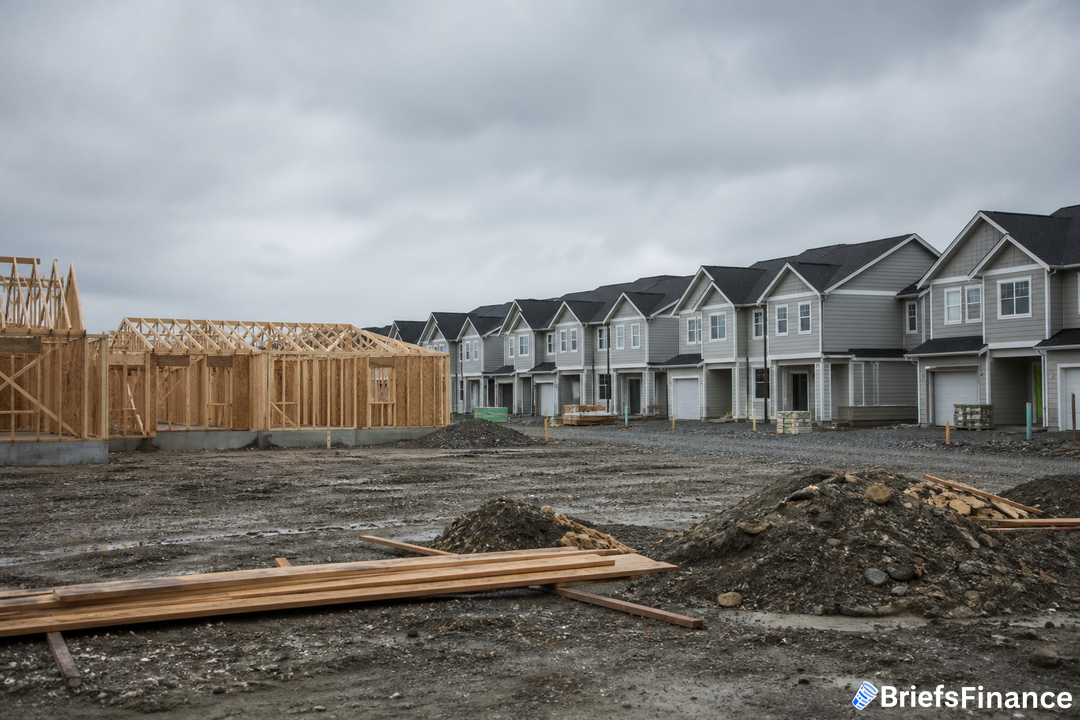
Berkshire Hathaway has built a $2.2 billion position in Lennar and, after buying $53.9 million of shares in late September, now holds 11% of the company, just shy of Vanguard's 11.2% stake. That puts Berkshire within striking distance of becoming the top shareholder. The stepped-up buying followed CEO Greg Abel's early September CNBC comments that he does not expect a quick housing rebound but wants to stay invested for the long haul. Bloomberg Intelligence's Drew Reading called the purchases "a vote of confidence in the long-term outlook for housing and a bet on Lennar having torque to an eventual market rebound."
This push sits inside a bigger housing footprint. In July, Berkshire paid $6.8 billion for Taylor Morrison Home Corp., augmenting its holdings that include Clayton Homes Inc. plus a smaller investment in NVR Inc., and giving it reach from factory-built homes and building materials through real estate brokerages and utilities. Berkshire more than doubled its Lennar holdings in the third quarter. The company did not return requests for comment, and Lennar declined to comment.
Lennar's land play, explained
Lennar stopped buying raw land and, in early 2025, wrapped up a multi-year plan to shift $5.5 billion of land into Millrose Properties, a standalone public company. The strategy follows the land-light playbook NVR pioneered in the late 1990s and that D.R. Horton Inc. and others adopted after the financial crisis. Maurice Austin, a credit analyst and director at S&P Global Ratings who follows Millrose, said, "It's a matter of Lennar trying to diversify their land risk." He added, "If there's another market crash, they won't have that land on the balance sheet."
Lennar pushed further than most competitors, holding less than 2.5% of its land versus 22% at D.R. Horton, and it locked itself into a strict schedule for taking lots from Millrose. Given weak demand, Lennar must either construct homes that require discounts to sell or pay Millrose a fee to forgo lots, effects that can cascade across the remainder of the portfolio. According to some analysts, the company swapped conventional land ownership for a restrictive and costly third‑party financing setup. "The street has been wrestling with this over time," said Raymond James analyst Buck Horne. "It's why Lennar has decoupled from its peers - it's the complexity of what they've entangled themselves with."
Politics, pricing, and a long slog
Materials and labor have become more expensive, driven by the combination of the Trump administration's tariffs, the war in Iran, and immigration policy. Add mortgage rates at 7.3% this week, near a three-year high, and the sector has stumbled: the S&P Composite 1500 Homebuilding index has declined 7.9% year to date, and Lennar is off 21%, making it one of the benchmark's laggards.
About a year earlier, President Donald Trump criticized large builders for stockpiling land and throttling supply, posting on Truth Social: "They have to start building Homes." Lennar looked like it got the message, sweetening incentives, cutting prices, and taking margin pain to lure hesitant buyers. CEO Stuart Miller took the rhetoric as a sign that policymakers were readying help. Yet this summer's 21st Century Road to Housing Act left homebuilders with little to show for it. Miller told analysts he still expects some federal or state action, but "it's taken longer than I would've liked." For now, even as peers dial back production, Lennar is continuing to build and letting margins slide toward 2008 levels.
When the housing news keeps you thinking about long-term plans, download our free Always Be Buying E-Book and start building consistent wealth
KBW's Jade Rahmani estimates that, given today's conditions, it will take Lennar about three years to clear its land obligations. "The impact from Millrose is worse than we previously modeled, and worse than I think management expected," he said. "I don't think politics is going to get them through this."
The bottom line for your wallet
Berkshire is leaning into housing's future, even as the present still bites. Its growing stake only goes so far, though. Since 1997, Stuart Miller has served as CEO, chairman, or both; he holds over two-thirds of Lennar Class B shares, which confers roughly 42% of total voting power.
Short term, Lennar faces soft demand, fixed lot commitments, and slimmer margins. Longer term, if demand revives, its retooled model could have real upside. For everyday investors, the message is simple: a heavyweight sees value on the other side of a choppy cycle, while the here and now still looks bumpy.
Even amid changing homebuilding plans, steady contributions matter, so access the free Always Be Buying E-Book for a simple plan