Free NewsletterPro Login
Free Live Investors Workshop
Seats limited
Tue, Sep 29.
The dollar is losing value.
Here’s how investors can still profit.
Hosted By
Jaspreet Singh
Founder, Briefs Finance
X

Warning: Undefined variable $stocks in /var/www/briefs.co/htdocs/wp-content/plugins/oxygen/component-framework/components/classes/code-block.class.php(133) : eval()'d code on line 448

Warning: foreach() argument must be of type array|object, null given in /var/www/briefs.co/htdocs/wp-content/plugins/oxygen/component-framework/components/classes/code-block.class.php(133) : eval()'d code on line 448

Warning: Undefined variable $funds in /var/www/briefs.co/htdocs/wp-content/plugins/oxygen/component-framework/components/classes/code-block.class.php(133) : eval()'d code on line 472

Warning: foreach() argument must be of type array|object, null given in /var/www/briefs.co/htdocs/wp-content/plugins/oxygen/component-framework/components/classes/code-block.class.php(133) : eval()'d code on line 472
/* the link was here */

Meta's Muse-fueled surge puts $2T valuation in sight, but spending spree looms

Published Sep 25, 2026
Share:
Summary:
  • Meta shares climbed 36% in September through Thursday after its Muse personal AI assistant shot up the app rankings.
  • The stock is tracking for its strongest month since July 2013 and is nearing the $2 trillion market-cap tier.
  • Investor excitement over fresh AI offerings is the primary boost, but late last month Meta also agreed to a settlement that could reach up to $18 billion in a social-media lawsuit.

What happened and why it matters

Meta's latest rally kicked into gear after Muse, its personal AI assistant, took off with users, easing worries that the company's outsized AI investments might not translate into business results. That burst put September on pace to be Meta's best month since July 2013 and moved it close to the small circle of companies valued at $2 trillion or more. Early Friday trading cooled things down, with the stock dropping more than 3% and trimming the week's advance to about 13%.

From laggard to leader in six weeks

Just under six weeks ago, the setup looked very different. After a muted revenue guide in late July, Meta's year-to-date return was negative 18%, placing it within the 50 poorest performers in the S&P 500 as of Aug. 18. Since then, the shares have flipped to one of the index's standouts with a gain near 40%.

The tide began to turn late last month after Meta reached a settlement agreement tied to a social-media lawsuit that could amount to $18 billion, easing a major legal overhang. The larger spark is investor excitement about new AI tools and what they could add to revenue.

Asymmetric Capital Partners co-founder and managing partner Rob Biederman said, "Muse clearly validates its AI strategy and position, after a year and a half where the stock was basically flat because people didn't know if AI was going to be a net positive or a net negative." He added, "It's logical that AI agents will become the front door to the internet for a lot of people, which puts the balance of power in Meta's favor."

What Meta is shipping right now

Meta announced a grocery-commerce tie up with Instacart owner Maplebear Inc. and another with Expedia Inc. At a Wednesday event, the company rolled out a palm-sized device for using Muse and introduced camera-free versions of its smart glasses, earning favorable nods from analysts. The buzz around Muse has also spooked investors in a wide range of other sectors over fears of disruption, echoing the selloffs seen earlier this year around Anthropic.

JPMorgan's Doug Anmuth lifted his rating on Meta to overweight from neutral on Sept. 10, writing, "There's still meaningful upside potential as Meta is in the early stages of releasing frontier models and AI-driven products beyond advertising."

New technology successes remind investors to balance innovation enthusiasm with steady risk management. Join Briefs Finance CEO Jaspreet Singh on September 29th for a FREE live investor workshop, How to Profit From A Dollar That's Losing its Value, where he shows how we're spotting investment opportunities as the dollar falls. Save your spot.

The bill for AI is enormous

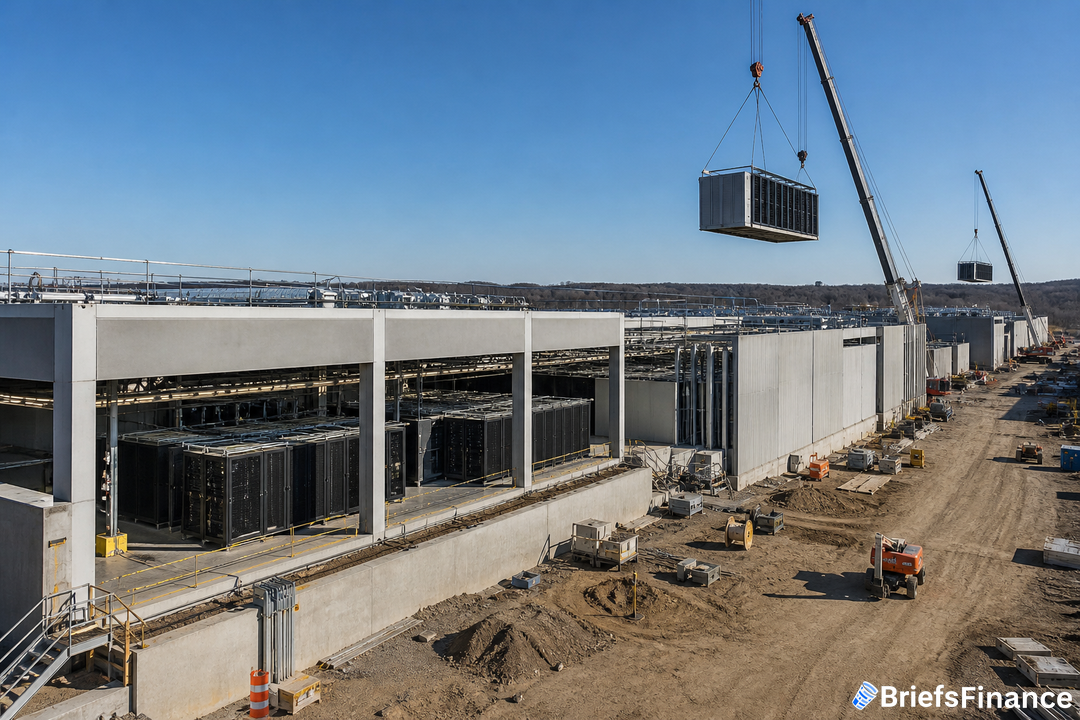
Meta's checkbook is wide open. This year's capital spending is projected to land near $140 billion, about twice the roughly $70 billion it spent in 2025. Forecasts call for that figure to rise to $197 billion next year and reach $215 billion in 2028.

On the income statement, analysts see 2026 sales climbing 26% to $254 billion and net income up 33% to $80.6 billion, based on Bloomberg estimates. Growth is expected to moderate next year, with revenue up 20% and profit up 9%.

How the market is pricing it

The stock trades at 21 times earnings expected over the next year, according to Bloomberg data. That is well above June's sub-14 trough, roughly in line with Meta's three-year average, and a bit cheaper than the Nasdaq 100 at 22 times. More than 90% of analysts tracked by Bloomberg rate the shares a buy, though the price is hovering near the average target, hinting at limited upside over the next year.

"Right now Meta offers a below-market multiple for above-market growth, which is attractive on its own, but it also has massive scale and distribution, which are advantages that will be really hard for competitors to overwhelm," Biederman said. Still, volatility cuts both ways. Brandon Pizzurro, chief investment officer at GuideStone Funds, which oversees $29 billion, cautioned, "Sentiment on the big players seems to change as often as new AI models get released, and something like Muse gives markets the sugar rush of a new catalyst, but there's an increasingly high bar to impress investors, and rightful trepidation on whether these companies can deliver."

What this means for your money

The setup is simple to grasp and hard to price: fast product traction, a cleared legal cloud, and a valuation that is not stretched versus big-tech peers, set against colossal AI spend and a growth slowdown penciled in for next year. That kind of mix can reward patience or whipsaw nerves, sometimes in the same week.

Staying focused on long term goals helps protect and grow your savings. Our CEO Jaspreet Singh is hosting a FREE live investor workshop, How to Profit From A Dollar That's Losing its Value, on September 29th. Sign up free to join him live.

Disclosure

Recent News

1 2 3 … 85

Get Market Briefs delivered to your inbox every morning for free!

No fluff. No noise. No politics. Just finance news you can read in 5 minutes.

Blogs

September 24, 2026
The 2026 Economic Reset Is Starting: Are We in a Recession, or Is the Pain Still Ahead?
  • The Federal Reserve has flipped from stimulating the economy to fighting inflation with higher interest rates, while the White House still wants growth at almost any cost.
  • The national debt tops $40 trillion, has outgrown the entire U.S. economy, and its interest payments are now the government's fastest-growing expense.
  • Higher rates bring pain for private equity, private credit, and speculative assets, but they open opportunities for investors holding cash, treasuries, and value assets.
Read More
September 23, 2026
Are We in a Recession? Without AI, America Might Already Be in One - and Washington Knows It
  • The White House attributes about three quarters of U.S. economic growth to AI, and many believe the economy would already be in a recession without it.
  • Washington has three reasons it cannot let the AI boom slow down: staying the world's superpower, outgrowing $40 trillion in national debt, and protecting a government stock portfolio worth billions.
  • Every market goes through booms and busts, and investors who understand the cycle get to buy the downturn instead of panic-selling with the crowd.
Read More
September 22, 2026
Will Interest Rates Go Down in 2026? Where the Money Moves Either Way
  • The Fed is leaning toward higher rates to fight 4% inflation, while the White House and a cracking job market push the other way.
  • If rates rise, money has tended to move toward short-term Treasuries, floating-rate loans, energy, banks and dividend payers.
  • If rates fall, it has tended to move toward gold, silver and Bitcoin, real estate, small caps, the S&P 500 and speculative bets.
Read More
September 21, 2026
How the Federal Reserve Makes Money - and Why It Just Posted Its Biggest Loss Ever
  • For 109 years the Federal Reserve created money, lent it to the U.S. government and handed the interest it collected back to Washington - almost $1 trillion in the decade starting in 2011.
  • Pandemic-era lending locked the Fed into earning about 2% on trillions of dollars while it now pays banks around 4%, producing a record loss of hundreds of billions in 2026.
  • The Fed covers its losses by creating money and the government covers its lost revenue by borrowing, and both feed the inflation that eats at the dollars in your account.
Read More
September 18, 2026
Kevin Warsh Just Defied Trump: What the Fed Rate Hike Means for Your Money
  • The Fed raised rates for the first time since 2023 in a unanimous vote led by Kevin Warsh, the chairman President Trump appointed to cut them.
  • Higher rates make the $40 trillion national debt, business loan resets and mortgages more expensive, but they strengthen the dollar and pay investors holding cash.
  • The war with Iran is pushing up oil, grocery and chip prices, another hike is likely in 2026, and recession talk is about to get louder.
Read More
September 17, 2026
Why America Bailed Out the Yen: The Japan Carry Trade, the Dollar and Your Mortgage Rate
  • In July 2026 the US sent money to steady the yen because Japan is the largest foreign owner of US debt, and Washington needs Japan to keep lending.
  • For decades the Japan carry trade let Wall Street borrow yen at essentially 0% and pour it into US stocks, real estate and Treasuries, and rising Japanese rates are shutting that off.
  • A weaker yen means fewer buyers for the dollar and for US debt, which pushes Treasury rates up and drags mortgage, car loan and credit card rates up with them.
Read More
September 16, 2026
Treasury Yields Are Spiking Because Lenders Are Backing Away From U.S. Debt
  • The U.S. is paying its highest 30-year borrowing rate in about two decades because its biggest lenders, the Fed, foreign governments, and banks, are all pulling back from Treasuries.
  • Every mortgage, car loan, credit card, and business loan is priced off the 10-year Treasury yield, so when Washington pays more to borrow, so do you.
  • With about $40 trillion of debt against a $32 trillion economy, the country either outgrows its debt or slides into a doom loop, and investors need a plan for both.
Read More
September 15, 2026
Fiat Currency Runs on Trust, and the World Just Stopped Trusting the Dollar
  • Gold has overtaken US treasuries as the world's top reserve asset, and central banks are now buying less US debt and more gold.
  • The US dollar is a fiat currency, meaning it's backed by a promise rather than gold, so it loses value when fewer countries want to hold it.
  • Whether the US economy or its national debt grows faster from here decides which assets stand to benefit next.
Read More
September 14, 2026
Why RAM Prices Are Soaring - and Where the Money Is Moving
  • Memory chips - the RAM inside phones, laptops, fridges, and trucks - are in a shortage Tim Cook called a 100-year flood, and some memory prices have climbed about 90% in a single quarter.
  • Four forces hit at once: AI demand, a production shutdown in 2023, build times that push any fix to 2028 at the earliest, and a bombed helium plant in Qatar.
  • The last two supply shocks ended in aggressive Fed rate hikes and market drops of around 45% and 20%, and this time Washington is spending heavily to bring memory production home.
Read More
September 11, 2026
How Is the Economy Doing? Washington Says It's Fixed, but the Numbers Don't Agree
  • Treasury Secretary Scott Bessent says the economy is fixed because lower earners' incomes are now rising faster than top earners'.
  • The Atlanta Fed and Bank of America show different numbers, and Hilton, Marriott, and McDonald's can't agree on what they're seeing either.
  • Whichever side is right, the economy is built to make investors rich, and inflation is how it does it.
Read More
1 2 3 … 27
Share via
Copy link











