What Moody's found
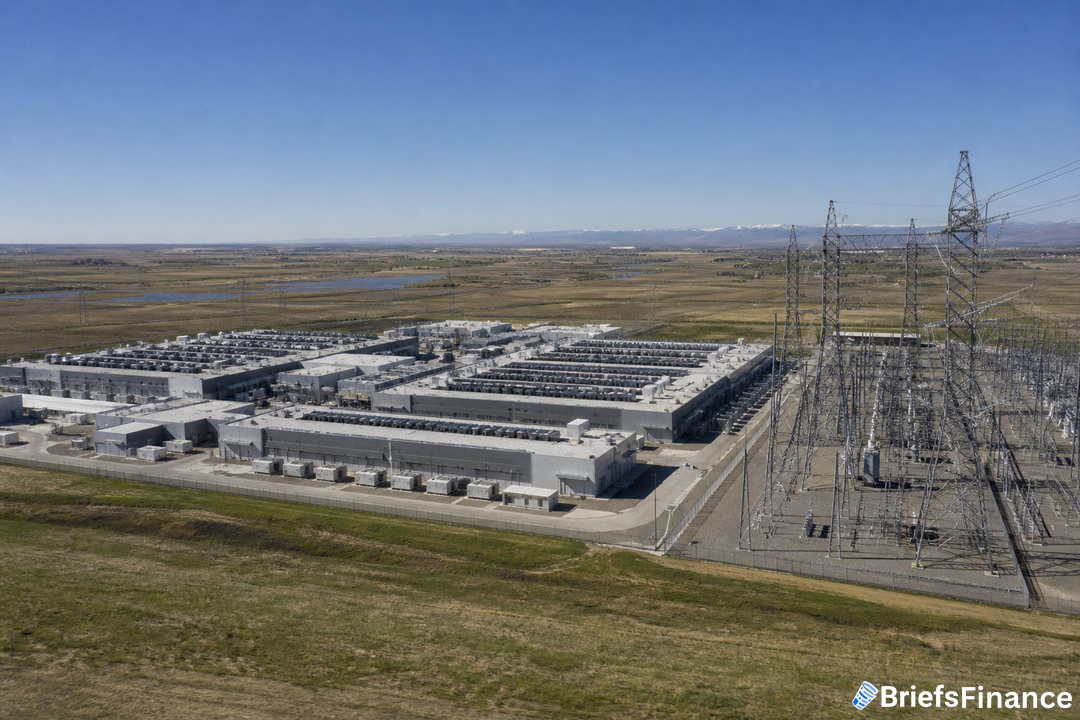
Moody's Ratings projects data centers will drive 45 gigawatts of fresh power capacity by 2030 at roughly $110 billion. The work is guided by the International Energy Agency's outlook that data centers will use 426 terawatt hours in 2030, taking their share of U.S. electricity to about 10%, double the 2025 level.
Natural gas carries the bulk of the additions, with over 30 gigawatts coming from gas units, which implies on the order of 4 billion cubic feet of extra gas supply. Most of the remaining capacity is expected from solar paired with storage, while nuclear restarts contribute less than 5%. For context, one gigawatt is in the ballpark of a traditional nuclear reactor's output.
Why the boom and the pushback
AI and cloud computing are powering the strongest U.S. electricity demand growth in decades, and the grid is racing to keep up. The White House has cast the AI competition as essential to the nation's interests, and it is supporting some of the world's largest companies pursuing potentially substantial profits.
Not everyone is cheering. Americans are voicing concerns that typical households and businesses are subsidizing AI via higher power bills, along with added pollution, shrinking water availability, and risks to public lands and private property. Affordability worries are also slowing approvals: "federal and state politicians and regulators are requiring more time to review and structure rates, creating a new source of potential delays for new data center developments." And the pace is outstripping the grid's ability to connect new supply: "The pace of data center development is increasingly exceeding the speed at which the electric grid can add generation, transmission and interconnection capacity."
Infrastructure needs often create long term opportunities to protect and grow your savings. Join Briefs Finance CEO Jaspreet Singh on September 29th for a FREE live investor workshop, How to Profit From A Dollar That's Losing its Value, where he shows how we're spotting investment opportunities as the dollar falls. Save your spot.
What it could cost and who pays
According to Moody's, the construction of new generation facilities by itself may tack on $25 billion to $30 billion annually to U.S. electricity expenses. In an email, Ryan Wobbrock, a senior vice president of ratings within Moody's Ratings' global infrastructure finance group, explained that how those costs show up for customers will hinge on the rate making process and other local rules that allocate expenses.
Data center operators will also foot part of the bill directly. They are paying for plants on their AI campuses, covering as much as $15 billion. Those behind-the-meter projects account for roughly 30% of the overall capacity additions planned through 2030. After two decades of sluggish demand growth, the U.S. has struggled to revive gas generator construction, and these units are in demand because they can be dispatched on command, unlike renewables that depend on sunshine and wind.
What this means for your wallet
The headline is simple: scaling AI has a real price tag, and part of it shows up in national electricity costs. Whether and how much lands on your bill depends on the rate making and cost allocation rules where you live, not a single national formula. If you're tracking your monthly expenses, this is one more reason to watch how your local utility talks about new generation, grid upgrades and who pays for what.
Staying steady through change helps you preserve capital and pursue future gains. Our CEO Jaspreet Singh is hosting a FREE live investor workshop, How to Profit From A Dollar That's Losing its Value, on September 29th. Sign up free to join him live.