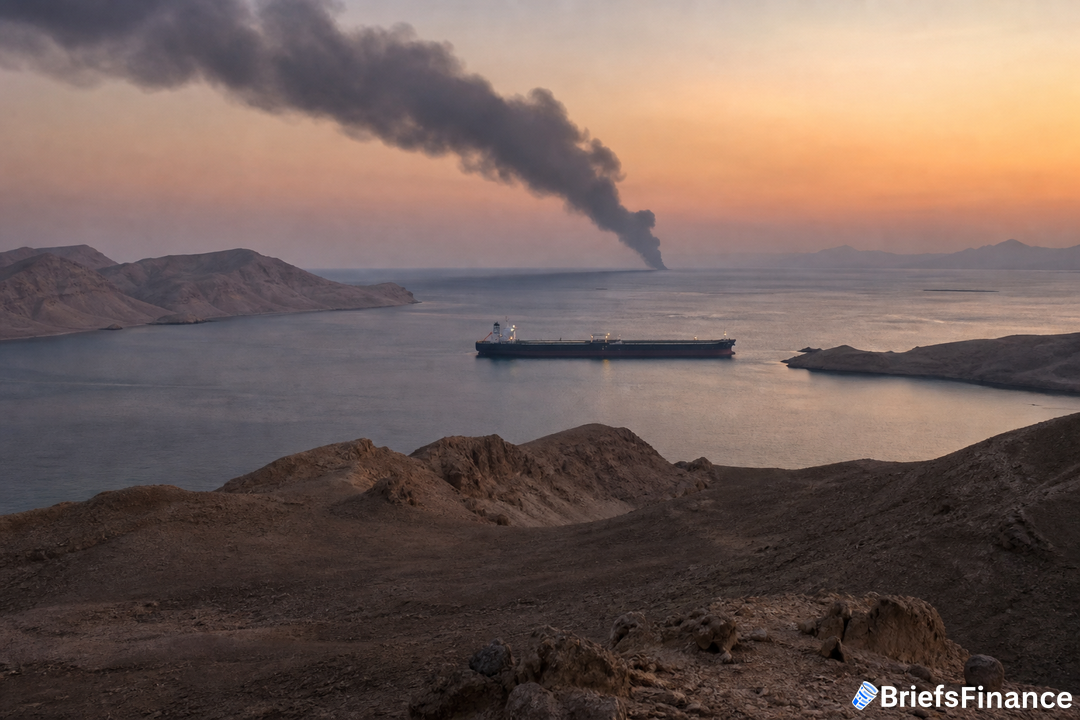
What happened over the Strait of Hormuz
Iran's Islamic Revolutionary Guard Corps said its "new advanced aerospace defence system" brought down an advanced MQ-1 over the Strait of Hormuz on Monday, without saying what the aircraft had been doing. The MQ-1, built by General Atomics, has historically been flown primarily by the U.S. Air Force and the CIA. The shootdown follows a run of Iranian actions against U.S. unmanned naval systems in Gulf waters as the war, now seven months old, drags on and talks around the strategic waterway remain stuck.
The wider war and energy chokepoints
Since the conflict began in February, the Strait of Hormuz has seen an Iranian naval blockade followed by a U.S. blockade, a one-two that has helped keep energy costs elevated. A June attempt by Washington and Tehran to find common ground fell apart over disagreements about the strait. Meanwhile, Yemen's Houthi rebels mounted a blistering offensive in recent days, boosting the Tehran-aligned group's leverage over another vital corridor, the Bab el-Mandeb. Vessels labeled non-compliant are frequently targeted by Iranian strikes, and the U.S. periodically bombs stretches of Iran's coastline to challenge control of Hormuz.
Diplomacy hits pause
A planned gathering in Oman that was set to bring Gulf states together with Iran to hash out possible arrangements for the Strait of Hormuz has been put on hold. According to Omani foreign minister Badr Albusaidi, who posted on X Sunday, the delay was for "consensus." Monday had been slated for a meeting between officials from Iran and Gulf countries to sign off on and finalize a maritime corridor connecting Iran and Oman across the Strait of Hormuz. No direct talks took place between the U.S. and Iran.
Turbulent headlines remind investors to focus on protecting and steadily growing their savings. Join Briefs Finance CEO Jaspreet Singh on September 29th for a FREE live investor workshop, How to Profit From A Dollar That's Losing its Value, where he shows how we're spotting investment opportunities as the dollar falls. Save your spot.
Prices and the pocketbook
Oil popped back above $100 on Monday for the first time since May after Saudi Arabia shut a key East-West line damaged by Iraqi drones, and prices kept climbing. U.S. West Texas Intermediate futures rose 2.3% to $102.39 per barrel, while Brent, the global benchmark, gained 2.4% to $107.11. On Sunday, Trump said Washington might keep pursuing its campaign against Iran and seize control of its oil, comparing the idea to an August arrangement with Venezuela. Under that deal, Venezuela ceded majority U.S. control over more than 65 billion barrels of reserves in exchange for $209 billion for its state treasury, and Secretary of State Marco Rubio said it is set to draw nearly $100 billion from private investors.
A calm, consistent plan helps your money weather uncertainty and build future security. Our CEO Jaspreet Singh is hosting a FREE live investor workshop, How to Profit From A Dollar That's Losing its Value, on September 29th. Sign up free to join him live.